Pro Tips for Best Results
I tested this soup three different ways to nail the consistency. The first time, I didn’t use the chicken broth, and it was far too thick, almost like a stew. The cup of broth is essential for achieving that perfect, spoonable soup texture. It loosens the cream soup base just enough without making it watery. Don’t be tempted to skip it.
Here’s what I learned the hard way about seasoning: not all taco seasonings are created equal. Some are saltier than others. I always start with one tablespoon from my favorite brand, then taste after simmering. You can always add more, but you can’t take it out. If you find it’s a bit bland, an extra half tablespoon can really wake it up. On the flip side, if you accidentally over-salt, adding a squeeze of fresh lime juice at the end can help balance it beautifully.
For the absolute best flavor, let the soup sit for 10 minutes off the heat before serving. I know it’s tempting to dive right in, but this brief resting period allows everything to settle. The beans absorb a bit more broth, the chicken distributes more evenly, and the flavors deepen. It’s a small wait that pays off hugely in every bite.
Common Mistakes to Avoid
The biggest mistake I made the first time was not draining the canned ingredients properly. I was in such a rush I just dumped the beans in with their starchy liquid. The result was a murky, overly thick soup that tasted a bit metallic. Don’t do what I did! Taking that extra 60 seconds to drain the beans and corn (and give them a quick rinse) ensures a brighter, cleaner flavor and perfect texture. It’s the one prep step you truly shouldn’t skip.
Another common pitfall is overcomplicating it. This recipe is designed for ease. I’ve seen friends try to sauté onions and garlic first, or brown ground beef instead of using chicken. While those are delicious meals, they are different meals. The beauty here is in the shortcut. Embrace the simplicity of the canned ingredients. Trust the process and the formula—it works perfectly as written for those “I need dinner NOW” nights.
Serving Suggestions
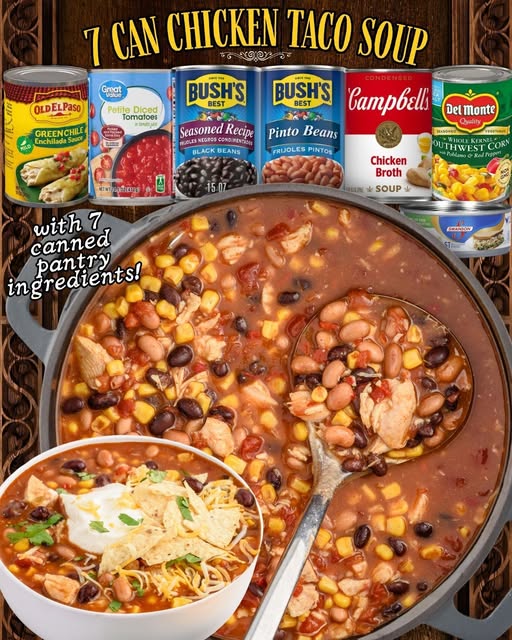
I like serving this soup piping hot in big, wide bowls. The toppings are where the party’s at and let everyone customize their bowl. I always set out a topping bar with shredded cheddar cheese, a big dollop of cool sour cream (the contrast with the hot soup is divine), finely chopped red onion for crunch, fresh cilantro, sliced jalapeños for heat lovers, and a big bowl of tortilla chips. The chips are non-negotiable for me—some for crumbling on top and some for scooping.
For a complete meal, I often whip up a quick side of cornbread or simple cheese quesadillas. The sweetness of the cornbread is a fantastic contrast to the savory, slightly spicy soup. If I’m feeling extra, I’ll make a quick chopped avocado salad with lime juice and salt, which adds a wonderful fresh, creamy element to the meal.
Presentation is easy but fun. I’ll often garnish my own bowl with a little zig-zag of sour cream, a sprinkle of cheese, and a single perfect cilantro leaf. It makes it feel special. Serving it in a colorful, rustic bowl with the toppings in little dishes turns this pantry-clean-out meal into a festive, inviting dinner that looks like you fussed for hours.
Variations & Customizations
This soup is a fantastic canvas. One of my favorite variations is to make it “White Chicken Taco Soup.” I swap the red enchilada sauce for a 15-ounce can of green enchilada sauce and use a can of cream of chicken and a can of cream of celery soup. I also add a drained can of white hominy. It’s a totally different, equally delicious flavor profile that’s a little brighter and tangier.
For my vegetarian friends, I’ve successfully made this by omitting the chicken and cream of chicken soup. I use an extra can of beans (like kidney beans), swap the cream of chicken for a cream of celery or mushroom soup, and use vegetable broth. It’s still incredibly hearty and satisfying. You could also stir in a cup of cooked rice or quinoa at the end to bulk it up.
Feel free to play with the protein and heat level. Shredded cooked beef or ground turkey work wonderfully. If you love spice, use hot enchilada sauce and add a diced chipotle pepper in adobo sauce—just one will add a deep, smoky heat. For a creamier version, stir in 4 ounces of softened cream cheese along with the soups and let it melt in. It adds a lovely richness.
How to Store, Freeze & Reheat
From my experience, this soup stores beautifully. Let it cool completely, then transfer it to airtight containers. It will keep in the refrigerator for 4-5 days. The flavors actually get better on the second day, as they continue to meld. When reheating on the stovetop, do so gently over medium-low heat, stirring occasionally. You may need to add a small splash of chicken broth or water to loosen it up, as it will thicken in the fridge.
This soup is a champion in the freezer, which is why I often double the batch. Portion the cooled soup into freezer-safe bags or containers. I’ve found it keeps its quality for up to 3 months. To reheat, I typically thaw it overnight in the refrigerator first, then warm it on the stove. You can also reheat from frozen in a pot over low heat, adding a bit of broth and breaking it up with a spoon as it thaws. Avoid the microwave for large, frozen portions, as it tends to heat unevenly.
Conclusion
This 7-Can Chicken Taco Soup is more than just a recipe to me; it’s a reminder that delicious, comforting food doesn’t have to be complicated. It’s my go-to for laughter-filled family dinners, for quietly comforting a friend, and for simply taking care of future-me on a busy day. I hope it finds a spot in your recipe rotation and brings as much ease and joy to your kitchen as it has to mine. Now, go raid that pantry—your new favorite soup is waiting.