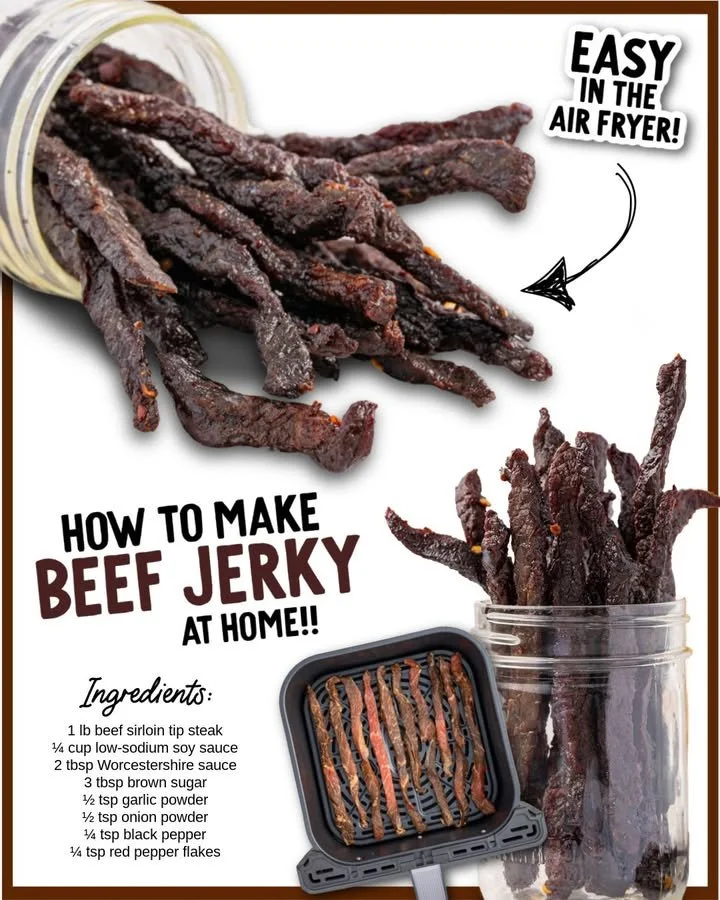
I also recommend monitoring the air fryer closely during the drying process. Every air fryer is different in terms of airflow and temperature, so finding the right timing for your model may take a few tries. Too much time can lead to an overly tough jerky, while not enough time may leave it chewy without that satisfying crispiness.
Finally, don’t forget to let the jerky cool completely before storing it. I learned this the hard way when I stored warm jerky in a bag, leading to moisture buildup and resulting in mushy bites. Cooling ensures the jerky maintains its dry texture and can last longer.
Serving Suggestions
When it comes to serving homemade beef jerky, the possibilities are endless! I often pack it as a protein-rich snack on road trips, where it keeps me fueled during long drives. Pairing it with some nuts, like almonds or cashews, creates a perfect trail mix that satisfies those savory cravings.
For a fun movie night snack, I like to serve it alongside some cheese and crackers. The saltiness of the jerky is beautifully balanced by a creamy cheese, which makes for a delightful combination—perfect for sharing with friends or family.
I also enjoy crumbling small pieces of jerky over salads for a unique twist. It adds a wonderful texture and flavor, not to mention an extra protein boost that keeps me feeling full longer!
Variations & Customizations
One of the best things about making beef jerky at home is the ability to customize flavors to your liking. I often switch up the marinade by substituting honey for brown sugar, giving the jerky a hint of sweetness that’s just heavenly. If you like it spicy, try adding some chipotle powder or cayenne pepper for a kick!
Another fun variation I’ve experimented with is adding pineapple juice to the mix. Not only does it tenderize the meat, but it also imparts a lovely tropical taste that is incredible when dried. I found that combining sweet and savory flavors can lead to an exciting jerky experience!
Lastly, if you’re in the mood to try something different, switch out the beef for turkey or even venison. Each meat lends its unique flavor profile, and the process remains fairly similar. It’s always fun to discover new tastes while enjoying the same satisfying method!
How to Store, Freeze & Reheat
Storing beef jerky properly is key to maintaining its flavor and texture. I usually keep it in an airtight container or bag in the refrigerator for up to 2 weeks. For longer storage, you can refrigerate it, prolonging its shelf life for several months.
If I want to store my homemade jerky for an even longer time, I wrap it tightly in plastic wrap and place it in the freezer. This keeps it fresh and tasty for several months—just make sure to thaw it in the refrigerator when you’re ready to enjoy some.
Reheating isn’t necessary, but if you prefer your jerky warm, I’ve found that a quick zap in the microwave for about 10 seconds does the trick. Be cautious not to overheat, as you want to preserve that delicious chewiness!
Conclusion
Making air fryer beef jerky has truly transformed my snacking habits, and I’m thrilled to share it with you! Whether you’re enjoying it on a hike or curling up while watching a movie, this homemade jerky never fails to impress. I hope you give this recipe a try, customize it to fit your taste, and most importantly, enjoy the delightful flavors and scents that will fill your kitchen. Happy snacking!