Pro Tips for Best Results
Let’s talk about the sauce temperature. I’ve tested this three different ways, and adding cheese to a sauce that’s too hot is the number one cause of graininess or separation. Keep the heat on low when you add the cheese. If your burner runs hot, take the pan off the heat entirely, let it cool for 30 seconds, then start whisking in the cheese. A smooth, velvety sauce is the goal.
For the chicken, thickness is key. If your chicken breasts are very plump, I like to pound them to an even thickness (about ¾-inch) before marinating. This ensures they cook evenly throughout without drying out the thinner edges. An even cook means every bite is juicy, not just the center.
And for the tortellini, treat them gently. They’re delicate little pasta pillows! Don’t overcook them, as they’ll continue to warm through in the sauce. I always set a timer for one minute less than the package says and then taste for doneness. Mushy tortellini are a tragedy we can easily avoid.
Common Mistakes to Avoid
The first time I made this, I made a classic mistake: I added all the cheese at once to a still-bubbling cream base. The sauce immediately seized up and became a gritty, clumpy mess. Don’t do what I did. Patience is your friend. Let the cream mixture cool slightly, and add the cheese gradually, whisking until fully incorporated before adding more. This guarantees that silky, restaurant-quality texture.
Another pitfall is overcooking the chicken. Because we’re finishing it in a creamy sauce, the chicken should be perfectly cooked but still very moist on its own. I use a simple trick: I press on the chicken with my tongs. If it feels firm but still has a little give, it’s done. Remember, it will carryover cook a bit while resting. Slicing into it immediately lets all the juices run out, leaving you with dry chicken. Always, always let it rest for 5-7 minutes.
Serving Suggestions
I like serving this dish straight from the skillet at the table for a real family-style feel. It’s rich, so a bright, simple side is essential to balance the meal. My absolute favorite pairing is a crisp arugula salad with a sharp lemon vinaigrette. The peppery arugula and acidic lemon cut through the richness of the Alfredo perfectly. It’s a match made in heaven.
For something heartier, I’ll often roast some asparagus or broccolini with olive oil, salt, and a squeeze of lemon alongside the chicken. The caramelized, crispy edges of the vegetables provide a wonderful textural contrast to the creamy pasta. A loaf of warm, crusty bread is also non-negotiable in my house—it’s perfect for sopping up every last drop of that incredible sauce.
If you’re serving a crowd, this dish is incredibly welcoming on its own. I just make sure to have extra grated cheese and red pepper flakes on the table for guests to customize their bowl. A glass of a crisp Pinot Grigio or a buttery Chardonnay complements the flavors beautifully.
Variations & Customizations
This recipe is wonderfully adaptable. Not a fan of chicken? I’ve made it with large shrimp sautéed in garlic and butter, and it was phenomenal. For a vegetarian version, I’ll grill or roast portobello mushroom caps with the same herb marinade and slice them over the top. The meaty texture of the mushrooms works wonderfully with the creamy sauce.
You can also play with the pasta and the sauce base. While I love the five-cheese tortellini, a spinach and ricotta version is also delicious. For a lighter take, I’ve swapped half the heavy cream for whole milk, though the sauce will be a bit thinner—just let it simmer a little longer. And if you want a kick, adding a teaspoon of crushed red pepper flakes to the butter and garlic step infuses the whole sauce with a gentle, warming heat.
For an extra decadent twist, I sometimes stir in a couple of handfuls of fresh baby spinach into the hot sauce just after adding the pasta. It wilts down in seconds and adds a lovely color and a bit of greenery. I’ve also seen friends add sun-dried tomatoes or crispy pancetta bits on top for a salty, savory punch.
How to Store, Freeze & Reheat
To store leftovers, I let everything cool completely before transferring it to an airtight container. It will keep in the refrigerator for 3-4 days. The sauce will thicken significantly as it chills—this is normal. Here’s what I learned the hard way about reheating: Do not microwave it on high power. This will cause the sauce to separate and the tortellini to become rubbery.
The best way to reheat is gently on the stovetop. I place the desired amount in a skillet over low heat, adding a splash of milk, cream, or even chicken broth. I stir frequently until it’s warmed through and the sauce has loosened back up to a creamy consistency. This method preserves the texture far better. Unfortunately, I don’t recommend freezing this dish, as the dairy-based sauce and the delicate filled pasta tend to separate and become grainy when thawed. It’s truly best enjoyed fresh.
Conclusion
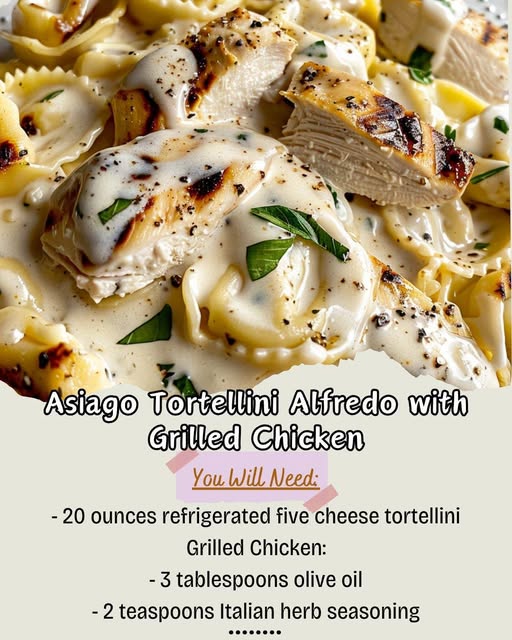
This Asiago Tortellini Alfredo with Grilled Chicken is more than just a recipe to me; it’s a reliable source of comfort and joy in my kitchen. It has the power to turn an exhausting day into a delightful evening and to make guests feel truly cared for. I hope it finds a special place in your recipe rotation, too, and that you experience the same simple pleasure of stirring that gorgeous sauce and savoring that first perfect bite. Happy cooking, and don’t forget to grab that crusty bread