Pro Tips for Best Results
I tested the rolling method three different ways, and rolling it warm in the towel is the undisputed champion. The first time I let the cake cool flat, it cracked irreparably when I tried to roll it. The towel method creates a steamy, pliable environment that sets the cake’s “muscle memory.” Don’t skip this step thinking you can just be careful later—trust me, you can’t.
When whipping the cream, stop the moment you see stiff peaks. I once got distracted and whipped it just 30 seconds too long, and it started to look grainy and become buttery. If your kitchen is warm, chill your bowl and beaters in the freezer for 15 minutes beforehand. This guarantees a stable filling that won’t weep or sag when you slice the cake.
For the cleanest slices, pop the fully assembled cake into the refrigerator for at least an hour before serving. This allows everything to set firmly. Use a long, thin-bladed knife, and dip it in hot water, wiping it clean between each cut. The difference is stunning—you’ll get pristine, photogenic slices every single time.
Common Mistakes to Avoid
The most common mistake is using cold eggs straight from the fridge. I made this mistake the first time, and my batter was dense and never achieved the fluffy volume needed. The cake baked up thin and tough, and it cracked instantly upon rolling. Room-temperature eggs whip up to create the necessary structure for a flexible sponge. Plan ahead and let them sit out for an hour, or place them in a bowl of warm water for 10 minutes.
Another pitfall is not letting your fillings cool completely. In my early baking days, I was too eager to assemble. I spread slightly warm cherry compote onto the cream, which immediately began to melt and turn my beautiful filling into a runny, pink mess. It made the roll soggy and impossible to slice. Letting both the cherries and the rolled-up cake cool fully is not a suggestion—it’s a requirement for structural integrity.
Serving Suggestions
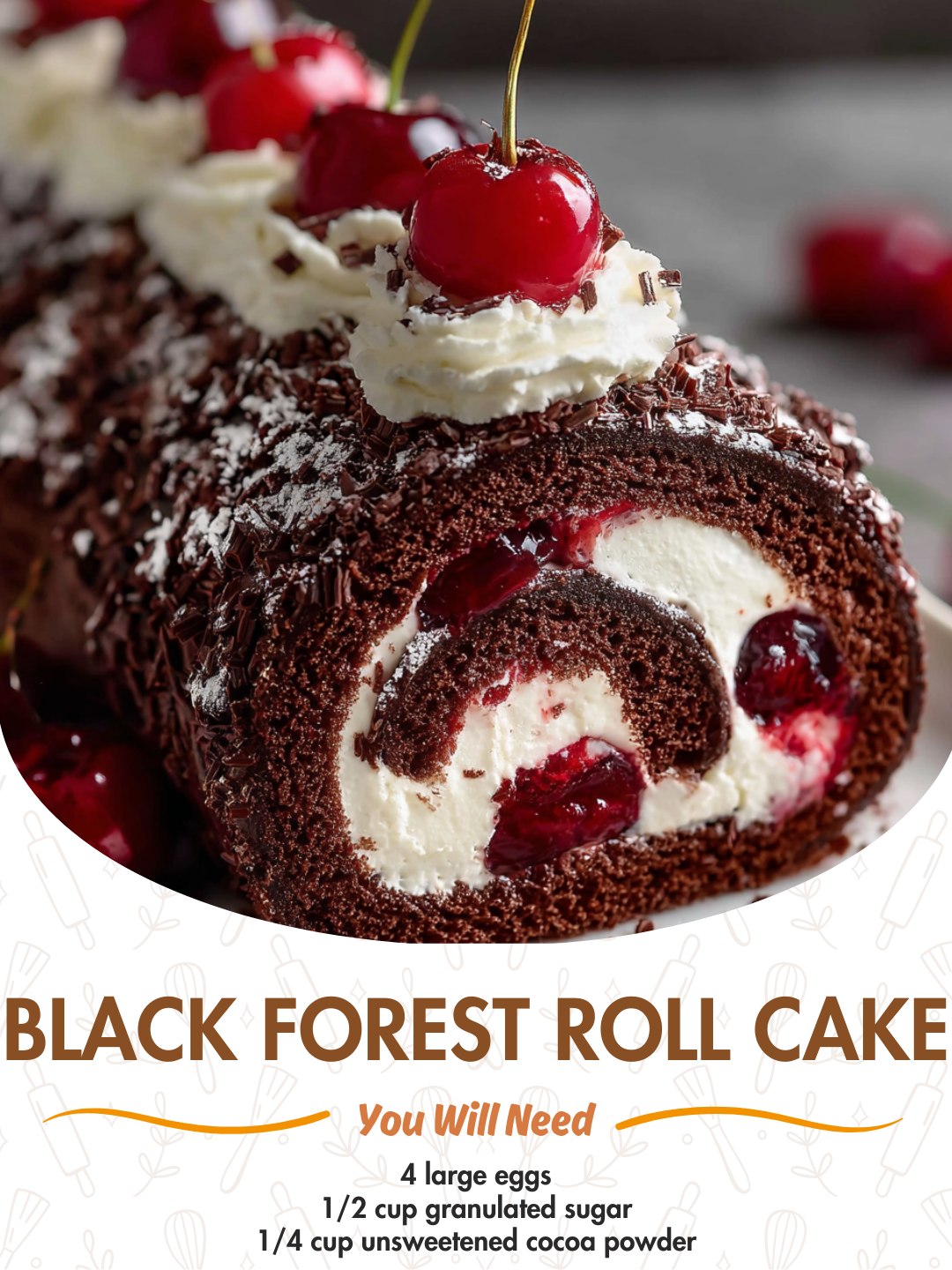
I love serving this cake as the grand finale to a cozy dinner. A simple dusting of powdered sugar or extra chocolate curls on top is elegant. For a truly decadent touch, I’ll warm a little extra cherry compote and offer it on the side for guests to drizzle over their slice. The contrast of the cool, creamy cake and the warm sauce is fantastic.
For plating, I use a cake server or a thin pie slice to transfer each portion. I always garnish the individual plate with a fresh cherry or a mint leaf—it adds a pop of color that makes the dark chocolate and cream really stand out. A cup of strong coffee or a glass of dessert wine, like a late-harvest Riesling, pairs perfectly and cuts through the richness.
If I’m bringing this to a potluck or party, I transport it on its platter, covered loosely with a dome or tented foil to protect the topping. I always carry the knife separately and slice it on-site for the freshest presentation. It never fails to draw compliments and requests for the recipe.
Variations & Customizations
If you’re not a fan of alcohol, the kirsch can be seamlessly replaced with a teaspoon of almond extract. I’ve tried this for a friend, and it adds a lovely marzipan-like note that pairs wonderfully with the cherries. You can also use a high-quality cherry jam, gently warmed and thinned with a little water, as a quick filling in a pinch.
For a different twist, I’ve swapped the cherry filling for a raspberry one. I simmer fresh or frozen raspberries with a bit of sugar and lemon juice until jammy, then strain out the seeds. The tartness of the raspberries against the chocolate is absolutely divine. I’ve even seen friends use a layer of chopped, toasted hazelnuts mixed into the cream for added crunch and flavor.
During the holidays, I’ll sometimes add a hint of spice to the cake batter, like a quarter teaspoon of cinnamon. It makes the cake feel even more cozy and special. Feel free to play with the toppings, too—crushed peppermint candies for Christmas or fresh berries in the summer make this recipe adaptable year-round.
How to Store, Freeze & Reheat
This cake stores beautifully in the refrigerator. I cover it loosely with plastic wrap or place it in a cake carrier. It’s best enjoyed within 2-3 days. The sponge may soften slightly from the moisture of the cream, but the flavors only meld and improve. Do not leave it at room temperature for more than two hours due to the dairy.
You can freeze the unfilled, cooled sponge roll very successfully. After it’s cooled in the towel, I wrap it tightly in plastic wrap, then in foil, and freeze for up to 2 months. Thaw in the refrigerator overnight before filling. I do not recommend freezing the fully assembled cake, as the whipped cream can become icy and lose its texture upon thawing. It’s best assembled fresh or a day ahead.
Conclusion
Baking this Black Forest Roll Cake is more than just following a recipe; it’s a delightful experience that fills your home with wonderful smells and ends with a dessert that’s as joyful to make as it is to eat. Don’t let the rolling intimidate you—embrace the process, learn from my mistakes, and you’ll be rewarded with a stunning, delicious creation. I hope this recipe brings as much warmth and delight to your table as it has to mine. Happy baking