Pro Tips for Best Results
I tested salting the tomatoes at different stages, and here’s what I learned: Add a good pinch of salt to the tomatoes right after you add them to the skillet. It helps draw out their natural juices faster, building your sauce more effectively. Don’t be shy with the salt here; it makes the tomatoes’ sweetness shine.
The chicken resting step is not a suggestion. The first time I made this, I sliced right into it and watched all the precious juices run out onto the cutting board, leaving the meat dry. Letting it rest for 5-10 minutes allows those juices to redistribute. When you slice it, every piece will be moist and flavorful, not just the ones that soaked up the sauce.
For the absolute best flavor, try to time it so your pasta is done just as your tomato mixture is ready. Adding the hot, freshly drained pasta directly to the skillet not only stops the tomatoes from overcooking but also allows the pasta to drink up that sauce immediately. It makes a noticeable difference in how the flavors marry.
Common Mistakes to Avoid
I made a big mistake the first time by overcrowding the skillet with the chicken. If your pan is too small, cook the breasts one at a time. Crowding them steams the chicken instead of searing it, and you’ll miss out on that incredible golden crust and deep flavor. A little patience here pays off in texture big time.
Another pitfall is overcooking the garlic. It becomes bitter in a flash and can ruin the delicate balance of the dish. The moment you smell that strong, nutty aroma—usually within 30-60 seconds—it’s time to add the tomatoes. The tomatoes will cool the pan down and stop the cooking process. Don’t walk away during this step!
Serving Suggestions
I love serving this pasta family-style, right out of the skillet I cooked it in, placed in the center of the table with a simple green salad on the side. A salad with a sharp, lemony vinaigrette cuts through the richness of the cheese and tomatoes beautifully. It’s the perfect contrast.
For a true Italian-inspired meal, I’ll sometimes start with a platter of cured meats and olives, and then bring out this pasta as the primo (first course). It feels so special and celebratory. A crusty loaf of warm, toasted garlic bread is also non-negotiable in my house for scooping up every last bit of the tomato-basil sauce left on the plate.
When it comes to drinks, a light, chilled Pinot Grigio or a glass of Sangiovese pairs wonderfully. For a non-alcoholic option, sparkling water with a squeeze of lemon and a few fresh basil leaves muddled in feels just right. It’s all about complementing those fresh, herbal notes.
Variations & Customizations
This recipe is a fantastic canvas. Don’t have chicken? I’ve made this with large, pan-seared shrimp, and it was divine. For a vegetarian version, you can simply omit the chicken or add a can of drained and rinsed chickpeas in with the tomatoes for some plant-based protein. The chickpeas soak up the flavors wonderfully.
Play with the herbs! While basil is classic, a mix of basil and fresh oregano is lovely. In a pinch, I’ve used a high-quality pesto stirred in at the end instead of fresh basil, and it was delicious, though richer. You can also add a pinch of red pepper flakes with the garlic if you like a little heat.
The cheese is also flexible. While fresh mozzarella is my favorite, small balls of burrata placed on top of the hot pasta are absolute heaven. For a sharper flavor, try crumbled feta instead of the mozzarella. It adds a wonderful salty tang that plays so well with the sweet tomatoes and balsamic.
How to Store, Freeze & Reheat
In my experience, this dish is best enjoyed fresh, but leftovers will keep in an airtight container in the refrigerator for up to 3 days. The pasta will continue to absorb the sauce, so when reheating, do it gently in a skillet over low heat with a splash of water, chicken broth, or even a touch of olive oil to loosen it up. The microwave can make the pasta gummy and the mozzarella rubbery, so I avoid it.
I don’t recommend freezing the fully assembled dish, as the fresh tomatoes, basil, and fresh mozzarella don’t hold their texture well after thawing. However, you can absolutely freeze the grilled chicken separately. Slice it, portion it, and freeze it in bags. Then, you can quickly make a smaller, fresh batch of the tomato-pasta base on a busy night and just add the thawed chicken at the end for a nearly-instant meal.
Conclusion
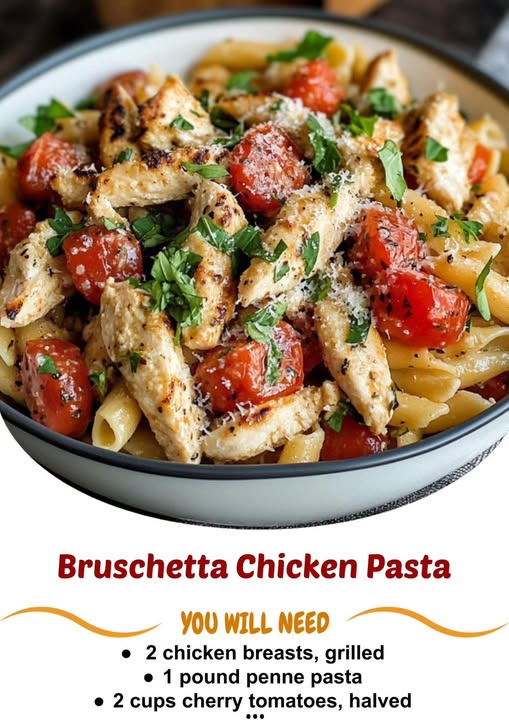
This Bruschetta Chicken Pasta has become more than just a recipe in my home; it’s a feeling. It’s the taste of a relaxed summer evening, the satisfaction of a meal that feels both elegant and effortless, and the happy silence that falls over the dinner table when everyone digs in. I hope it brings as much joy to your kitchen as it has to mine. Give it a try, make it your own, and don’t forget that final drizzle of balsamic—it’s the kiss that makes it perfect. Happy cooking