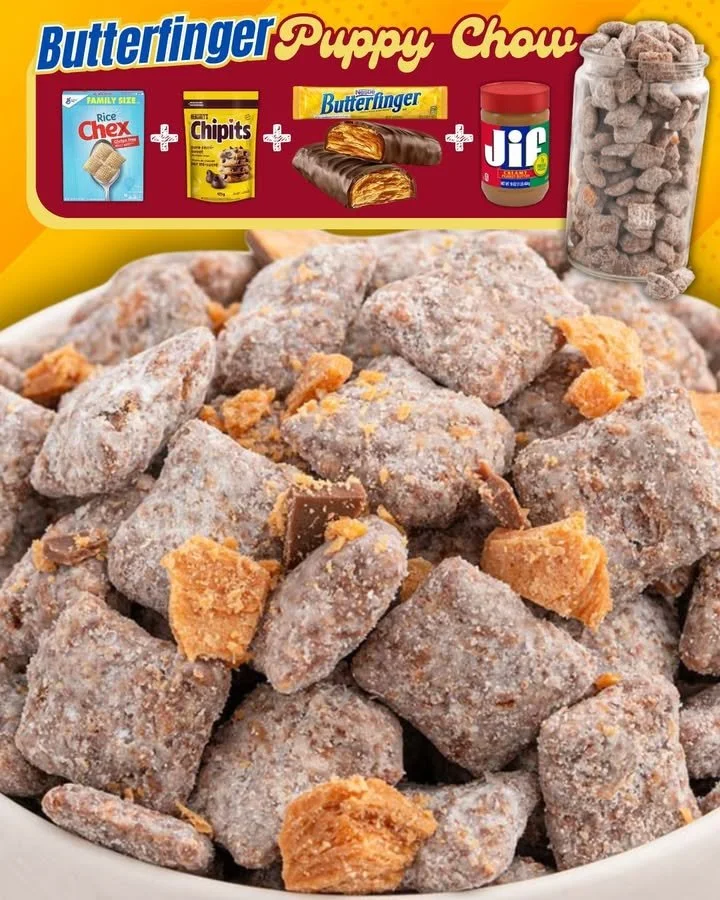
Now it’s time to add the fun part: the Butterfinger candy! I like to chop the Butterfinger bars into little pieces using a sharp knife—it’s so satisfying to watch those pieces scatter throughout the mix. Once the Butterfinger is added, give the mix another gentle stir to evenly distribute those crunchy bits. Grab your large Zip-lock bag and pour the powdered sugar inside. Then, add the coated cereal mixture to the bag and seal it tightly. Shake it up vigorously, letting the powdered sugar coat every piece of cereal. You’ll know it’s ready when the cereal looks white and sweetened.
After you’ve given everything a good shake, spread the Puppy Chow onto a baking sheet lined with parchment paper or wax paper to dry and cool. At this point, your kitchen will smell heavenly—chocolate, peanut butter, and Butterfinger coming together in one scrumptious mix. Let it sit for about 30 minutes, then it’s ready to enjoy!
Pro Tips for Best Results
One of my top tips is to pay close attention to melting the chocolate and peanut butter—overheating can make the mixture too thick. I tested melting them together at various times, and I found that 1 minute at medium heat, stirring in between, yielded the best results. This ensures you get that silky smooth texture that coats the Chex perfectly.
Also, don’t skip the step of letting the Puppy Chow cool before storing it. If you store it while it’s still warm, it can clump together into a messy ball. Trust me, I learned the hard way! Just let it rest on the baking sheet for a little while before transferring to an airtight container.
Lastly, I always make a double batch of this recipe because it tends to disappear quickly, especially when I have friends over. It seems like every time I serve it, everyone can’t get enough!
Common Mistakes to Avoid
One mistake I made early on was using crispy rice cereal instead of Chex. While they’re similar, the texture is off. Chex offers better crunch and holds up nicely against the melted chocolate and peanut butter. So, stick with Chex for the best result! (See the next page below to continue…)
Another thing to watch out for is adding too much butter or oil to the chocolate and peanut butter mixture. While a little bit can make it creamier, too much can make the Puppy Chow greasy rather than delightful. I recommend sticking with the recipe measurements for that perfect balance!
Lastly, don’t forget to finely chop the Butterfinger bars! If they are too big, they won’t mix well into the Puppy Chow and could clump together. I find that using a food processor works well, or a sharp knife for more control if you’re doing it by hand.
Serving Suggestions
I love serving Butterfinger Puppy Chow in a big bowl on movie nights. It’s the perfect finger food—easy to grab and munch without any fuss. I also like to package it into cute little treat bags when I’m giving them as gifts or party favors. It’s an adorable touch that always gets compliments from my friends!
Another fun idea is to mix some fun seasonal sprinkles into the mix when you’re tossing it with powdered sugar. It’s a great way to make it festive for holidays! For example, red and green sprinkles for Christmas or pastel sprinkles for Easter.
Don’t forget about presentation! Sometimes, I line a pretty dish with parchment paper and pour the Puppy Chow in like a catered treat. It makes my homemade snack feel a little more special, especially when sharing with friends and family.
Variations & Customizations
While Butterfinger is my go-to for this recipe, you can easily swap it for other candy bars if you’re feeling adventurous. Snickers, Reese’s Pieces, or even M&M’s can change the flavor profile entirely and make it your own. I tested a version with chopped Snickers, and it was a hit!
For a healthier twist, consider using dark chocolate instead of semi-sweet. Dark chocolate has a rich flavor that pairs beautifully with the sweetness of the powdered sugar and cereal. I promise, you won’t feel as guilty when indulging!
If you want to make it a bit more nutritious, you could throw in some nuts or seeds along with the Butterfinger bits. A handful of chopped almonds or a sprinkle of chia seeds adds a delightful crunch and increases the nutritional value. It’s a sneaky way to incorporate a little extra goodness without sacrificing flavor.
How to Store, Freeze & Reheat
To store leftover Puppy Chow, simply keep it in an airtight container at room temperature. It stays fresh for up to a week, though I’m often lucky if it lasts that long! Just make sure to keep it in a cool, dry place to maintain its crunch.
If you have a large batch or want to make it ahead of time, you can freeze it! Just lay it out in a single layer on a baking sheet to freeze completely, then transfer it to a zip-lock bag. It can last in the freezer for about 3 months. When you’re ready to enjoy, just take it out and let it thaw at room temperature—no need to reheat, as it’s a treat best enjoyed cold!
I recommend avoiding the fridge, though; the moisture can make it stale faster. My kitchen has learned by trial and error that this snack is best left at room temperature!
Conclusion
I hope you give this Butterfinger Puppy Chow a try! It’s a wonderful blend of flavors and textures that has secured a special place in my heart (and my kitchen). Whether you’re indulging on your own or sharing with friends, this treat is bound to be a hit. Dive in, enjoy every crunchy, sweet bite, and let me know how it goes in your kitchen! Happy snacking!