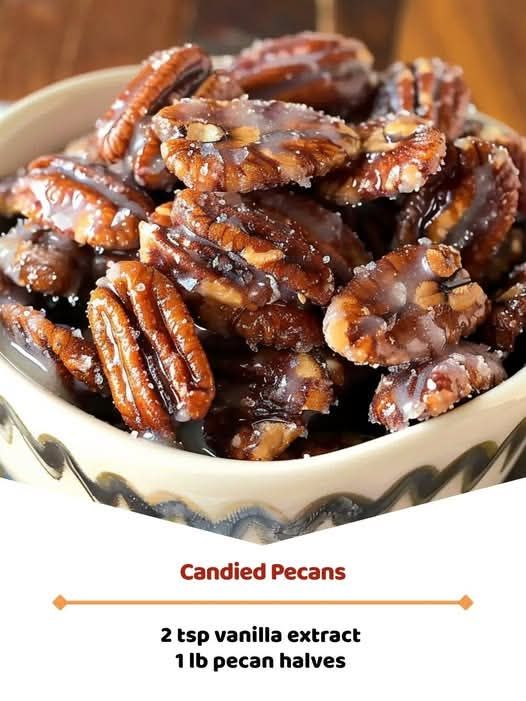
Next, dump in all those beautiful pecans. Stir, stir, stir until every single pecan is lovingly coated in that glossy, fragrant syrup. It will look like there’s too much syrup at first, but keep folding. The pecans will drink it up as they toast. Now, spread them out in a single layer on your parchment-lined baking sheet. This is critical. If you pile them on top of each other, you’ll get a big, sticky clump instead of individual candied gems. I’ve made that messy mistake so you don’t have to.
Finally, slide them into a preheated 250°F (120°C) oven. Yes, low and slow! We’re not baking them; we’re drying and toasting them gently. Set your timer for 45 minutes, but you’ll need to stir them every 15 minutes. This ensures even cooking and prevents the edges from burning. When you pull them out, they’ll still look a bit soft. This is normal! Let them cool completely on the sheet. As they cool, that coating transforms into a delicate, crystalline, perfectly crunchy shell. The waiting is torture, but it’s a necessary step.
Pro Tips for Best Results
I’ve tested this recipe three different ways: with mixed nuts, with different sugars, and at different oven temps. For truly exceptional candied pecans, stick with the halves. Pieces can burn more easily. That low oven temp is my biggest secret. I tried rushing it at 350°F once, and the sugar coating burned bitter before the pecans were properly toasted. The low heat coaxes out the pecan’s natural oils and toasts them evenly from the inside out.
My second pro tip is all about the stir. When you’re doing those 15-minute stirs in the oven, be thorough. Get right to the edges of the pan, where the syrup likes to pool and caramelize faster. I use a small spatula to flip sections. This also breaks up any clumps that are starting to form. If you see a big cluster, gently separate it while it’s still warm and pliable. Once it cools, it’s cemented together.
Finally, don’t skip the cooling time on the baking sheet. I know it’s tempting to try one immediately (I burn my tongue almost every time because I can’t resist). But that undisturbed cooling period is when the sugar hardens into that signature snap. If you transfer them while warm, they’ll bend and lose that perfect brittle texture. I put the sheet on a cooling rack and walk away for a full hour. It’s worth the wait.
Common Mistakes to Avoid
My biggest first-time blunder was not using parchment paper. I thought a well-greased pan would be fine. I was wrong. I spent what felt like forever trying to pry apart a single sheet of pecan brittle. Some pecans shattered, others were left behind. It was a sad, sticky mess. Parchment paper or a silicone mat guarantees a perfect, easy release every single time. Do not skip this step.
Another common pitfall is rushing the syrup stage. If you don’t let it boil for that full minute, the syrup will be too thin and won’t coat the pecans properly. You’ll end up with a soggy result. Conversely, if you let it boil too long, it becomes hard candy before it even touches the nuts. I’ve done both. Use a timer for that one-minute boil, and take the pan off the heat the second it goes off. Precision here makes all the difference.
Serving Suggestions
I love serving these pecans straight out of a big, beautiful bowl as the perfect party snack. But they’re so much more than that. My favorite way to use them is tossed into a salad with mixed greens, crumbled blue cheese or goat cheese, sliced apples or pears, and a simple vinaigrette. The sweet, salty crunch against the creamy cheese and crisp fruit is absolutely divine. It turns a simple salad into something special.
They also make the most thoughtful homemade gift. I pack them into cute mason jars, tie them with a ribbon, and give them to neighbors, teachers, and friends. Everyone raves about them, and they keep so well. I also keep a jar by my desk for an afternoon pick-me-up, and I love crumbling them over vanilla ice cream or yogurt for an instant dessert upgrade. They add a fancy touch with zero effort.
(See the next page below to continue…)