Your most important tool here is a good, heavy-bottomed skillet or Dutch oven that’s large enough to hold everything. I use my enameled cast iron Dutch oven because it distributes heat evenly and goes straight from the stovetop to the table for serving. A lid is absolutely crucial for the simmering step to cook the pasta properly. If your skillet doesn’t have a lid, foil pressed tightly over the top will work in a pinch. I’ve tried making this in a regular non-stick skillet that was too shallow, and it was a messy, splattery struggle—go big!
Step-by-Step Instructions
First, I heat the olive oil over medium-high heat in my big Dutch oven and add the diced onion. I let it cook until it’s soft and translucent, about 5 minutes, stirring often because nobody wants burnt onion bits. Then, I add all of the ground beef and the minced garlic, breaking the meat up with my wooden spoon. Here’s a key moment: I cook it until it’s well-browned, not just gray. That fond (the tasty browned bits) on the bottom of the pot is pure flavor gold. Once the beef is browned, I drain any excess grease—this step is important, or your final dish can be a bit oily.
Next, I stir in the entire packet of taco seasoning, letting it toast for just 30 seconds until it’s fragrant. Immediately, I pour in the undrained can of diced tomatoes with green chiles and the tomato sauce, scraping up all those delicious browned bits from the bottom. Then, I add the dry pasta shells and the beef broth, giving everything a good stir to make sure the pasta is mostly submerged. I bring it to a lively boil, then immediately reduce the heat to low, cover it tightly with the lid, and let it simmer for 12-14 minutes. I resist the urge to peek too often! This steam is what cooks the pasta.
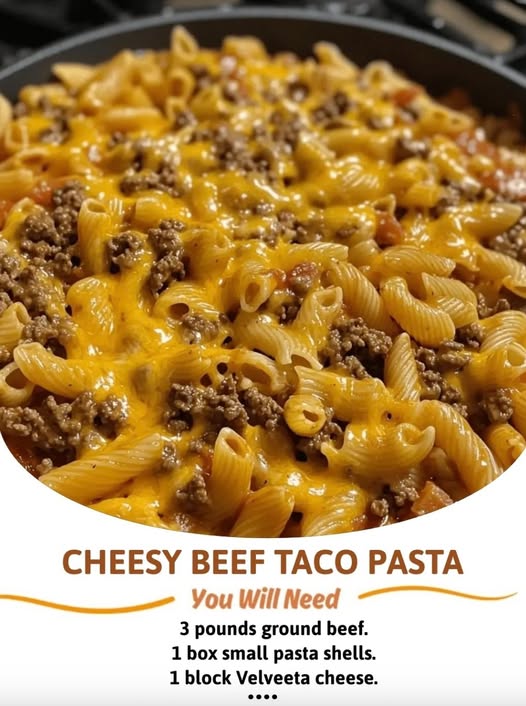
When the pasta is just al dente, I uncover the pot and reduce the heat to the lowest setting. Now for the magic: I scatter all the cubed Velveeta over the top. I don’t stir it in right away. I let it sit for a minute to start melting, then I gently fold it in. Watching that orange block transform into the creamiest, most cohesive cheese sauce never gets old. I keep folding until every shell is coated in that glorious, velvety cheese. At this point, I take it off the heat and let it sit for 5 minutes—it will thicken up perfectly.
Pro Tips for Best Results
I tested the broth amount three times to get it right. The first time, I used only 3 cups and my pasta was undercooked and sticky. Four cups is the sweet spot, but remember, all pasta brands absorb liquid slightly differently. Start checking your pasta at the 12-minute mark. You want it just al dente, as it will continue to soften in the residual heat with the cheese. If there’s a little excess liquid left when the pasta is done, that’s actually perfect—the Velveeta will absorb it and create the sauce.
The order of adding the cheese is critical. Take the pot off the heat before you add the Velveeta. If the mixture is at a rolling boil, the cheese can “break” and become grainy instead of smooth. Letting it melt slowly and folding it in gently guarantees that signature silky texture. I’ve made the mistake of dumping it in while still boiling, and while it tasted fine, the mouthfeel wasn’t the same luxurious experience.
(See the next page below to continue…)