Step-by-Step Instructions
First, I get my pasta water boiling in the large pot, heavily salted. While that heats, I start the bacon in my cold skillet—this renders the fat slowly for perfectly crispy bits. Once the bacon is done, I remove it with a slotted spoon and leave about a tablespoon of that glorious bacon fat in the pan. This is my secret flavor weapon. I add the cubed chicken to that same fat, seasoning it well with salt and pepper. The smell as it sears is unbelievable. I cook it until just done, then set it aside with the bacon. Don’t overcook the chicken here; it will finish warming in the sauce later.
Now, for the heart of the dish: the Alfredo sauce. In that same skillet (see all that flavor left behind?), I melt the butter with a splash of olive oil over medium-low heat. I add the minced garlic and cook for just 60 seconds until fragrant—do not let it brown or it will turn bitter. This is where I learned my timing mistake! Then, I pour in the heavy cream and Italian seasoning, letting it simmer gently for about 5 minutes until it slightly reduces. It should coat the back of a spoon.
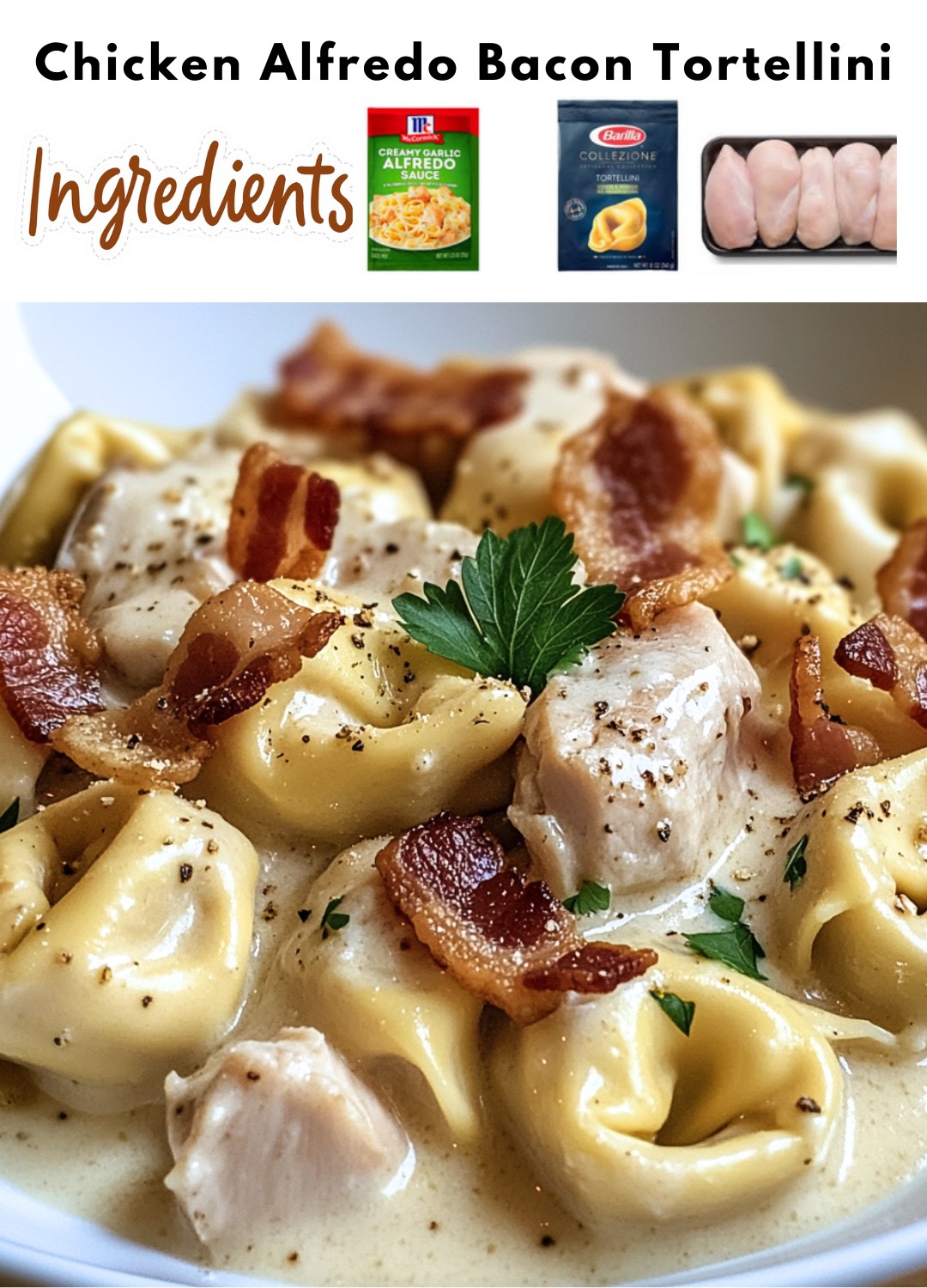
Finally, I turn the heat to low and slowly whisk in the grated Parmesan until it’s melted and the sauce is smooth. By now, my tortellini is cooked (according to the fresh package directions, usually just 2-3 minutes!). I drain it and add it directly to the creamy sauce, along with the reserved chicken and bacon. I gently toss everything together for a minute or two until it’s beautifully coated and heated through. The sauce will cling to every nook of the tortellini.
Pro Tips for Best Results
I tested the sauce thickness three different ways, and here’s what I learned: if you want a restaurant-quality, velvety sauce that clings to the pasta, let the cream simmer for the full 5 minutes before adding the cheese. Rushing this step gives you a thinner, runnier sauce. Also, always take the skillet off the direct heat when adding the Parmesan. Adding cheese over too high of heat can cause it to seize up and become oily. Low and slow is the key to creamy perfection.
My biggest “aha!” moment was using the pasta water. Before draining my tortellini, I always scoop out about a half cup of the starchy water. After I’ve combined everything, if the sauce seems a tad too thick (it happens!), I add a splash of this reserved water. The starch helps loosen the sauce while keeping it creamy and helping it adhere to the pasta. It’s a simple trick that makes a professional difference.
Don’t skip the garnish! I know it’s easy to just serve it straight from the pan, but taking 30 seconds to sprinkle on some fresh chopped parsley does two things: it adds a pop of color that makes the dish look incredible, and more importantly, that little bit of fresh herbal brightness cuts through the richness beautifully. It balances the whole plate.
Common Mistakes to Avoid
The first time I made this, I made a classic mistake: I added the garlic to the pan when it was too hot, and it burned in seconds. Burnt garlic makes the whole sauce taste bitter. Now I’m religious about turning the heat down to medium-low before the butter even melts. Cook the garlic just until you can smell it—that’s your cue to add the cream. It seems like a small step, but it protects the delicate flavor.
Another pitfall is overcooking the tortellini. Fresh tortellini cooks incredibly fast, and it will continue to soften slightly when you toss it in the warm sauce. I cook it until it’s just al dente, or even a minute under the package directions. If you boil it to mush, you’ll end up with a pot of broken, bloated pasta. Set a timer! And remember, you’re not making a roux-based sauce, so there’s no need to constantly whisk the cream mixture violently. A gentle simmer with occasional stirring is all it needs.
(See the next page below to continue…)