Pro Tips for Best Results
Get your wok screaming hot before you add anything. This is the secret to “wok hei,” that slightly smoky, charred flavor you get from good takeout. If your pan isn’t hot enough, you’ll end up steaming the ingredients in their own liquid, leading to soggy veggies and pale chicken. I tested this on medium-high versus high heat, and the high-heat version wins every time for texture and flavor.
Undercook your noodles by about a minute. I made the mistake of boiling my noodles to full tenderness the first time, and by the time I tossed them in the sauce, they turned mushy. Draining them when they’re still just a little firm in the center ensures they stay perfectly chewy after soaking up that glorious sauce in the wok.
Don’t skip the toasting step for the aromatics. When you add the garlic and ginger to the hot oil, let them sizzle and bloom for that full 30 seconds. It transforms their flavor from sharp and raw to deeply fragrant and sweet, which forms the flavor foundation of the whole dish. I’ve tried rushing this step, and the final flavor was noticeably flatter.
Common Mistakes to Avoid
The biggest mistake I made early on was dumping all my ingredients in at once. It creates a temperature crash, and everything stews instead of fries. You must cook in stages: protein first, remove; aromatics and hard veggies next; then noodles and sauce. It feels like more steps, but it’s the difference between a soggy, steamed mess and a vibrant, textured stir-fry. Don’t do what I did—be patient with the process.
Another pitfall is using cold, straight-from-the-fridge noodles. After draining, give them a good shake in the colander and spread them out a bit. If they’re still clumpy and cold when they hit the hot wok, they’ll cool everything down and won’t absorb the sauce properly. I like to time it so they’ve just been drained and are still warm when it’s time to add them.
Serving Suggestions
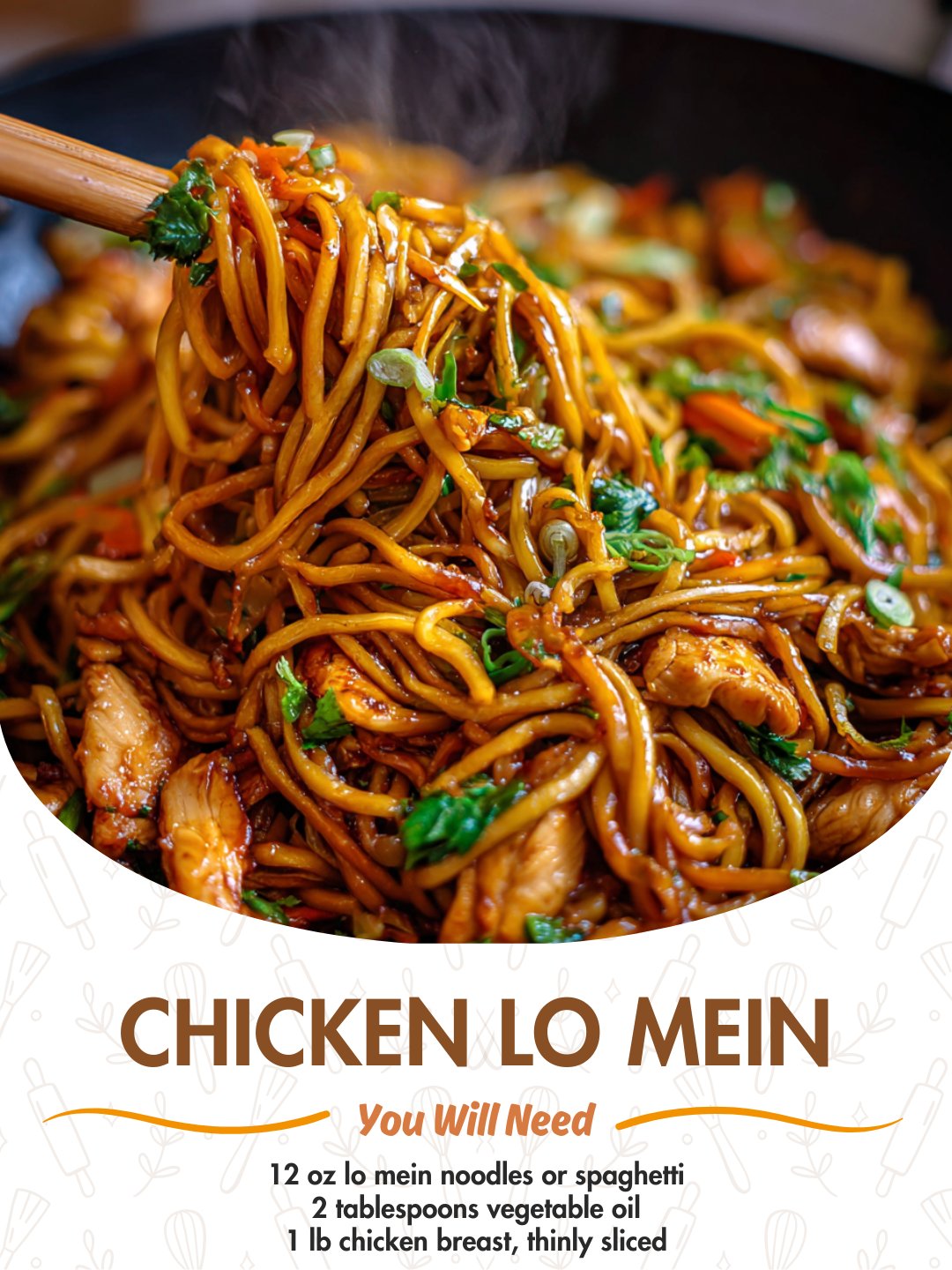
I love serving this Chicken Lo Mein right out of the wok, family-style, in a big bowl. The steam rising off it is part of the experience! For a simple, complete meal, I often pair it with a light, crisp cucumber salad dressed with rice vinegar and a pinch of sugar to cut through the richness. It’s the perfect refreshing contrast.
If I’m feeling fancy or having friends over, I’ll add some classic takeout sides. Steamed or fried dumplings are always a hit, and a simple egg drop soup makes the meal feel extra special. I usually put out some extra chili oil or sriracha, and maybe a small dish of soy sauce, for those who like to customize their bowl even further.
For a drink pairing, I find a light, cold lager or a crisp, unoaked white wine like a Pinot Grigio works wonderfully. But honestly, my favorite way to enjoy it is with a big glass of ice water—it’s that satisfying on its own, and you’ll want to save every bit of stomach space for the noodles.
Variations & Customizations
This recipe is a fantastic canvas. For a shrimp lo mein, I swap the chicken for a pound of large shrimp, peeled and deveined. I cook them even faster—just until pink and curled—and set them aside before adding them back at the very end to avoid rubbery shrimp. For a vegetarian version, I double up on the veggies, adding broccoli and mushrooms, and use a vegetarian oyster sauce or more hoisin. Tofu is great too; just press and cube firm tofu and pan-fry it until crispy.
I’ve also played with the sauce based on my mood. Sometimes I add a tablespoon of smooth peanut butter for a satay-like twist, or a big spoonful of chili-garlic paste for heat. If I want it sweeter, a dash more hoisin does the trick; for a tangier note, a splash of rice vinegar right at the end is lovely. Don’t be afraid to make it your own.
One of my favorite variations is using leftover roasted chicken or even a store-bought rotisserie chicken. I simply shred the cooked meat and add it at the very end just to warm through. It’s the ultimate quick-fix meal that feels homemade. The beauty of this dish is its adaptability—it never has to be the same twice.
How to Store, Freeze & Reheat
Leftovers store beautifully for 3-4 days in a sealed container in the fridge. The noodles will absorb more sauce, so they might seem a little drier. My best reheating trick is to add a splash of water or broth to a non-stick skillet over medium heat, add the lo mein, and cover it for a minute or two. The steam will revive the noodles perfectly. I avoid the microwave, as it tends to make the noodles gummy and overheats the chicken.
You can freeze Chicken Lo Mein, though the texture of the noodles and veggies will soften a bit upon thawing. I spread cooled portions in a single layer on a baking sheet to flash-freeze, then transfer to freezer bags. To reheat from frozen, I do the same skillet method with a lid, adding a bit more liquid and cooking on low until heated through. It’s not quite as perfect as fresh, but it’s a fantastic freezer meal for a busy night.
Conclusion
This Chicken Lo Mein recipe is more than just a meal to me; it’s a little kitchen victory every single time I make it. It’s proof that with a bit of prep and a hot pan, you can create something truly magical that rivals your favorite restaurant. I hope it brings as much joy, flavor, and easy satisfaction to your table as it has to mine. Now, go heat up that wok—your new favorite dinner is waiting.