Pro Tips for Best Results
I tested the roux step three different ways, and here’s what I learned: taking the full two minutes to cook the flour with the butter and veggies is non-negotiable. It gets rid of that chalky flavor and gives the sauce a beautiful, nutty depth. If you skip this, your sauce will taste flat. Also, when you add the liquids, go slow with the broth at first, whisking like your dinner depends on it. This guarantees a perfectly smooth, lump-free sauce every single time.
For the chicken, a store-bought rotisserie chicken is truly the best shortcut. I’ve poached my own breasts, and while it’s good, the rotisserie meat has more flavor and saves you so much time. Just be sure to shred or chop it into bite-sized pieces. Another pro move: undercook your pasta by about a minute. It will finish cooking in the sauce, absorbing all that flavor without becoming mushy.
The finishing touch is all about balance. After you’ve combined everything, let the pasta and sauce mingle in the warm skillet off the heat for 2-3 minutes. This allows the pasta to fully embrace the sauce. Always, always reserve that starchy pasta water. I’ve forgotten before and regretted it when my sauce tightened up too much. A few tablespoons brought it right back to saucy perfection.
Common Mistakes to Avoid
The first time I made this, I was impatient and added all the liquid at once to the roux. Big mistake. I ended up with a lumpy sauce that took forever to fix with an immersion blender. Don’t do what I did! Add the broth slowly, in a steady stream, while whisking constantly. It takes an extra minute but ensures velvety smoothness from the start.
Another common pitfall is overcooking the vegetables. You want them softened, but not mushy, as they’ll cook a bit more in the sauce. If you let them get too soft in the initial sauté, they’ll almost dissolve later. Aim for a tender-crisp texture at the start. Also, remember to season in layers—salt the veggie sauté, then season the sauce well before adding the pasta. Underseasoned sauce means an underseasoned final dish.
Serving Suggestions
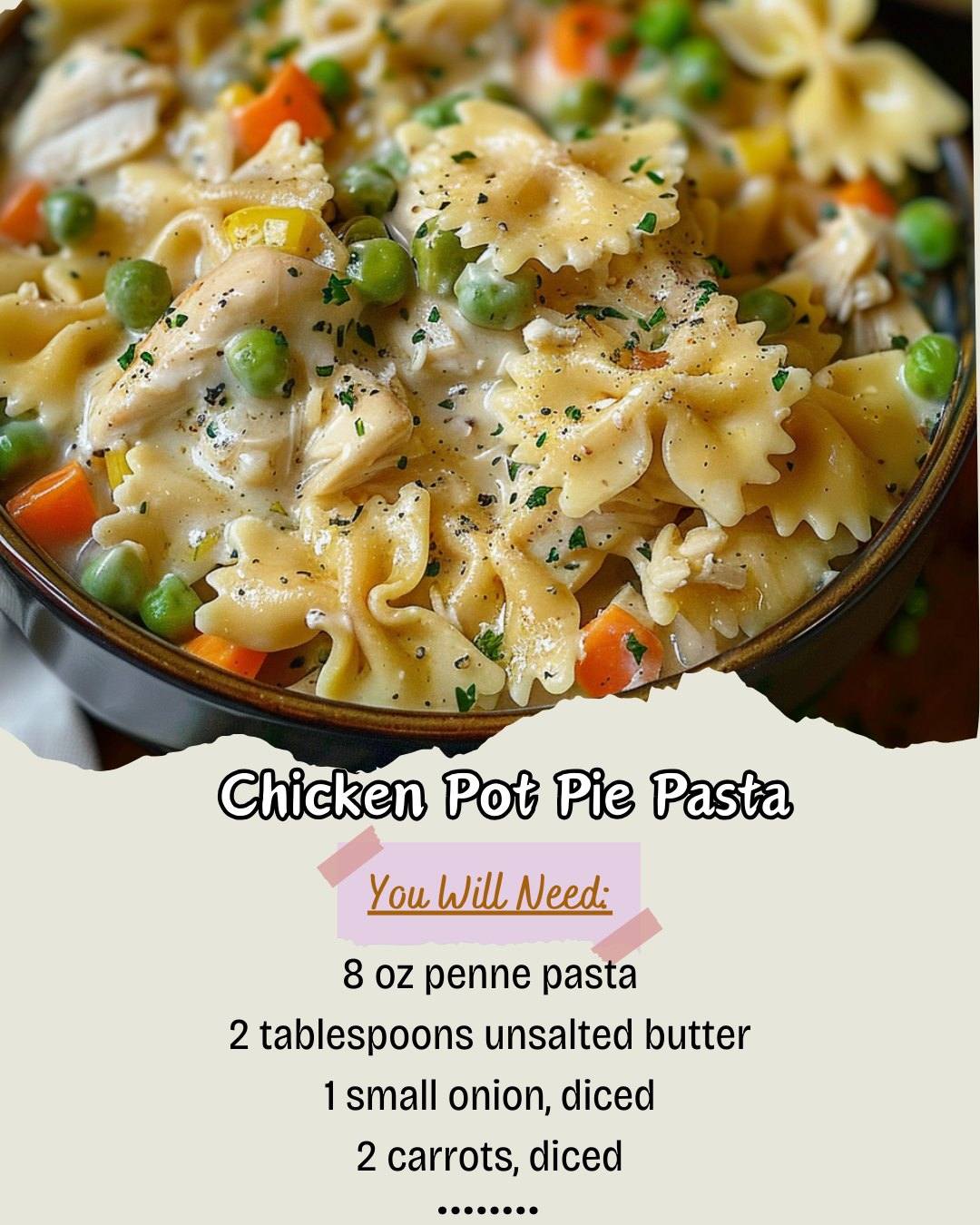
I love serving this pasta steaming hot, right from the skillet into shallow bowls. The presentation is so inviting with all the colorful veggies and flecks of parsley. For a true “pot pie” experience, I sometimes will grab a tube of refrigerated biscuits, bake a few separately, and serve one right on top of the bowl. Tearing into that flaky biscuit and dipping it into the creamy pasta is pure joy.
This is a hearty meal on its own, but I often pair it with a simple, crisp side to cut through the richness. A straightforward green salad with a sharp vinaigrette is my go-to. The acidity and freshness are the perfect counterpoint to the creamy, savory pasta. It makes the whole meal feel balanced and complete.
For a cozy night in, I keep the drinks simple. A chilled glass of unoaked Chardonnay or even a crisp hard cider works wonderfully. For the family, sparkling water with lemon does the trick. Honestly, this dish creates such a comforting atmosphere that what you serve it with almost becomes secondary—the pasta is the undeniable star.
Variations & Customizations
This recipe is wonderfully adaptable. Not a fan of peas? Try chopped fresh spinach stirred in at the very end until just wilted, or swap in some blanched green beans. For a richer, deeper flavor, I’ve added about 1/3 cup of dry white wine to the pan after cooking the veggies, letting it reduce by half before adding the flour. It adds a lovely complexity.
You can easily make this vegetarian by using vegetable broth and omitting the chicken. In its place, I’ve added sautéed mushrooms and a can of drained, rinsed white beans for protein. It’s just as satisfying. For a herb-forward version, use fresh herbs like tarragon or sage along with the thyme—it tastes incredibly fresh and sophisticated.
If you want to play with the pasta shapes, go for it! I’ve made this with fusilli, rigatoni, and even medium shells. Anything with nooks to hold the creamy sauce works beautifully. For a decadent twist, stir in a handful of grated Parmesan cheese at the very end with the pasta. It melts into the sauce, adding a salty, umami kick that’s absolutely divine.
How to Store, Freeze & Reheat
Leftovers store beautifully! Let the pasta cool completely, then transfer it to an airtight container. It will keep in the refrigerator for 3-4 days. When reheating, I do it gently on the stovetop over low heat, adding a splash of broth, milk, or water to loosen the sauce back up. The microwave works in a pinch, but stir it every 30 seconds and add liquid to prevent it from drying out.
You can freeze this dish for up to 3 months. I portion it into freezer-safe containers, leaving a little space for expansion. Thaw it overnight in the fridge before reheating. A note from experience: the texture of the pasta will be a bit softer after freezing and reheating, but the flavor will still be fantastic. If you know you want to freeze it, you might slightly undercook the pasta initially.
Conclusion
This Chicken Pot Pie Pasta has become more than just a recipe in my home; it’s a feeling of comfort, a solution to a busy day, and a guaranteed crowd-pleaser. I hope it brings as much warmth and joy to your table as it has to mine. Give it a try, make it your own, and get ready for the compliments. Happy cooking, friends