Pro Tips for Best Results
My number one tip is all about the press. When you’re forming the base layer in the pan, don’t just pat it down. Use serious, firm pressure with the flat bottom of a cup or even a small glass. I’ve made these bars side-by-side, pressing one firmly and one gently. The firmly pressed batch held together in perfect, neat squares, while the other wanted to crumble at the edges. That compact layer is your best friend.
I tested the chilling process three different ways: fridge-only, freezer-only, and a combo. The winner? The room-then-fridge method I described. Letting the chocolate topping set just enough at room temperature first prevents condensation from forming when you transfer it to the fridge, which can make the top of your chocolate layer slightly tacky. The slow, steady chill also seems to prevent the layers from separating or cracking when you cut them.
For the cleanest cuts, use a large, sharp chef’s knife. I run it under very hot water, wipe it completely dry, and make my slice in one confident, straight-down motion. I wipe the blade clean and reheat it between every cut. It feels a bit fussy, but I promise you, it gives you those gorgeous, professional-looking bars with sharp edges and no smeared chocolate. It makes all the difference in presentation.
Common Mistakes to Avoid
The first time I made these, I was in a hurry and tried to speed up the base-setting by popping the pan straight into the freezer after adding the warm chocolate topping. Big mistake. The extreme temperature difference caused the top to set too quickly and contract, creating a weird, cracked surface and causing the soft peanut butter layer underneath to pull away slightly at the edges. It tasted fine, but it looked disastrous. Letting it start at room temperature is a non-negotiable step for visual perfection.
Another classic error is undermixing the base. When you combine the peanut butter mixture with the crumbs, it will look hopelessly dry for a bit. My instinct was to add more butter, but I resisted and just kept folding. Sure enough, after a solid minute of mixing, the oils distributed and it became a perfect, moldable dough. If you add more liquid, you’ll end up with a greasy, too-soft base that won’t set properly. Trust the process and your mixing arm.
Serving Suggestions
I like serving these bars straight from the fridge, where they have a wonderful, firm yet creamy bite. On a plate, they’re stunningly simple, but I sometimes dress them up for guests with just the tiniest sprinkle of flaky sea salt on top right after I pour the chocolate, or a dusting of crushed, salted peanuts for extra crunch and visual appeal. It takes two seconds but elevates them beautifully.
For a full dessert experience, I’ll plate a bar alongside a small scoop of vanilla bean ice cream. The cold, creamy vanilla is the perfect contrast to the rich, dense peanut butter and chocolate. The slight melt from the ice cream onto the bar as you eat is pure magic. It turns a simple treat into a proper, composed dessert that feels incredibly special.
On a more casual day, I simply cut them into smaller, bite-sized pieces and pile them onto a platter. They are the ultimate potluck or party treat—no utensils needed, utterly transportable, and universally adored. I always make a double batch when I bring them anywhere, because I’ve learned they disappear within minutes. They’re that kind of crowd-pleaser.
Variations & Customizations
One of my favorite twists is to stir 1/2 cup of crispy rice cereal into the peanut butter base along with the graham crumbs. It adds this fantastic, subtle crunch that plays so well against the creamy layers. My nephew calls them “peanut butter crisp bars” and requests this version every time. You could also swap out half the graham crumbs for crushed pretzels for a glorious sweet-and-salty situation.
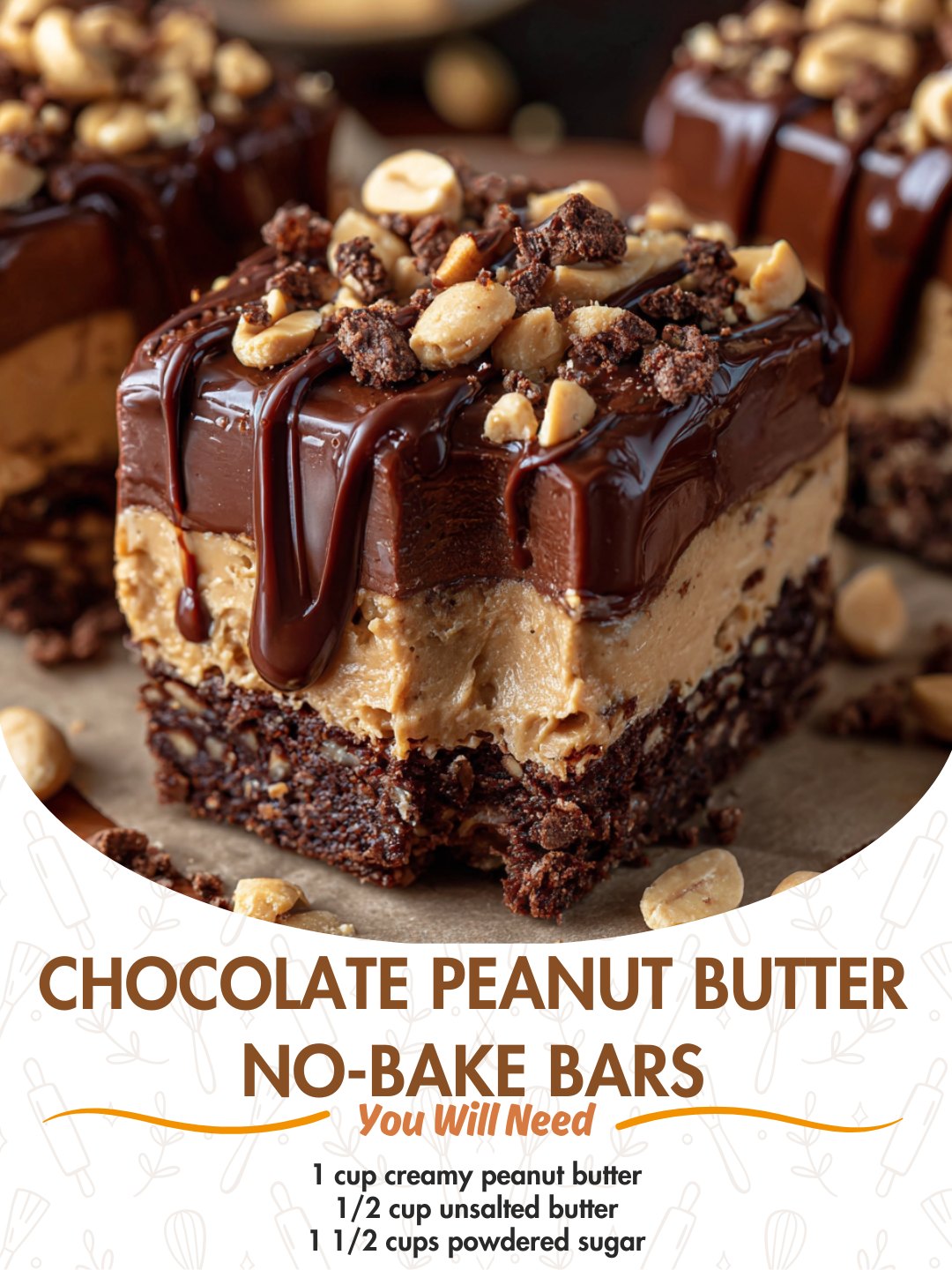
For the chocolate lovers, the topping is your playground. I’ve made these with dark chocolate chips for a more intense, grown-up flavor, and it was fantastic. You can also stir a tablespoon of smooth peanut butter into the warm ganache for an even more intense peanut butter chocolate vibe. Once, when I was out of heavy cream, I successfully used full-fat coconut milk for the ganache, which added a very subtle, lovely tropical note that paired surprisingly well.
If you’re feeling festive, the topping is a perfect canvas for decorations. Before the chocolate sets, you can press in mini peanut butter cups, Reese’s pieces, or even a drizzle of melted white chocolate. Around the holidays, I’ll add a sprinkle of festive sprinkles. The base recipe is so forgiving and acts as the perfect stage for your own creative flair.
How to Store, Freeze & Reheat
I store these bars tightly covered in the refrigerator. They keep their perfect texture and flavor for up to a week this way. I’ve tried leaving them at room temperature in an airtight container, and while they’re okay for a day, they become too soft and messy to handle. The fridge is definitely their happy place. I always slice them completely before storing, separating layers with parchment paper so they don’t stick together.
These bars freeze magnificently for up to three months. After slicing, I place them in a single layer on a parchment-lined baking sheet to flash-freeze for about an hour. Then, I transfer the frozen bars to a heavy-duty freezer bag or airtight container. This prevents them from freezing into one solid block. To thaw, I just move the number I want to the fridge for a few hours or let them sit at room temperature for about 30 minutes. They retain their texture perfectly—no reheating needed.
Conclusion
Every time I make a batch of these Chocolate Peanut Butter No-Bake Bars, I’m reminded that the best recipes are often the simplest. They require no special skills, just a little patience for the chilling time, and they reward you with a treat that feels both nostalgic and deeply satisfying. I hope this recipe finds its way into your kitchen on a lazy Sunday or a hectic weeknight, filling your space with that unforgettable peanut butter scent and giving you a moment of pure, uncomplicated joy. Happy no-baking