Equipment Needed
- Stand mixer or hand mixer (a stand mixer is a lifesaver here)
- Clean, completely grease-free glass or metal mixing bowl
- Rubber spatula
- Baking sheet
- Parchment paper
- Pencil (for tracing, if you want a perfect circle)
- Sieve or fine-mesh strainer (for dusting)
Step-by-Step Instructions
First, I line my baking sheet with parchment. I sometimes trace a 9-inch circle on the underside as a guide, but I’ve also learned to embrace a more free-form, rustic shape—it’s charming! I preheat my oven to 300°F (150°C), but here’s a crucial tip: as soon as the meringue goes in, I immediately reduce the temperature to 250°F (120°C). This initial blast helps form a crust. In my spotlessly clean bowl, I start beating the room-temp egg whites with the pinch of salt on medium speed until soft peaks form. The air being incorporated sounds like a soft, rhythmic whisper.
Now, with the mixer running, I begin adding the superfine sugar, just one tablespoon at a time, letting each incorporate fully before adding the next. This patience is key to a glossy, stiff meringue. I’ll beat for a good 5-7 minutes until the meringue is thick, glossy, and holds very stiff peaks. When I lift the whisk, the peak should stand straight up without flopping over. This is when I add the vanilla, vinegar, and sifted cornstarch, folding them in gently with my spatula until just combined. I can feel the meringue transform, becoming a bit more marshmallowy.
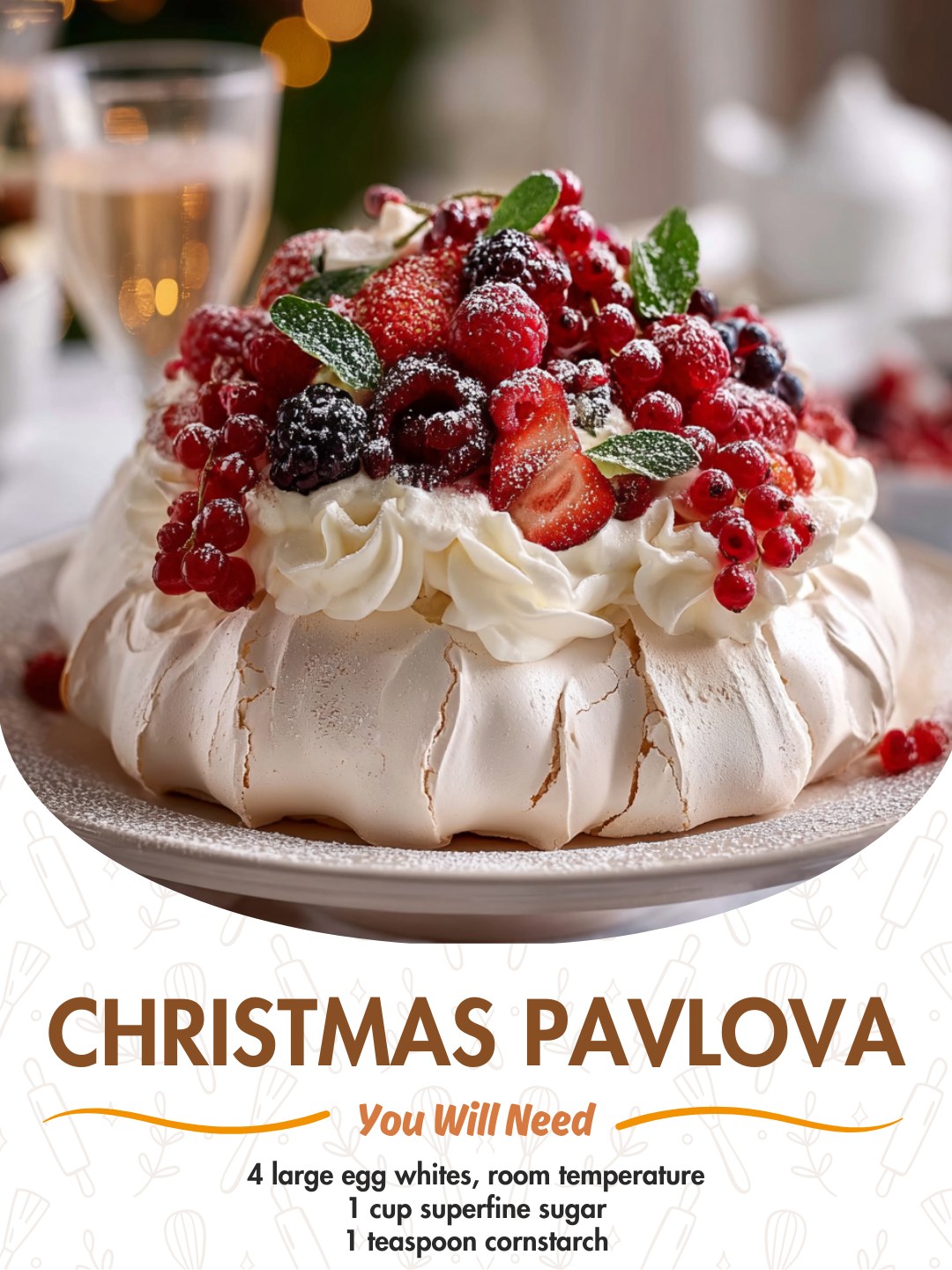
I pile the meringue onto my prepared parchment, using the spatula to shape it into a round with slightly higher edges to form a nest for the cream later. I love making little decorative peaks and swirls with the spatula—they crisp up beautifully. Then, it goes into the preheated oven. The moment I close the door, I turn the heat down to 250°F. And then, I do the hardest part: I walk away. I don’t peek for at least 90 minutes. An early draft can cause catastrophic cracking from a sudden temperature drop.
After about 90 minutes, I check. The Pavlova should be crisp to the touch and easily lift off the parchment. I then turn the oven off completely, but I leave the Pavlova inside with the door slightly ajar to cool down incredibly slowly—overnight is ideal. This gradual cooldown prevents sinking and major cracking. The first time I made this, I took it out right away, and it let out a sad sigh and cracked deeply. Learning to let it rest in the turned-off oven was a game-changer.(See the next page below to continue…)