Pro Tips for Best Results
The single most important tip I can give you is about your tools. Ensure your bowl and whisk are impeccably clean and completely free of any grease. Even a tiny speck of egg yolk or oil can sabotage your meringue. I wipe my bowl down with a little lemon juice or white vinegar on a paper towel right before I start, just to be sure. It feels like overkill, but it guarantees success.
Weather matters more than you’d think. I’ve made this on humid, rainy days, and the meringue can become sticky and soft. If it’s humid, I’ll let the baked meringue cool in the oven with the door completely shut, and I assemble it just before serving. On a dry day, it stays perfectly crisp for hours after assembly. It’s a forgiving dessert, but it does have its atmospheric preferences.
Don’t be afraid of cracks! They are part of the Pavlova’s charm. A few fine, hairline cracks are normal and even desirable—they add texture. The goal is to avoid a major fissure that splits it in half, which is why the slow cooling is so vital. I’ve had some look wildly cracked, but once smothered in cream and fruit, they were stunning. It’s a lesson in embracing beautiful imperfections.
Common Mistakes to Avoid
The first time I made a Pavlova, I was impatient with adding the sugar. I dumped it all in at once, and my meringue never achieved that glorious, glossy stiffness. It was grainy and deflated in the oven. Don’t do what I did! Adding the sugar slowly, one spoonful at a time, allows it to dissolve properly into the egg whites, creating a stable foam that can withstand the long bake.
Another classic mistake is skipping the slow cool-down. I made this error, too, pulling my beautiful, crisp Pavlova out of the oven and placing it on the counter. Within minutes, I heard a series of sharp cracks as it rapidly contracted in the cooler air, leading to a sunken middle. It was still tasty, but it lost its lofty height. Letting it cool in the turned-off oven is not a suggestion—it’s the rule for a perfect, tall Pavlova.
Serving Suggestions
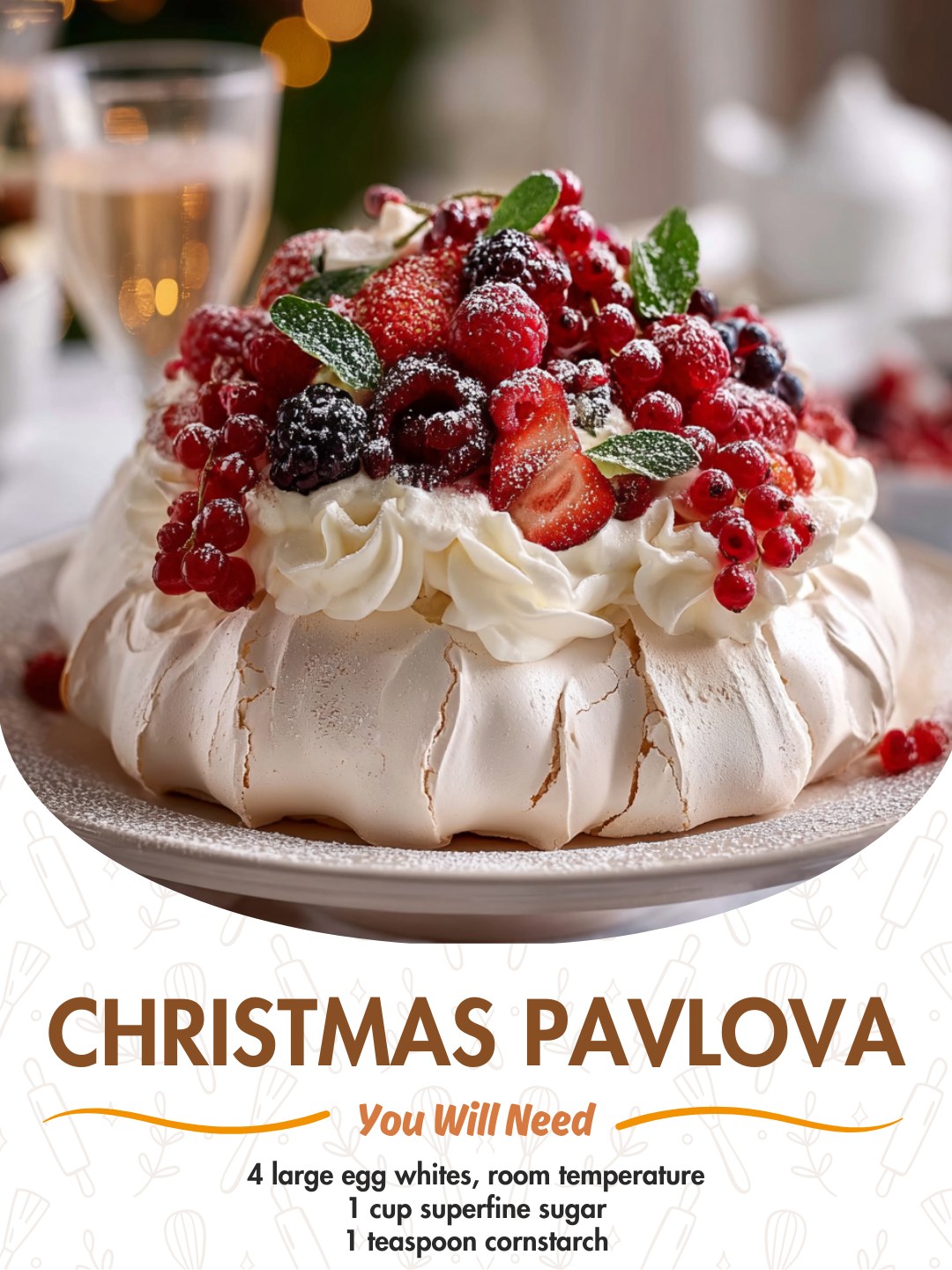
I like serving my Pavlova on a large, festive platter or cake stand. I whip the cold cream with the powdered sugar and vanilla until just holding medium peaks—you want it luscious and soft, not buttery. I pile it into the center of the cooled meringue nest just before serving. The contrast of the cold cream on the crisp meringue is sublime.
For the fruit, I go for a Christmas color palette. A drizzle of vibrant passionfruit pulp over the cream, followed by a tumble of ruby-red pomegranate arils, slices of green kiwi, and a scattering of raspberries creates a stunning wreath-like effect. The tartness of the fruit cuts perfectly through the sweetness of the meringue and the richness of the cream.
When you slice into it, use a sharp knife in a gentle sawing motion. I present it at the table whole, then slice generous wedges. Be prepared for oohs and aahs as people discover the soft interior. It’s a moment of pure holiday magic that always feels worth the wait.
Variations & Customizations
One of my favorite variations is a chocolate ripple Pavlova. I fold 2 tablespoons of sifted cocoa powder and a handful of dark chocolate chips into half of the meringue, then gently marble it with the plain meringue before baking. I top it with whipped cream and fresh cherries or orange segments. The chocolate adds a deep, rich note that’s incredible.
For a summer twist, I’ve made a berry lemon version. I’ll add the zest of one lemon to the meringue and top the cream with a mix of macerated strawberries, blueberries, and blackberries. The lemon zest in the meringue adds a beautiful, fragrant zing that pairs wonderfully with berries. It’s a lovely way to adapt this classic for a different season.
If you’re not a fruit fan, you can go decadent. I’ve topped it with a drizzle of salted caramel sauce and crushed toasted pecans, or a layer of lemon curd under the whipped cream. A friend of mine even does a mini Pavlova stack, making smaller individual meringues and layering them with cream and fruit for a deconstructed effect. The possibilities are endless.
How to Store, Freeze & Reheat
Once assembled, a Pavlova is best enjoyed within a few hours, as the moisture from the cream will eventually soften the crisp shell. If you have leftovers (a rare occurrence in my house!), you can cover them loosely with plastic wrap and store them in the fridge for up to a day. The meringue will soften into a delightful, cake-like texture, which is a different but still delicious experience.
The unbeaten meringue disc, however, is a fantastic make-ahead component. Once completely cooled in the oven, I store it in an airtight container at room temperature in a dry place for up to 3 days before assembling. Do not refrigerate the plain meringue, as it will absorb moisture. You cannot freeze the assembled dessert, but you can freeze the plain, baked meringue disc. Wrap it very well in several layers of plastic wrap and freeze for up to a month. Thaw it, still wrapped, at room temperature to prevent condensation from making it sticky.
Conclusion
This Christmas Pavlova is more than just a recipe to me; it’s a edible celebration of the season. It has taught me patience, the beauty of imperfection, and the sheer joy of creating something breathtakingly beautiful from simple ingredients. I hope it brings as much light, sweetness, and festive cheer to your table as it has to mine. Gather your loved ones, slice into this cloud of delight, and savor the moment. Happy baking, and Merry Christmas