Pro Tips for Best Results
My first test of this recipe, I used cold buttermilk and eggs straight from the fridge. The batter was thick, stubborn, and didn’t bake up nearly as evenly. I tested it three different ways, and bringing your dairy and eggs to room temperature is the single biggest tip I can give you. It creates a smoother, more emulsified batter that rises beautifully and bakes to an even golden brown. It takes a little forethought, but it’s a game-changer.
Here’s what I learned the hard way about measuring flour: scooping directly from the bag packs it in, leading to a dry, dense bread. Always, always spoon your flour into the measuring cup and level it off with a knife. That “spooned and leveled” note in the ingredients list isn’t just for show—it’s the secret to the perfect, tender texture. This one simple habit transformed my baking.
Don’t rush the cooling process. I know it’s agonizing to wait when your house smells so good, but if you slice this bread while it’s too warm, it can be gummy in the middle. Letting it cool on the rack allows the structure to set fully. I use the waiting time to clean up and brew a pot of coffee, so it’s ready to go with that first perfect slice.
Common Mistakes to Avoid
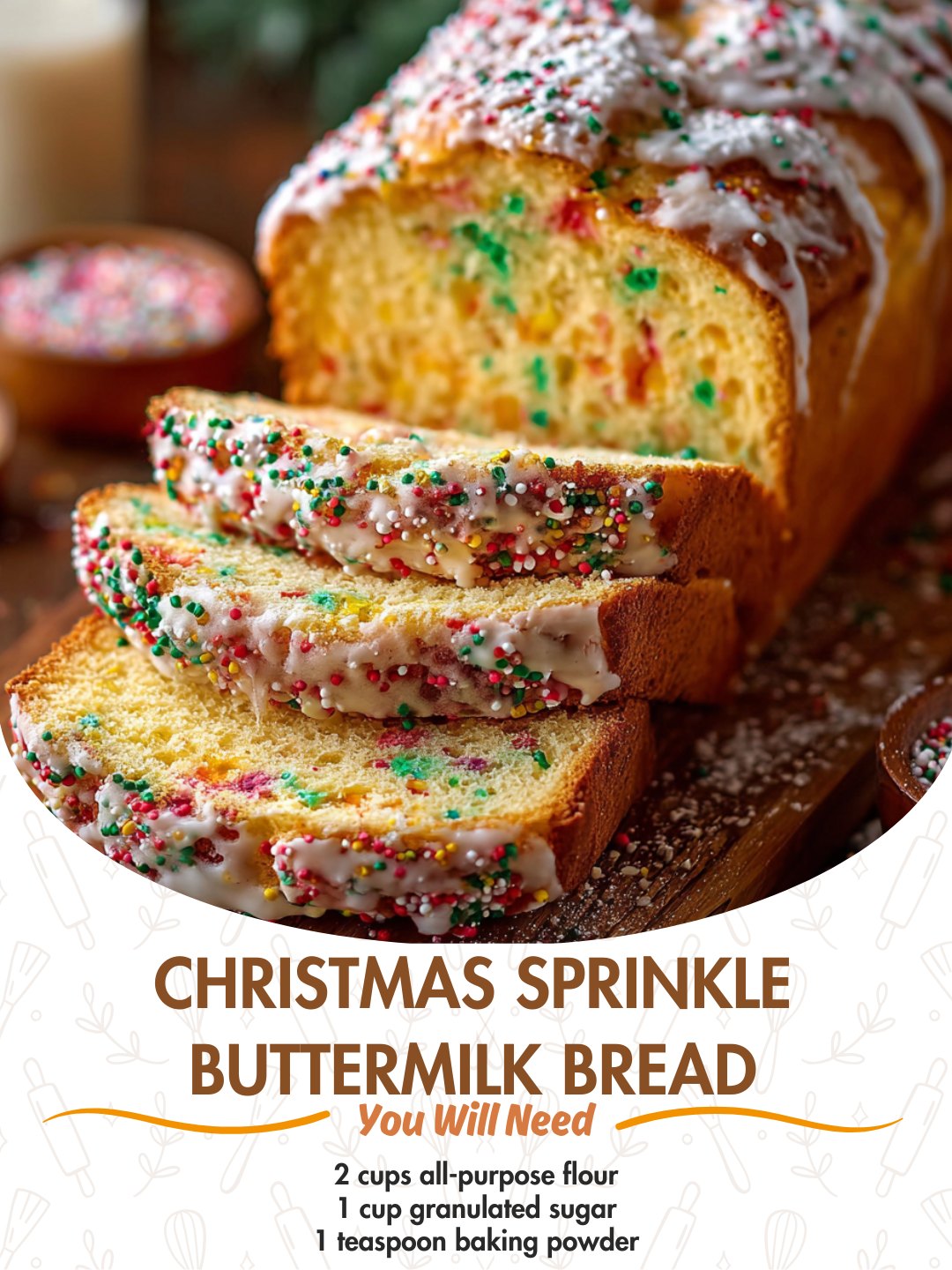
I made a crucial mistake the first time: I used the wrong sprinkles. In my haste, I grabbed a jar of the tiny round balls. They looked so pretty going in! But as the bread baked, all those colors melted and ran together, turning my festive loaf a sad, muddy gray-green. It tasted fine, but it looked… haunted. Don’t do what I did. Stick with the longer, waxier “jimmies.” They hold their shape and color through the baking process, giving you those perfect bursts of red and green.
Another easy pitfall is overmixing. This isn’t a yeast bread that needs kneading; it’s a quick bread that thrives on a gentle hand. Once you combine the wet and dry ingredients, fold just until you no longer see dry flour streaks. A few lumps are your friend. Overmixing develops the gluten in the flour, which leads to a tough, chewy texture instead of the soft, cake-like crumb we’re dreaming of. Mix with confidence but also with restraint.
Serving Suggestions
I like serving this bread slightly warm or at room temperature, simply sliced thick and placed on a festive platter. It’s magnificent all on its own with a cup of strong black coffee or a glass of cold milk. The simplicity really lets the vanilla and buttermilk flavors shine. For Christmas morning, I often leave it whole on a cutting board with a bread knife beside it—it becomes a beautiful, edible centerpiece that guests can help themselves to.
When I want to dress it up for a holiday party or dessert, I’ll whip up a simple vanilla glaze. I mix about a cup of powdered sugar with a tablespoon or two of milk and a splash of vanilla until it’s drizzle-able, then I zig-zag it over the top of the cooled loaf. It adds a little extra sweetness and makes it look truly bakery-worthy. Sometimes I’ll even add a few more sprinkles on top of the wet glaze for maximum festive effect.
For a truly decadent treat, I’ve been known to toast a slice lightly in a buttered skillet until the edges are just crisp and then add a dollop of vanilla bean ice cream on top. The contrast of the warm, soft bread and the cold, creamy ice cream is next-level. It turns this quick bread into a special holiday dessert that feels indulgent but is so easy to pull together.
Variations & Customizations
If you’re not a sprinkle person (or just want a year-round version), this recipe is a fantastic base. I’ve made a lemon-blueberry version that’s incredible. I substitute 1 teaspoon of vanilla with 1 teaspoon of lemon extract and add the zest of one lemon to the wet ingredients. Then, I fold in 1 cup of fresh or frozen blueberries (tossed in a tablespoon of flour) instead of the sprinkles. It’s bright, moist, and perfect for spring.
For a richer, more dessert-like loaf, try adding chocolate. I’ve swapped the sprinkles for a heaping cup of semi-sweet chocolate chips, and it was a massive hit. You could even do a mix of white chocolate chips and dried cranberries for a different kind of holiday twist. The buttermilk base is sturdy enough to hold up to all sorts of mix-ins, so feel free to get creative with what you love.
I’ve seen friends make a “confetti” version for birthdays using classic rainbow jimmies. One reader told me she added a quarter teaspoon of almond extract along with the vanilla for a deeper flavor profile, which I tried and loved. This recipe is wonderfully adaptable. Just remember to keep the total volume of your add-ins around one cup so you don’t overwhelm the batter and affect the bake time.
How to Store, Freeze & Reheat
From my experience, this bread stores beautifully. Once completely cool, I wrap the whole loaf tightly in plastic wrap or store it in an airtight container at room temperature. It stays perfectly moist and delicious for up to 3 days. If you live in a humid climate, I’d recommend the airtight container to keep the texture just right. I’ve never had it last longer than that because it gets eaten, but I trust it for that window.
For longer storage, freezing is the way to go. I wrap the cooled loaf (or individual slices) tightly in plastic wrap, then again in aluminum foil or a freezer bag. It keeps for up to 3 months frozen. To thaw, I just leave it on the counter in its wrapping for a few hours. To reheat a slice, my favorite method is a 15-second burst in the microwave, which makes it taste freshly baked and soft. You can also warm slices in a 300°F oven for about 10 minutes if you want to revive a whole loaf.
Conclusion
This Christmas Sprinkle Buttermilk Bread is more than just a recipe to me; it’s a little jar of captured holiday spirit. It’s the joy of baking something beautiful, the warmth it brings to your kitchen, and the smiles it creates when you share it. I hope it finds its way into your holiday traditions, filling your home with its wonderful scent and your gatherings with its delicious comfort. Happy baking, and may your season be as sweet and colorful as this loaf