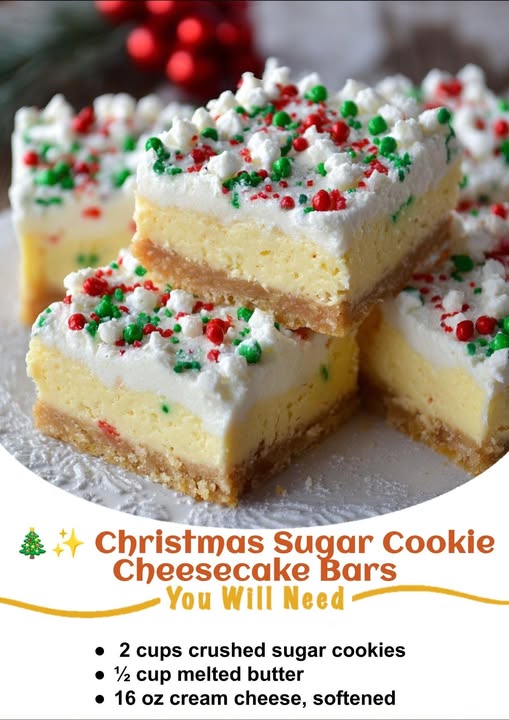
You don’t need any fancy gadgets for this recipe, but a few tools are heroes. Lining your 8×8 pan with parchment paper is a game-changer I swear by—it creates a sling so you can lift the entire batch out for pristine, crack-free slicing. I tried skipping it once, and what a mess! A hand mixer is my go-to for achieving that perfectly silky cheesecake filling; a stand mixer works wonderfully too, but a bit of arm strength with a whisk can get you there in a pinch. Just don’t underestimate the humble spatula for scraping down the bowl. I can’t tell you how many times I’ve found unmixed cream cheese hiding at the bottom because I got impatient and skipped that step.
Step-by-Step Instructions
First, we build that irresistible base. Preheat your oven to 325°F (163°C). Crush your sugar cookies or graham crackers into fine crumbs—I use a food processor for speed, but a zip-top bag and a rolling pin work wonders for stress relief! Combine the crumbs with the melted butter in a bowl until it resembles wet sand. Press this mixture firmly and evenly into your parchment-lined pan. I use the bottom of a flat measuring cup to really tamp it down; a loose crust will crumble when you cut the bars. Par-bake this for just 10 minutes. It will fill your kitchen with the most incredible, toasty-cookie aroma. Let it cool slightly while you make the filling.
Now, for the creamy heart of the bars. In your mixing bowl, beat the softened cream cheese on medium speed for a full 2-3 minutes until it’s completely smooth and no lumps remain. This is the most crucial step for texture—don’t rush it! I once added the sugar too early and ended up with tiny granules in my final bars. Scrape down the bowl thoroughly. Add the sugar and beat for another minute until creamy. Then, with the mixer on low, add the eggs one at a time, mixing until just incorporated after each. Finally, beat in the vanilla, sour cream, and that pinch of salt until the batter is velvety and uniform. Over-beating the eggs is a common pitfall that can cause the cheesecake to puff and crack dramatically in the oven.
Pour your luxurious filling over the slightly cooled crust and gently smooth the top. Bake for 35-45 minutes. You’re looking for the edges to be set, but the center should still have a slight, gentle jiggle—like Jell-O—when you tap the pan. It will firm up as it cools. This was my biggest learning curve: waiting for that perfect jiggle. I used to overbake it, resulting in a denser, less creamy texture. Let the pan cool completely on a wire rack, then refrigerate for at least 4 hours, but ideally overnight. The patience is torture, but it allows the flavors to marry and gives you that clean, perfect slice.
Pro Tips for Best Results
My first tip is all about temperature. I cannot stress enough how important it is for every component to be at the right temp. Your cream cheese, eggs, and sour cream should be at room temperature. I take mine out when I start preheating the oven. Cold ingredients don’t blend smoothly, and you’ll end up beating too much air into the batter trying to compensate, which leads to cracking. I tested this three different ways, and the batch made with truly room-temperature ingredients was flawlessly smooth every single time.
Second, embrace the slow cool. After baking, I run a thin knife around the edge of the pan (not touching the crust) to release the cheesecake from the sides. This prevents it from pulling and cracking as it contracts while cooling. Then, I let it cool on the rack for an hour before even touching the fridge. A sudden temperature shock is a major crack culprit. One winter, I placed a still-warm pan directly into the cold garage to speed things up, and the surface looked like a canyon map. Learn from my haste!
(See the next page below to continue…)