Step-by-Step Instructions
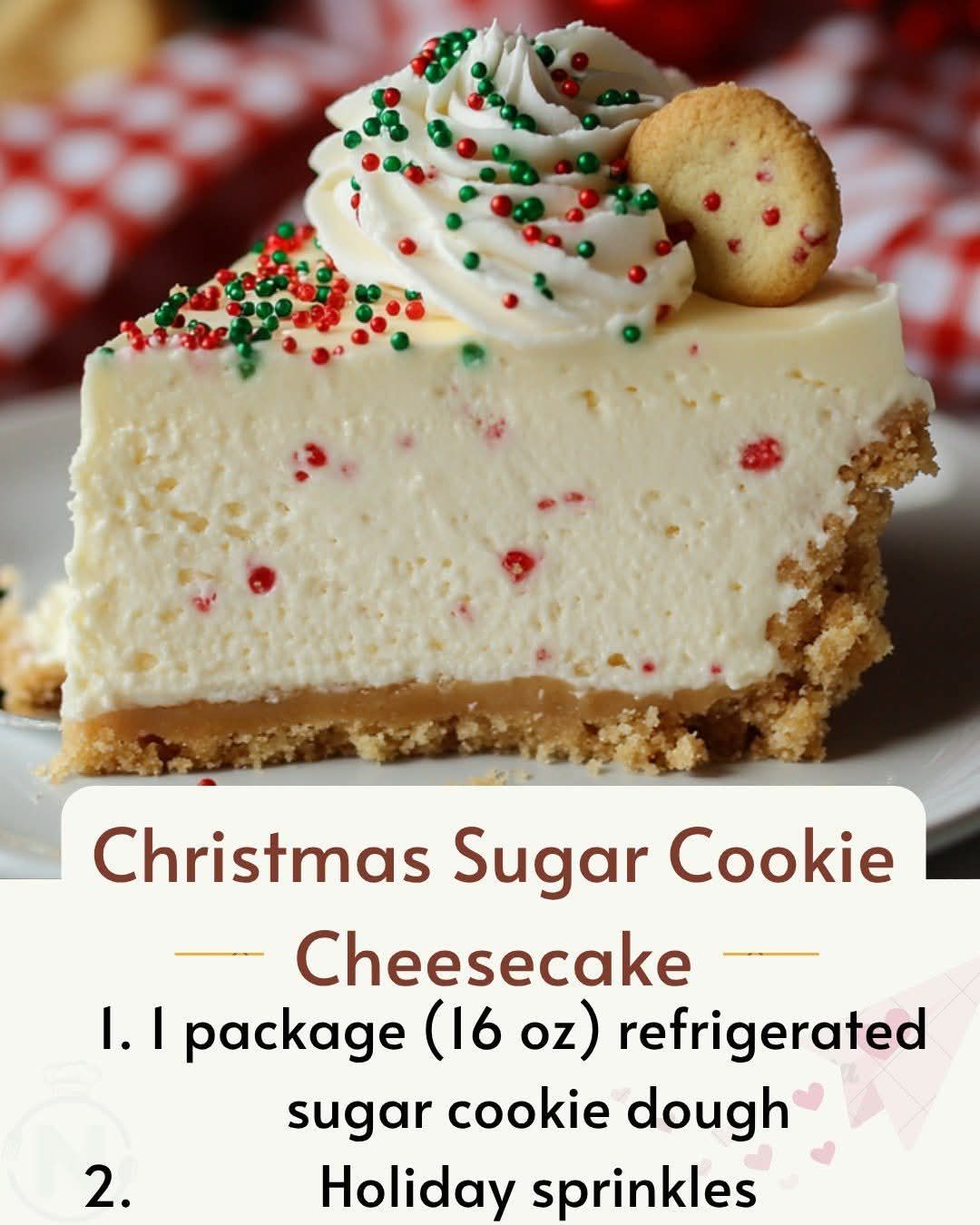
First, we set the stage. Preheat your oven to 325°F (163°C). Press the entire package of sugar cookie dough evenly into the bottom of your foil-wrapped springform pan—no need to go up the sides. I like to use my fingers dusted with a little flour to prevent sticking. Scatter a good layer of holiday sprinkles over the dough and press them in gently. This goes straight into the oven for about 15 minutes, just until it’s puffed and set but not fully browned. It will smell incredible. Let it cool on a rack while you make the filling. This par-bake is crucial; it prevents a soggy bottom.
Now, for the heart of it: the filling. In your mixer bowl, beat the softened cream cheese on medium-low until it’s completely smooth and creamy, about 2 minutes. This is where patience pays off; rushing and beating on high incorporates too much air. Scrape down the bowl. With the mixer on low, slowly stream in the sugar, then the sour cream and vanilla. I add the flour next, which helps stabilize everything. Only after this is fully incorporated do I add the eggs, one at a time, mixing on low until just combined. Over-beating the eggs is enemy number one for a dense cheesecake. The batter should be gloriously smooth and satiny.
Finally, the assembly and bake. Pour your filling over the slightly cooled cookie crust. Tap the pan firmly on the counter a few times to release any air bubbles. Place the springform pan into your large roasting pan. Carefully pour hot water into the roasting pan until it comes about halfway up the sides of the springform. This is the water bath. The whole thing goes into the oven for about 1 hour 15 minutes. The edges will be set, but the center will still have a slight, gentle jiggle—like Jell-O. Turn off the oven, crack the door open with a wooden spoon, and let it cool slowly inside for one hour. This gradual cooldown is my best defense against cracks.
Pro Tips for Best Results
Room temperature ingredients are your absolute best friend here. I can’t stress this enough. When I’m impatient and use cool cream cheese, I end up with tiny lumps in my batter no matter how long I mix. Let everything sit out for a solid two hours. To quickly bring eggs to room temp, I place them in a bowl of warm (not hot) water for 10 minutes. This simple step ensures everything emulsifies into a seamless, velvety filling that bakes evenly.
The low and slow approach is everything. I’ve tested baking this at a higher temperature to save time, and it always leads to a puffed, cracked top and a less creamy texture. The gentle heat of the 325°F oven and the humid environment of the water bath cook the cheesecake without shocking it. That final hour of cooling in the turned-off oven is non-negotiable in my book. It’s the difference between a good cheesecake and a professional-quality one.
Resist the urge to dive in! Cheesecake needs time to set its structure fully. After its oven cool-down, I let it cool completely on the rack, then I refrigerate it for at least 6 hours, but ideally overnight. The flavor deepens, the texture becomes perfectly sliceable, and the cookie crust firms up beautifully. I run a thin knife under hot water, dry it, and slide it around the edge before releasing the springform clasp for the cleanest release.
Common Mistakes to Avoid
The first time I made this, I was so excited I poured the filling onto the hot cookie crust straight from the oven. Big mistake. The heat began to cook the eggs in the filling on contact, and I ended up with a weird, grainy layer at the bottom. Let that crust cool for at least 20-30 minutes. It doesn’t need to be cold, just warm to the touch. This creates the perfect barrier for that distinct, clean line between the chewy cookie layer and the lush cheesecake.
(See the next page below to continue…)