Common Mistakes to Avoid
The number one mistake, which I am guilty of, is not removing enough moisture from frozen spinach. I thought I had squeezed it well enough, but my quiche was weeping liquid after it cooled. Now, I take the thawed spinach, put it in the center of a clean, thin kitchen towel, twist it into a ball, and squeeze over the sink with all my might until no more water drips out. It should feel like a dry, crumbly mass. This step is crucial for a firm, not soggy, quiche.
Another pitfall is over-seasoning with salt before you know how salty your cheese is. Different brands of cottage cheese and shredded cheddar have varying sodium levels. My advice? Season the egg mixture moderately, then after you’ve folded in the cheese, give the batter a tiny taste (it’s safe, it’s all eggs and dairy!). You can always add another pinch of salt if needed, but you can’t take it out. I also under-baked my first attempt, nervous about drying it out. An under-baked quiche will collapse and be runny in the center as it cools, so wait for that clean knife test.
Serving Suggestions
I adore serving this quiche warm or at room temperature. For a relaxed weekend brunch, I’ll pair a thick wedge with a simple arugula salad dressed in a bright lemon vinaigrette. The peppery, acidic greens cut through the richness of the eggs and cheese in the most perfect way. A few slices of ripe tomato or avocado on the side make it feel like a complete, celebratory meal.
For a cozy dinner, I keep it simple. A warm slice with a cup of roasted tomato soup is my ultimate comfort food. It’s also fantastic cold straight from the fridge the next day—the flavors have melded beautifully, and it makes for a protein-packed, no-fuss lunch. I often pack a slice in my lunchbox with some cherry tomatoes and whole-grain crackers.
Variations & Customizations
This recipe is a wonderful base for creativity. My favorite variation is a “Greek” style: I use feta cheese instead of cheddar and add a handful of chopped sun-dried tomatoes (oil-packed and patted dry) and a tablespoon of chopped fresh dill. The salty, tangy feta paired with the sweet tomatoes is incredible. I’ve also made a heartier version with cooked, crumbled breakfast sausage or diced ham—just be sure to drain any excess fat thoroughly before folding it in.
For a veggie-packed version, try adding sautéed mushrooms and bell peppers. Just make sure to cook them until all their released moisture has evaporated. If you’re not a spinach fan, kale (stems removed, finely chopped) or even broccoli florets (steamed and chopped small) work wonderfully. Fresh herbs are also a fantastic addition; chives, parsley, or tarragon can completely change the flavor profile with just a small handful.
How to Store, Freeze & Reheat
To store leftovers, I let the quiche cool completely right in the dish, then cover it tightly with plastic wrap or transfer slices to an airtight container. It keeps beautifully in the refrigerator for 3-4 days. The texture holds up remarkably well. To reheat, I avoid the microwave, as it can make the eggs rubbery. Instead, I warm a slice in my toaster oven or a regular oven at 325°F for 10-12 minutes, until heated through. It almost tastes freshly baked.
You can absolutely freeze this quiche! I wrap individual slices tightly in plastic wrap and then aluminum foil before placing them in a freezer bag. To reheat from frozen, I don’t thaw it. I unwrap the slice, place it on a baking sheet, and cover it loosely with foil. I bake it at 350°F for 25-30 minutes, until hot all the way through. The texture is a touch denser than fresh, but it’s still delicious and such a lifesaver on busy mornings.
FAQ Section
Can I make this dairy-free?
I’ve experimented with this using a plain, unsweetened almond milk yogurt in place of the cottage cheese and a dairy-free shredded cheese. It works in a pinch, but the texture and flavor profile change significantly—it becomes more tangy and less rich. For a true custard base without dairy, a silken tofu blend might be a better substitute, though I haven’t perfected that version yet. The cottage cheese really is the magic ingredient here.
My quiche deflated a lot after cooling. What happened?
This usually points to under-baking or a drastic temperature change. If the center isn’t fully set when you take it out, it will collapse as it cools. Ensure your knife test is completely clean. Also, avoid placing the hot dish directly on a cold counter; let it cool gradually on a wire rack. A little deflation is normal, but a major slump means it needed more time in the oven.
Can I prepare the batter the night before?
I do not recommend mixing the complete batter ahead of time, as the salt can start to draw moisture out of the spinach and make everything watery. What I do recommend is doing all your prep: chop the spinach, shred the cheese, sauté any onions. Store these components separately in the fridge. In the morning, simply whisk the eggs, dairy, and seasonings, fold in your prepped ingredients, and bake. It makes morning assembly a five-minute affair.
Conclusion
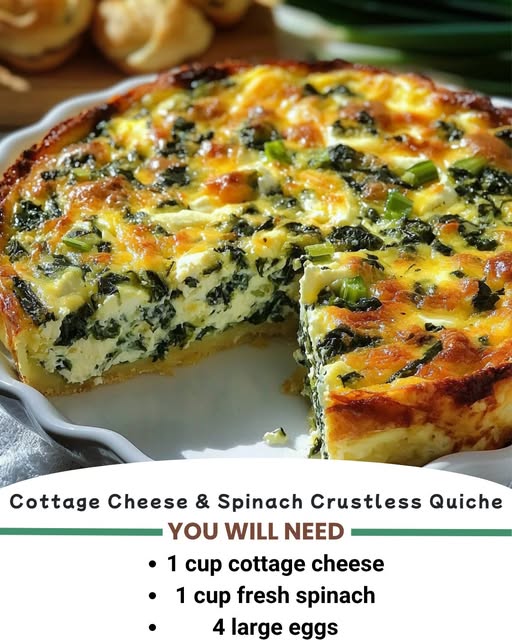
This Cottage Cheese & Spinach Crustless Quiche is more than a recipe to me; it’s a reliable source of comfort and a testament to how beautiful simple cooking can be. It has saved countless busy mornings, impressed weekend guests, and provided delicious leftovers that I genuinely look forward to. It’s forgiving, flexible, and consistently delightful. I hope it finds a regular spot in your kitchen and brings you as much joy and ease as it has brought to mine. Happy cooking!