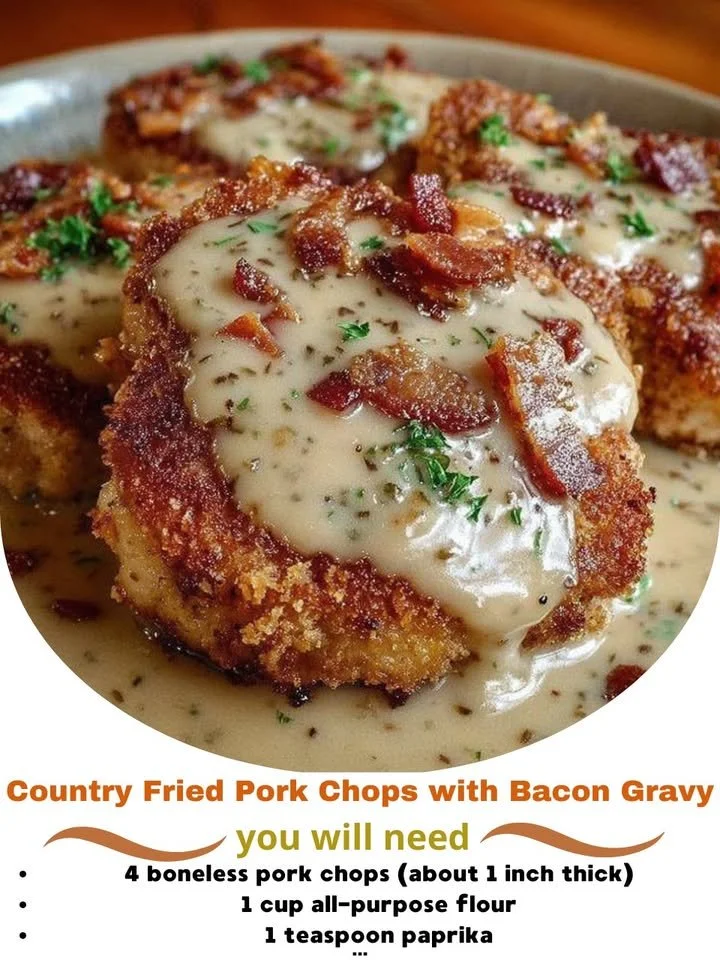
Next, heat about 1/4 inch of vegetable oil in the skillet over medium heat. Once the oil is hot (a sprinkle of flour should sizzle), carefully add the pork chops to the pan. Fry them for about 4-5 minutes on each side or until they’re golden brown and cooked through. It’s important to cook them in batches if your skillet isn’t large enough to avoid overcrowding; this ensures that they fry up nice and crispy! Once they are done, transfer the chops to a plate lined with paper towels to drain any excess oil.
Now let’s make that delicious bacon gravy! In the same skillet, remove all but a tablespoon of the grease and add the chopped bacon. Cook the bacon until crisp and golden, enjoying the wonderful smell wafting through the kitchen. Once the bacon is done, sprinkle in the 1/4 cup of flour, whisking continuously until it’s well combined. Gradually pour in the milk, and continue whisking to eliminate any lumps. Simmer the gravy on low until it thickens to your desired consistency. Finally, stir in black pepper, taste, and adjust seasoning if necessary.
Serve up those beautifully fried pork chops, drizzling the rich bacon gravy generously on top. I like to plate mine with some homemade mashed potatoes or a side of green beans for a complete meal that feels like a hug in food form.
Pro Tips for Best Results
I tested this recipe three different ways: with conventionally bred pork, heritage breed pork, and even some thick-cut boneless chops. The bone-in variety always wins for flavor and moisture, so I highly recommend sticking with them. Also, don’t skip the step of letting the coated chops rest for about 10-15 minutes before frying; this helps the breading adhere better during cooking.
If you buy your pork chops a day in advance, I suggest seasoning them and letting them sit in the fridge overnight. This not only enhances their flavor but also helps tenderize the meat, resulting in a juicy experience. Also, don’t rush the frying process! Keep an eye on the oil temperature as this ensures an even cook and prevents greasy meat.
Lastly, if you love crispy food like I do, make sure to use a cooking thermometer. The internal temperature for pork should reach 145°F. A quick check will make all the difference between perfectly juicy pork and dry chops that won’t get you any praise around the dinner table.
Common Mistakes to Avoid
One of the most common mistakes I made early on was not patting the pork chops dry enough before coating them. Any moisture on the surface makes it difficult to get that crunchy exterior we all crave. So make sure you dry them thoroughly; this little step goes a long way! (See the next page below to continue…)