Equipment Needed
- Large skillet or braiser (I use my trusty 12-inch cast iron)
- Large pot for boiling pasta
- Tongs or a sturdy wooden spoon
- Chef’s knife and cutting board
- Measuring spoons and cups
- Colander
- Small bowl for mixing sauce ingredients (optional)
Step-by-Step Instructions
First, get your pasta water salted and boiling. While that’s happening, pat your chicken cubes completely dry with paper towels—this is the golden rule for a good sear. Season them generously with salt, pepper, and the smoked paprika. In your large skillet, heat the olive oil over medium-high heat. Once it shimmers, add the chicken in a single layer. Don’t crowd the pan; I do this in two batches if needed. Let it cook undisturbed for a few minutes to get a beautiful golden-brown crust before turning. You’ll hear that glorious sizzle and smell the paprika toasting. Once cooked through, remove the chicken to a plate.
Now, lower the heat to medium. In that same skillet, with all those wonderful browned bits (called fond—that’s flavor!), melt the butter. Add the minced garlic and cook for just about 60 seconds until fragrant. You have to watch it closely; burnt garlic is bitter and will ruin the sauce. Then, stir in the lemon juice, Dijon mustard, red pepper flakes, and dried oregano. The mixture will foam and smell absolutely incredible. This is your cowboy butter base.
By now, your linguine should be cooked to al dente. Reserve about a cup of that starchy pasta water before you drain it—this is my number one pasta pro-tip! Add the drained linguine directly to the skillet with the cowboy butter. Toss it all together, letting the pasta drink up that sauce. If it looks a little tight or dry, add a splash of that reserved pasta water a little at a time. The starch helps create a silky, cohesive sauce that clings perfectly.
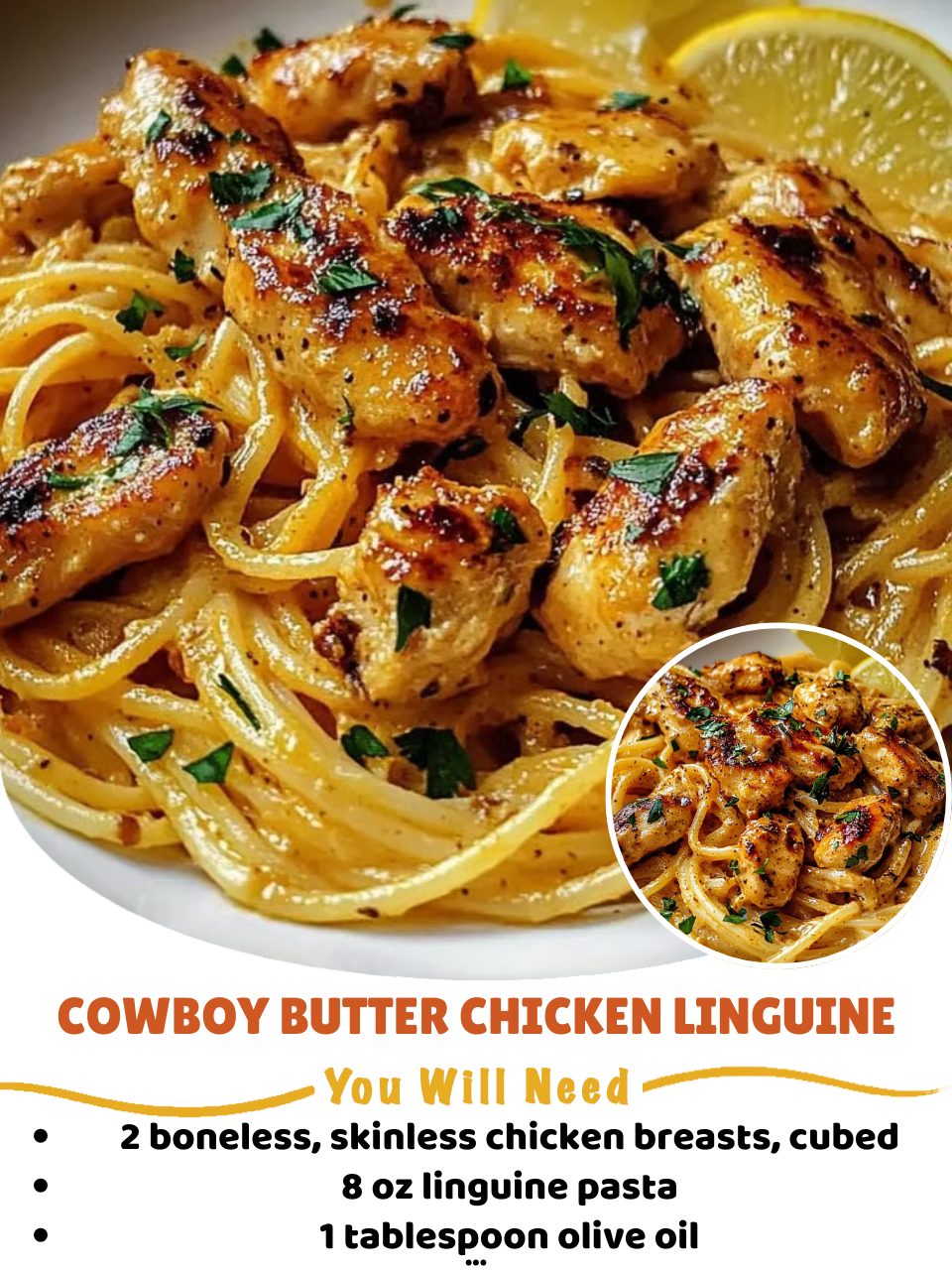
Finally, add the cooked chicken and any accumulated juices back into the skillet. Toss everything to combine and heat through. Turn off the heat, and this is the crucial moment: stir in all those fresh, chopped herbs—the parsley and chives. The residual heat will wilt them perfectly, releasing their oils without cooking them into oblivion. Give it one final, joyful toss. Your kitchen will smell like a dream.(See the next page below to continue…)