Common Mistakes to Avoid
The most common mistake I made, and I see others make, is using liquid that’s too hot. I was so eager once that I microwaved the milk until it was steaming. I poured it in, killed the yeast, and sat waiting for a rise that never came. Now, I always test it on my wrist. If it feels pleasantly warm, it’s perfect. Another error is measuring flour incorrectly. Scooping directly from the bag packs in too much flour, leading to a dry, tough dough. I always spoon my flour into the measuring cup and level it off with a knife. This small step ensures the perfect, soft consistency every time.
Also, don’t skip the salt! I know it seems like a small amount, but salt controls the yeast’s activity and is vital for flavor development. I forgot it once, and the dough rose too fast and tasted bland, almost flat. And finally, avoid the temptation to over-flour your kneading surface. Start with just a little, and add tiny amounts only if the dough is unmanageably sticky. More often than not, after a minute of kneading, the dough comes together and stops sticking. Adding cupfuls of flour mid-knead is a sure path to heavy, brick-like bakes. Trust the process and your hands.
Serving Suggestions
This dough is a chameleon, so how I serve it depends entirely on its form. When I make it into a classic pizza, I love serving it fresh from the oven with a simple, vibrant arugula salad dressed in lemon vinaigrette. The peppery greens cut through the rich cheese beautifully. For sweet rolls, like my favorite orange-cardamom version, I always serve them warm. I place the whole pan in the center of the table with a pot of strong coffee and let everyone pull apart their own gooey piece—it’s the heart of a lazy weekend morning.
For savory options like garlic knots or everything-spiced focaccia, I turn them into the star of a soup or stew night. There’s nothing better than dipping a soft, herby piece of warm bread into a hearty tomato soup or a beef stew. I also love making mini versions as party appetizers; little knotted rolls brushed with garlic-herb butter disappear faster than anything else on my snack table. The beauty is that it feels impressive, but you know the humble, heroic dough behind it all.
Variations & Customizations
Once you master the basic dough, the world is your oyster. I’ve had so much fun playing with mix-ins. For a whole-wheat version, I’ll substitute up to half of the all-purpose flour with whole wheat flour, adding an extra tablespoon or two of milk as whole wheat absorbs more liquid. You can also add flavors directly to the dough: try stirring in a tablespoon of everything bagel seasoning, dried herbs like rosemary and thyme, or even a little grated cheese right when you’re mixing.
Sweet variations are my favorite playground. For a brioche-like dough, I’ll increase the sugar to ⅓ cup and use all butter instead of olive oil. I’ve also swirled in countless fillings: classic cinnamon-sugar, Nutella and chopped hazelnuts, diced apples sautéed with butter and brown sugar, or even a savory-sweet combo of crisp bacon and maple sugar. The dough is incredibly forgiving and eager to carry whatever flavors you dream up. I once made a “pizza” with this dough, using pesto as the sauce, roasted grapes, and goat cheese—it was unforgettable.
How to Store, Freeze & Reheat
If you have leftovers (a rare occurrence in my house!), they store beautifully. For baked goods like rolls or bread, I let them cool completely, then store them in an airtight container or zip-top bag at room temperature for 2-3 days. To recapture that just-baked magic, I reheated rolls in a 350°F oven for 5-8 minutes. The microwave will make them soft but often soggy; the oven restores the exterior crispness. For pizza, I reheat slices directly on the rack of a hot oven to keep the crust crisp.
The real power move is freezing the dough itself. After the first rise and punch-down, I divide the dough into portions (enough for one pizza or a small pan of rolls), shape each into a ball, and coat lightly with oil. I place each ball in its own freezer bag, squeeze out all the air, and freeze for up to 3 months. When I get a craving, I move a bag to the fridge the night before to thaw slowly, then let it come to room temperature and proceed with shaping and the second rise. I’ve also frozen fully shaped, unbaked cinnamon roll slices on a parchment-lined tray before transferring them to a bag. Then, I can bake just two or a whole pan straight from the freezer, adding 5-10 minutes to the bake time. It’s like having fresh bakery goods on demand.
FAQ Section
Can I make this dough ahead of time?
Absolutely, and I do this all the time for easy mornings. After the first rise and punch-down, instead of shaping it, I place the dough ball back in the oiled bowl, cover it tightly with plastic wrap, and put it in the refrigerator. It will slowly rise overnight. The next day, I take it out, let it sit at room temperature for about 30 minutes to take the chill off, then shape, proof, and bake. The cold ferment actually develops even more flavor!
My dough didn’t rise. What went wrong?
I’ve been there, and it’s usually one of three things. First, check your yeast—it might be old. Second, the liquid was likely too hot and deactivated the yeast, or too cold and didn’t activate it. Third, the rising environment was too cold. Yeast is a living thing and needs warmth. Next time, ensure your milk is just warm to the touch and find a genuinely warm, draft-free spot for the bowl.
Can I use this dough for [X]?
You can probably try! This Crazy Dough is famously versatile. I’ve used it successfully for: calzones, monkey bread, stromboli, flatbreads, even as a topping for pot pie. The texture is soft and pliable yet sturdy enough to hold fillings. If you’re thinking of a yeast-based baked good that’s not an artisan loaf, this dough is likely a great starting point. Experiment—that’s half the fun!
Conclusion
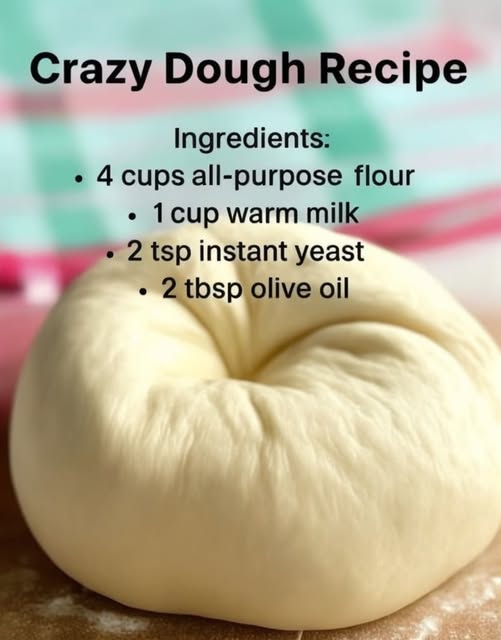
This Crazy Dough recipe has become more than just a list of ingredients in my kitchen; it’s a foundation for creativity, a promise of something delicious, and a reliable friend for everything from Tuesday pizza night to holiday brunch. I hope it brings as much mess, joy, and satisfaction to your kitchen as it has to mine. Don’t be afraid to get your hands floury, to make a little mess, and to make it your own. Now, go preheat your oven—your new baking hero is waiting.