Pro Tips for Best Results
My biggest tip is to be fearless with chilling. After I mix the lobster salad, I pop it back in the fridge for at least 15 minutes before serving. I tested serving it immediately versus letting it chill, and the chilled version wins every time. The flavors marry together beautifully, the creaminess sets up perfectly, and it provides that wonderful temperature contrast with the warm bun. It’s a small wait that makes a huge difference.
When cooking your own lobster tails, do not overcook them. I bring a large pot of salted water to a boil, drop in the tails, and as soon as they turn bright red and the meat is opaque (about 1 minute per ounce), I transfer them immediately to an ice bath. This stops the cooking dead in its tracks. Rubbery lobster is a tragedy in a dish where it’s the star. The ice bath step is something I used to skip, but it guarantees that perfect, tender bite.
For the creamiest, most cohesive sauce, let your heavy cream and mayo sit out for 10-15 minutes to take the chill off before mixing. I found that when they’re stone-cold from the fridge and hit the warm butter, they can sometimes want to separate or get a bit grainy. Letting them come closer to room temperature ensures everything emulsifies into a velvety, smooth sauce that clings to the lobster perfectly.
Common Mistakes to Avoid
The most common mistake I see (and made myself the first time) is using pre-cooked, frozen lobster meat from the seafood counter. I wanted to save time, but the texture was often waterlogged and the flavor was lacking. It’s worth the tiny bit of extra effort to cook fresh tails or seek out freshly cooked lobster meat from a trusted fishmonger. The sweet, clean flavor of fresh lobster is the entire foundation of this recipe.
Another pitfall is going overboard with the Cajun seasoning. Remember, you can always add more, but you can’t take it out. Start with the amount listed, especially if your blend contains salt and cayenne. I once made a batch so spicy my guests could barely taste the lobster! The goal is a warm, smoky background note that complements, not overpowers, the delicate seafood. Always do a taste test after mixing and adjust gently.
Serving Suggestions
I love serving these lobster rolls with the simplest sides that don’t compete for attention. A classic, crisp vinegar-based coleslaw is my absolute favorite pairing—its tanginess is the perfect palate cleanser between rich bites. I also always put out a big bowl of ridged potato chips or hot, crisp french fries for that satisfying salty crunch. They’re perfect for dragging through any extra creamy Cajun butter that might escape the bun.
For drinks, I keep it crisp and cold. A chilled, unoaked Chardonnay or a Provençal rosé works wonderfully. If you’re not drinking alcohol, a sparkling lemonade or ginger beer with a squeeze of lime complements the spice beautifully. I often set up a “roll-your-own” station if I’m serving a crowd, with the toasted buns in a basket, the lobster salad in a chilled bowl, and extra lemon wedges and herbs, so everyone can build their own.
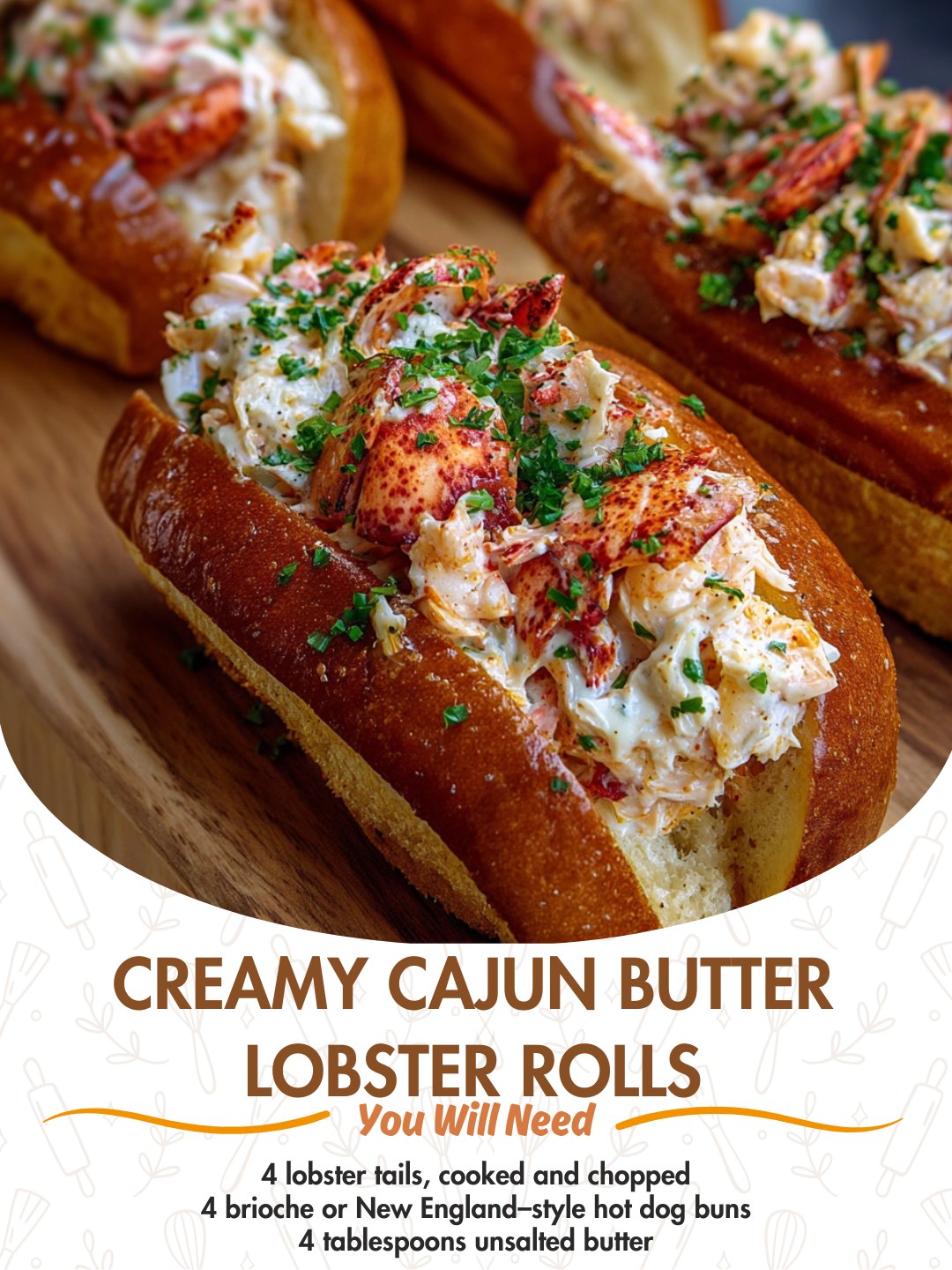
Presentation is everything with a dish this special. I serve them on a large platter lined with parchment or checkered paper, with the rolls propped up against each other so you can see that gorgeous filling. A final, light sprinkle of chives and a small dish of extra lemon wedges in the center makes it look like it came straight from a seaside shack in Maine—just with a Cajun twist.
Variations & Customizations
If you’re not a fan of mayo, I’ve had great success substituting it with an equal amount of mashed ripe avocado. It creates a richer, greener sauce that’s incredibly delicious, though it doesn’t keep as well, so eat it immediately. For a lighter version, you can replace the heavy cream with full-fat Greek yogurt. It adds a lovely tang, but be gentle when folding it in to prevent curdling with the warm butter.
The protein here is wonderfully flexible. I’ve made this exact sauce with large shrimp (chopped), king crab meat, and even for a vegetarian twist, with heart of palm or artichoke hearts. The creamy Cajun butter is so good, it elevates almost anything. Just adjust the cooking time accordingly if you’re using raw shrimp instead of pre-cooked lobster.
Want to play with the flavor profile? Try adding a teaspoon of Old Bay seasoning along with the Cajun for a more maritime depth. For a touch of sweetness, a tiny pinch of brown sugar in the butter can be lovely. I’ve even added a tablespoon of finely diced roasted red pepper to the salad for color and a subtle sweetness. This recipe is a fantastic canvas.
How to Store, Freeze & Reheat
Storage is straightforward but time-sensitive. The assembled lobster salad (without the buns) will keep in a sealed container in the refrigerator for up to two days. Any longer and the texture of the lobster starts to suffer and the lemon can begin to “cook” the meat. I do not recommend freezing the lobster salad at all. The dairy and lobster do not thaw well; the sauce breaks and the lobster becomes very tough and rubbery, losing all its magic.
The best practice for leftovers is to store the filling and buns separately. If you have leftover filled rolls, they will be quite soggy by the next day. If you must store them, wrap each assembled roll tightly in plastic wrap. To reheat, I’d actually recommend not reheating the filling. If you want it warm, gently warm it in a skillet over very low heat, stirring constantly, just until it takes the chill off. Re-toast your buns fresh. It’s an extra step, but it preserves the quality.
Conclusion
Making these Creamy Cajun Butter Lobster Rolls always feels like a small celebration. It’s a recipe that looks and tastes incredibly impressive but is built on simple, honest techniques. I hope you experience the same joy and satisfaction in making them as I do—that moment when you take the first bite and the flavors just sing. Don’t be afraid to make it your own. Grab your favorite drinks, call some friends, and get ready for the compliments to roll in. Happy cooking