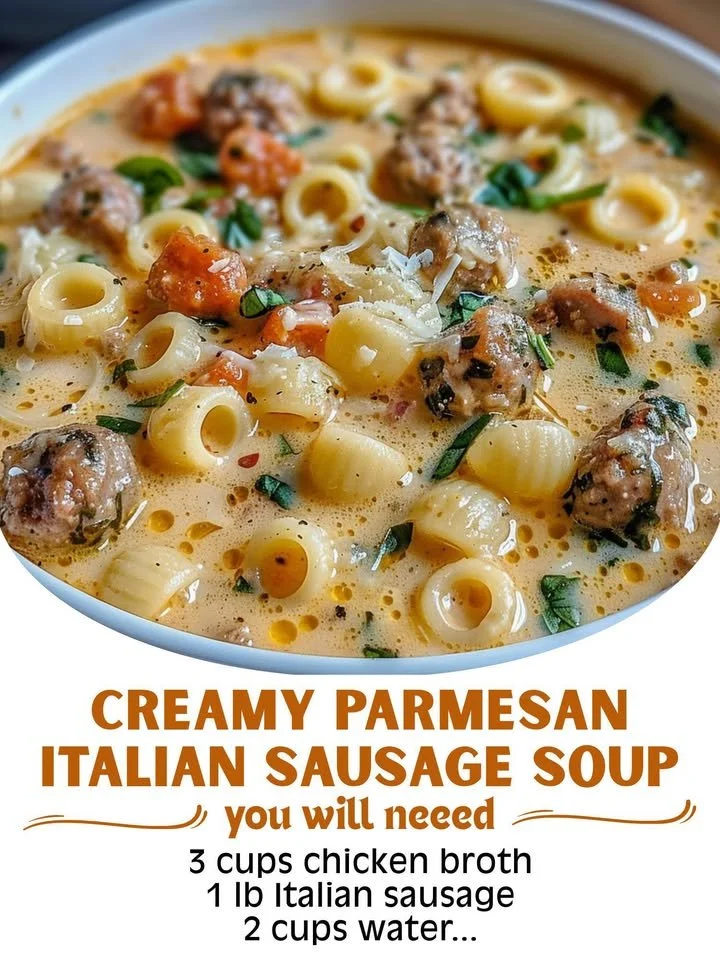
Next, I add the chopped onion to the pot, stirring until it becomes translucent—about 3 to 5 minutes. The combination of the sausage and the onion is mouthwatering. Then, I toss in the minced garlic and cook for an additional minute, allowing it to become aromatic. From there, I pour in the chicken broth and diced tomatoes, stirring everything together. It’s starting to come together beautifully!
After that, I bring the entire pot to a gentle simmer, adding the ditalini pasta. This is where the magic happens! I let it cook according to the package instructions until it’s al dente—typically around 8 to 10 minutes. Watching the pasta soak up the flavors while it cooks is simply rewarding. Once the pasta is just right, I lower the heat and blend in the heavy cream and spinach, stirring until the spinach wilts. Finally, I sprinkle in the grated Parmesan cheese, stirring until the soup is creamy and inviting.
Before serving, I like to take a moment to taste and adjust the seasonings with salt and pepper if needed. A little dash of freshly cracked pepper on top makes it even better! Dishing out this comforting soup is almost as satisfying as making it; the rich creaminess paired with the delightful textures makes for a wonderful meal.
Pro Tips for Best Results
I tested this soup a few ways, and here’s what I found: using fresh sausage instead of pre-cooked adds so much more flavor and depth. If you love a bit of spice, feel free to use hot Italian sausage instead of sweet—it really amps up the flavor profile!
Another tip that really improved the dish was letting it simmer just a tad longer after adding the cream. This allows the flavors to meld together beautifully, making every bowl memorable. I usually let it simmer for an additional 5 minutes on low heat.
Lastly, I learned that adding the Parmesan cheese slowly while stirring gives a smooth and stretchy consistency to the soup. It’s a little extra effort, but trust me, it’s worth it for that creamy texture!
Common Mistakes to Avoid
One common mistake I made on my first try was adding the cream too early. If you add it at the beginning, it can curdle or lose its silky texture. It’s best added last, just after the ditalini is cooked. (See the next page below to continue…)