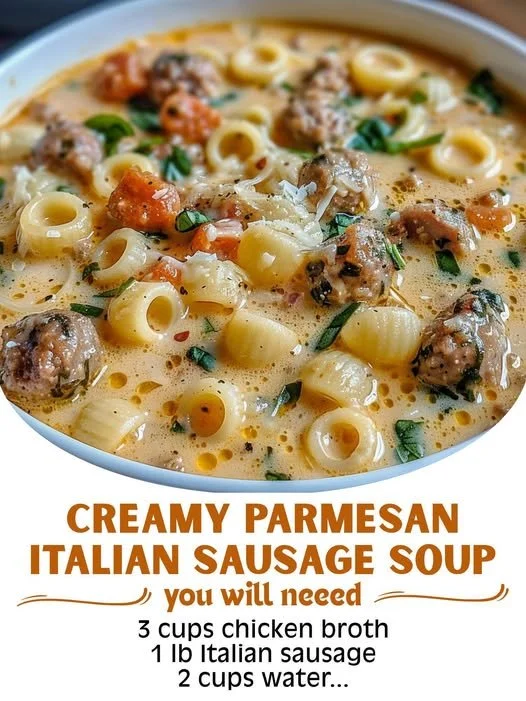
Next, I pour in the chicken broth and the diced tomatoes, bringing the mixture to a gentle boil. Then, I add the ditalini pasta, which cooks perfectly in the broth while soaking up all those amazing flavors. After about 8-10 minutes, when the pasta is cooked al dente, I reduce the heat and stir in the heavy cream and grated Parmesan cheese. The soup transforms into a deliciously creamy and cheesy delight!
Now, it’s time to add the spinach. I love how the vibrant green leaves wilt beautifully in that warm broth. Simply stir in the spinach until it’s just wilted, which usually takes only a couple of minutes. Finally, I season the soup with salt and black pepper to taste, giving it the finishing touches.
I usually let the soup sit off the heat for a few minutes before serving so the flavors can meld together while I slice some fresh bread on the side. Ladling the creamy soup into bowls, I like to garnish it with a sprinkle of fresh parsley for that extra pop of color!
Pro Tips for Best Results
I tested this soup with both spicy and sweet Italian sausage, and while they both offer an incredible flavor, I must admit that I lean towards the sweet sausage for a milder taste that appeals to everyone in my family. If you like a kick, feel free to go with the spicy kind!
Another tip is to keep an eye on the pasta. If it’s cooking in too much broth, it tends to soak it up and can turn mushy. To avoid this, I sometimes cook the ditalini separately and add it to each bowl before ladling the soup over it. This way, the pasta retains its perfect texture!
Lastly, don’t skip on the cheese! The Parmesan is essential for that creamy and rich flavor. If you’re feeling adventurous, you could experiment with adding other cheeses, like mozzarella or even a bit of feta, for a unique twist.
Common Mistakes to Avoid
One mistake I often made early on was adding too much salt before tasting. Since the broth and cheese already have salt in them, I learned to adjust my seasoning towards the end. It’s much safer to start with less and add more as needed, to ensure the flavors don’t get overpoweringly salty. (See the next page below to continue…)