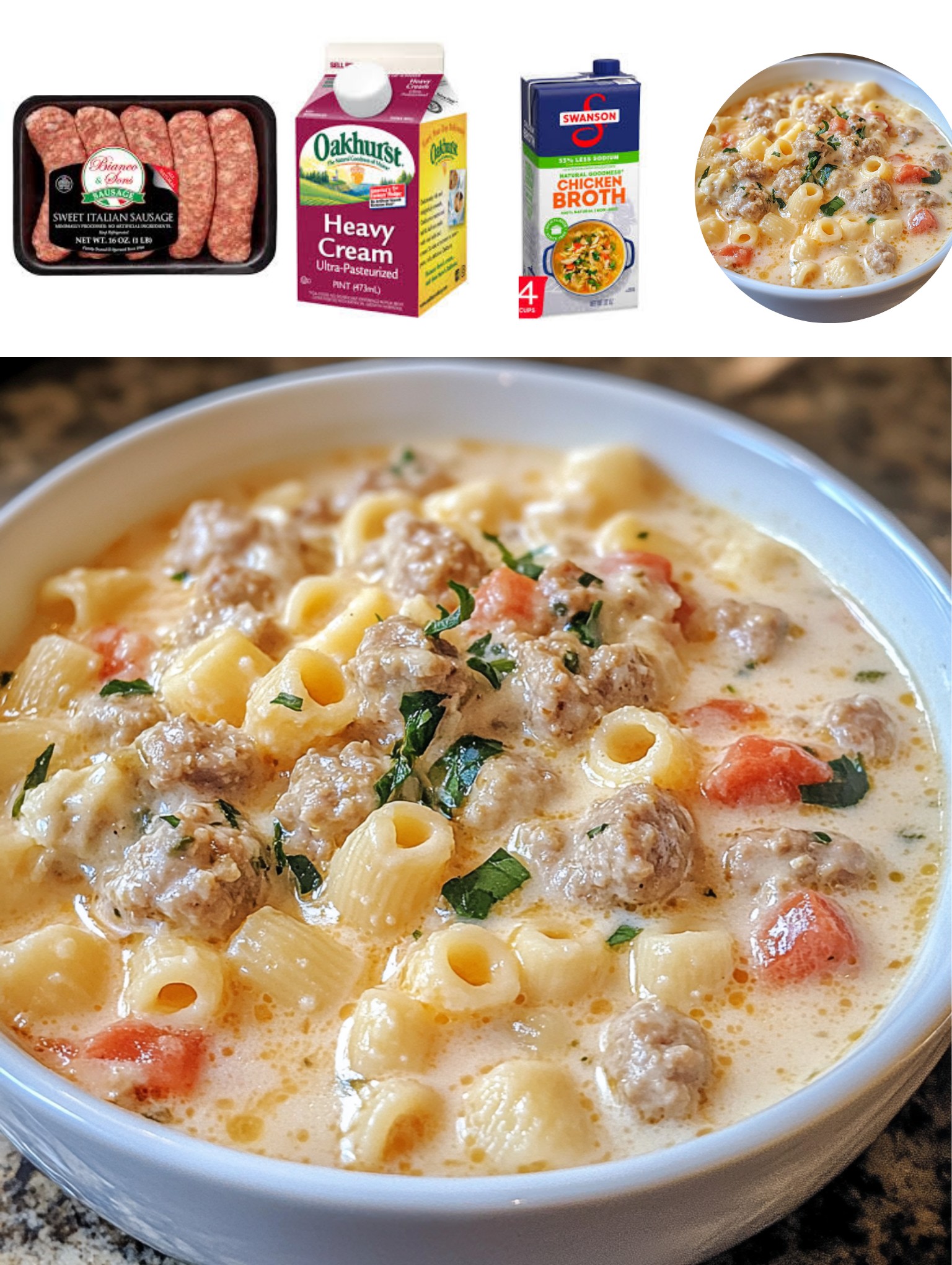
Now, for the simmer. I return the sausage to the pot and pour in the chicken broth and diced tomatoes with their juices. The oregano and red pepper flakes go in next. I bring it all to a lively boil, then reduce the heat to a gentle, steady simmer. This is where patience is key. I let it bubble away, uncovered, for a solid 15 minutes. This time allows the flavors to marry and the broth to reduce slightly, becoming more concentrated. It makes your whole house smell incredible.
Finally, the grand finale. I stir in the ditalini and cook according to the package directions, usually about 8-10 minutes. Once the pasta is al dente, I turn the heat to the lowest possible setting. This is crucial: you must reduce the heat before adding the dairy. I slowly pour in the heavy cream and then, handful by handful, stir in the grated Parmesan until it’s fully melted into a velvety sauce. I take the pot off the heat entirely before stirring in the fresh spinach—it wilts perfectly from the residual heat. A final taste for seasoning (it usually needs a good crack of black pepper) and it’s ready.
Pro Tips for Best Results
Let’s talk about the pasta. I’ve tested this three different ways: cooking it directly in the soup, cooking it separately, and even using different shapes. Cooking it directly in the simmering broth is the winner for flavor, as the pasta releases starch that slightly thickens the soup. However, if you plan on having leftovers, cook the pasta separately and add it to each bowl when serving. This prevents it from soaking up all the delicious broth overnight and becoming mushy. It’s a game-changer for meal prep.
The order of operations with the cream and cheese is everything. Here’s what I learned the hard way: if your soup is at a rolling boil when you add the dairy, it can separate or curdle. By reducing the heat to low, you gently introduce them, protecting their fat and creating that dreamy, cohesive texture. And please, add the Parmesan slowly, stirring constantly. Dumping it all in at once can cause it to clump. Think of it as a loving, gradual incorporation.
Don’t be tempted to use lean sausage or drain all the fat after browning. That rendered fat is your cooking oil for the vegetables and carries immense flavor. Also, let the soup rest for about 10 minutes off the heat before serving. This brief pause allows the flavors to settle and deepen even further, and it brings the temperature to the perfect, spoon-ready warmth.
Common Mistakes to Avoid
The first time I made this, I was so eager that I added the spinach right after the cream while the pot was still on the heat. Big mistake. The residual heat is more than enough to wilt tender baby spinach. Cooking it any longer turns it into a sad, gray, stringy mess. Now, I always take the pot completely off the burner, stir in the greens, and put the lid on for two minutes. Perfect, vibrant wilt every single time.
Another classic error is overseasoning with salt too early. Between the sausage, the broth, and the Parmesan, this soup has a lot of naturally salty elements. I always wait until the very end, after all the components are combined, to do my final salt adjustment. I’ve ruined a batch by adding salt with the vegetables, only to find the finished soup inedible after the Parmesan melted in. Season at the finish line.
(See the next page below to continue…)