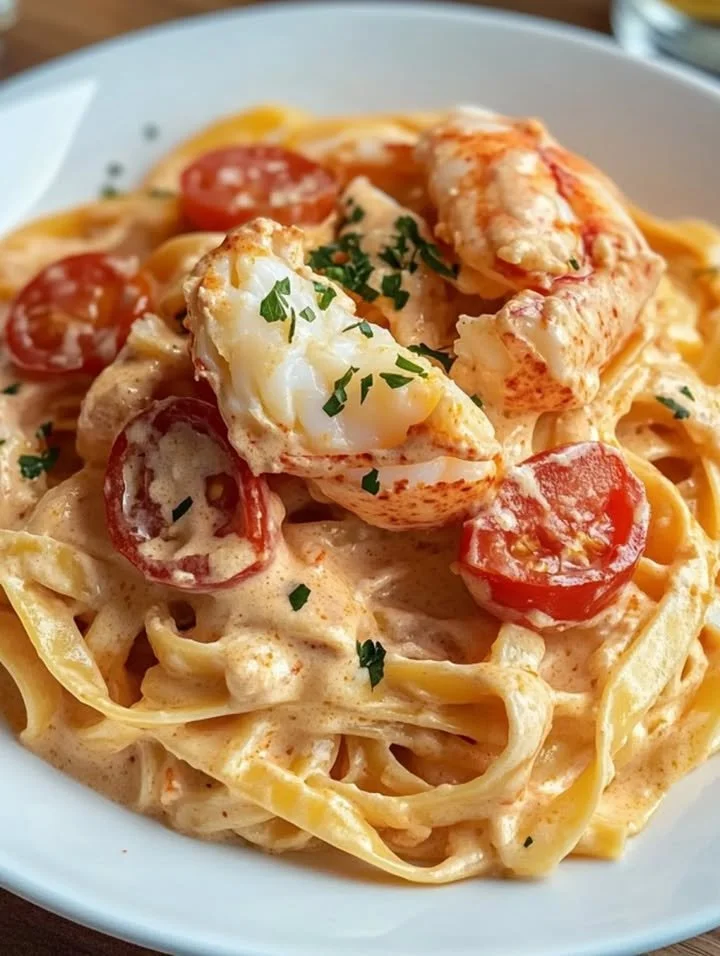
Next, add the minced garlic and red pepper flakes to the skillet, stirring for about 30 seconds until fragrant. Now, it’s time to pour in those crushed tomatoes. I love using San Marzano tomatoes for their sweetness and depth of flavor. Let the mixture simmer for about 10 minutes, allowing the flavors to meld beautifully. If you feel like adding a sprinkle of salt and pepper, go for it! After that, lower the heat and gradually stir in the heavy cream until it’s combined with the tomato sauce, turning it a delightful shade of rosy pink.
Once the sauce is creamy and luscious, add the cooked lobster meat to the skillet, tossing it gently to ensure it’s coated in all that rich goodness. Drain your pasta and reserve a cup of pasta water, which you can use later if needed to adjust sauce consistency. Combine the drained pasta with the lobster-tomato sauce. I always find that a gentle toss helps everything come together perfectly. If the sauce looks a bit too thick, don’t hesitate to add a splash of that reserved pasta water until it reaches your desired consistency!
Finally, sprinkle in the fresh basil and give everything a final toss. Plate your creamy tomato lobster pasta, and don’t forget to top it off with an extra sprinkle of freshly grated Parmesan cheese—it really elevates the dish. Trust me, your guests will think you’re a culinary genius!
Pro Tips for Best Results
Over the years of making this recipe, I’ve learned a few tricks to get the best possible outcome. First, I always use fresh lobster when possible; it makes a world of difference in flavor and texture. If fresh lobster isn’t available, high-quality frozen lobster works too, but make sure to thaw it thoroughly before cooking.
When it comes to the pasta, make sure you don’t overcook it. I like to drain it a minute earlier than the package suggests since it will continue cooking once added to the sauce. This ensures that it retains a lovely al dente bite that complements the creamy sauce beautifully.
Finally, don’t shy away from experimenting with the seasonings. I’ve tested this with different herbs, such as oregano and thyme, and each variation brought its own character to the dish. Don’t be afraid to make it your own!
Common Mistakes to Avoid
One of the most common mistakes I see is overcooking the lobster. It’s already cooked when you add it to the sauce, so all you need to do is warm it through without letting it turn rubbery. Keep an eye on the timing, and your lobster will be perfectly tender.
Another pitfall is skimping on the seasoning. Tomatoes can be quite acidic, and balancing that flavor with salt and some freshly cracked pepper is essential. Taste as you go along, and don’t hesitate to adjust those seasonings to suit your preferences. It’s your dish after all!
Be cautious with the heavy cream; pouring it in too quickly can cause it to curdle if the heat is too high. Always lower the heat before adding cream, and stir gently to prevent any mishaps. I learned this the hard way during one of my cooking sessions, and I definitely prefer a silky sauce over a chunky one!
Finally, don’t forget to reserve some pasta water! It’s a lifesaver for adjusting the sauce’s consistency. If you accidentally make it too thick, adding a bit of the starchy water will bring it right back to life.
Serving Suggestions
This Creamy Tomato Lobster Pasta is best served immediately, while it’s warm and inviting. I love putting it in shallow pasta bowls, garnished with a sprinkle of fresh basil and an extra twist of freshly cracked pepper. The visual appeal of the vibrant colors in each bowl is truly delightful.
Pair it with a light salad, like a simple arugula and cherry tomato salad dressed with lemon and olive oil, to balance the richness of the pasta. It adds a wonderful freshness to your meal, and it’s a simple addition that brings everything together!
For drinks, a crisp white wine such as a Pinot Grigio or a Chardonnay complements the flavors beautifully. If you prefer a non-alcoholic option, sparkling water with a splash of lemon is refreshing and uplifting alongside this luxurious pasta.
Variations & Customizations
While I adore the classic version of this creamy tomato lobster pasta, there are endless possibilities for customization! For a bit of a kick, consider adding sautéed spinach or kale; the slight bitterness works wonderfully against the creaminess. You can also toss in some sun-dried tomatoes for an extra layer of flavor, adding a delightful chewiness that contrasts beautifully with the lobster.
If you’re feeling adventurous, why not try adding a splash of white wine before the tomatoes? I find that it elevates the dish, giving depth without overpowering that lovely lobster flavor. Just make sure to allow the alcohol to cook off before adding the cream.
Lastly, for a lighter spin, you could swap out the heavy cream with a splash of half-and-half or even a vegan alternative. I tested this using coconut cream once, and while it had a different taste profile, it was still quite satisfying and delicious!
How to Store, Freeze & Reheat
If you happen to have leftovers (which is rare in my house!), they can be stored in an airtight container in the fridge for up to two days. When reheating, be gentle—use low heat and stir occasionally to prevent the sauce from breaking. A little splash of cream or reserved pasta water can help bring back the creamy texture.
If you’re looking to freeze this dish, I recommend doing so before adding the lobster, as seafood doesn’t always freeze well. Once you’ve made the sauce, allow it to cool completely before transferring it into freezer-safe containers; it should keep well for up to three months. When you’re ready to enjoy, thaw overnight in the fridge and then reheat, adding freshly cooked lobster just before serving.
Reheating in the stovetop is my go-to method as it allows for more control. If the sauce thickens too much during reheating, adding a little pasta water helps restore that creamy goodness!
Conclusion
I hope you enjoy making and savoring this Creamy Tomato Lobster Pasta as much as I do! It has a way of transforming any meal into an occasion with its sumptuous flavors and inviting aromas. Cooking should always be a joyful experience, and this dish surely brings happiness to my kitchen. So grab your ingredients, put on your favorite music, and let’s create something delicious together! Happy cooking!