Equipment Needed
- Two shallow dishes (for dredging)
- Whisk
- Large cast-iron or heavy-bottomed skillet
- Tongs
- Wire rack set over a baking sheet
- Paper towels
- Medium saucepan (for gravy)
- Meat mallet or rolling pin (optional, but helpful)
Step-by-Step Instructions
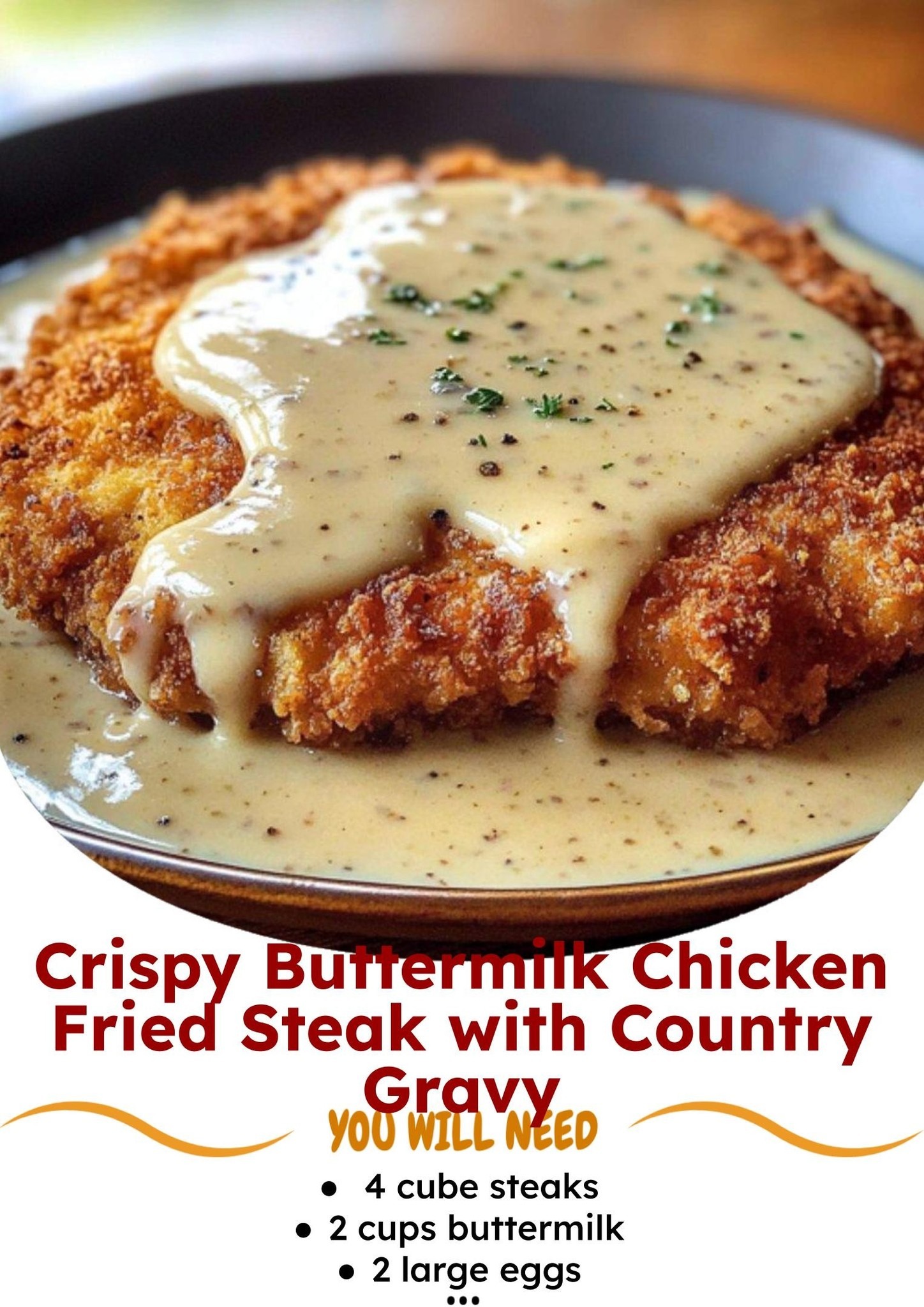
My process always starts with the steaks. I lay them out on a cutting board and give them a few gentle whacks with a meat mallet. Even though they’re already tenderized, this ensures they’re of even thickness, which is crucial for even cooking. Then, in one shallow dish, I whisk together the buttermilk and eggs until completely smooth. In another, I combine the flour, cornstarch, and all those beautiful spices—the paprika gives the crust its gorgeous color. I season the steaks generously with salt and pepper first, then dunk each one thoroughly in the buttermilk mixture, letting the excess drip off.
The dredging stage is where the magic starts to happen. I press each wet steak firmly into the flour mixture, making sure every nook and cranny is coated. Then, I do something vital: I place it back into the buttermilk for a second quick dip, followed by a second press into the flour. This double-dredge is my absolute top tip for the craggiest, crunchiest crust possible. I learned this the hard way after a single coat left me with patches that flaked off. Once coated, I let the steaks rest on a wire rack for about 10 minutes while the oil heats. This helps the coating set and adhere.
For frying, I pour about 3/4 inch of oil into my trusty cast-iron skillet and heat it over medium-high heat until it shimmers. To test it, I sprinkle a tiny pinch of flour in; if it sizzles immediately, it’s ready. I carefully lay two steaks in at a time—never crowding the pan! Crowding drops the oil temperature and leads to greasy, soggy steak. I fry for about 3-4 minutes per side, until they are a deep, glorious golden brown. I use my tongs to gently lift a corner to check the color before flipping. The sound alone is heavenly—a steady, robust sizzle.
While the steaks rest on the wire rack (never on paper towels directly if you can help it, as the rack keeps the bottom crisp), I immediately start the gravy. I carefully pour all but about 1/4 cup of the hot oil from the skillet, leaving behind all those wonderful browned bits. I whisk the flour into these drippings over medium heat, cooking it for a full minute until it’s fragrant and lightly tan. Then, I slowly stream in the milk, whisking constantly to avoid lumps. This is a moment for patience—the gravy will thicken beautifully as it comes to a gentle bubble. I season it heavily with salt and an absurd amount of black pepper, tasting until it sings.
(See the next page below to continue…)