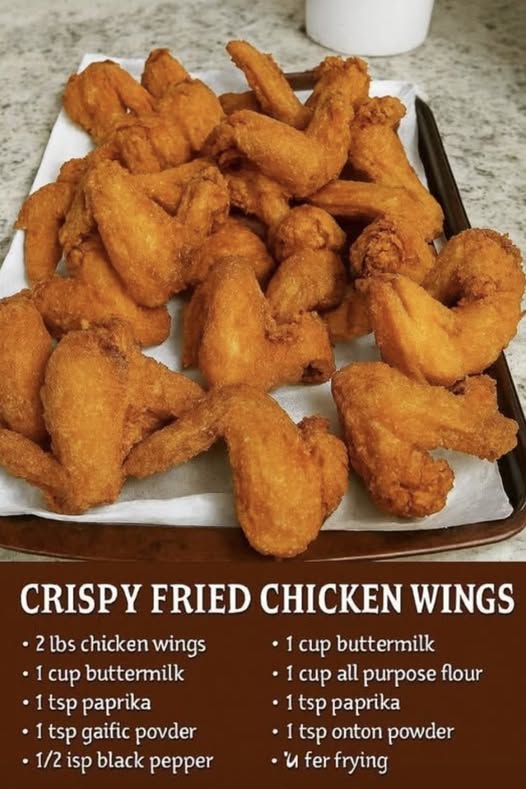
Step-by-Step Instructions
First, we marinate. Pat your wings completely dry with paper towels—this helps the buttermilk cling. In your large bowl, whisk the buttermilk with all the spices until it’s a beautifully speckled, creamy bath. Submerge the wings, cover, and let them rest in the fridge. I let mine go for at least 4 hours, but overnight is magic. The first time I rushed this step at 2 hours, the flavor difference was noticeable. The long soak is where the flavor and tenderness build, so be patient here.
When you’re ready to fry, pour your oil into the heavy pot until it’s about 2-3 inches deep. Heat it slowly to 350°F (175°C). This is where the thermometer is essential. While it heats, take your wings straight from the buttermilk and let the excess drip off—you want them coated, but not swimming. I carefully lower them into the oil one at a time using tongs to avoid splatters. Don’t crowd the pot! I do about 6-8 wings per batch. The oil will bubble furiously and then settle into a steady, active sizzle.
Fry for 10-12 minutes, turning them occasionally for an even, deep golden-brown color. I listen for the sound—a steady, lively crackle means the temperature is right. If it gets too quiet, the oil is too cool. The first time, I pulled them out at 8 minutes, and while cooked, they lacked that ultimate crunch. That full fry time renders the fat and sets the crust. Transfer them to the wire rack immediately. Let them rest for just a few minutes—the sizzle will stop, and you’ll be left with the crispiest wings imaginable.
Pro Tips for Best Results
My biggest lesson? Temperature control is everything. I tested frying at 375°F, 350°F, and 325°F. At 375°, the outside browned too fast before the inside was fully done. At 325°, they absorbed too much oil and were greasy. 350°F is the sweet spot. Also, let your oil come back to temperature between batches. I was impatient once and added cold wings to oil that had dropped to 300°F, resulting in a pale, soggy batch. It’s worth the wait.
Another tip from my kitchen: don’t toss the wings in sauce right away if you’re going that route. Let them cool on the rack for 5 minutes first. I made the mistake of saucing them straight from the fryer, and the steam trapped under the sauce made the skin soften slightly. That brief rest ensures the sauce clings to a surface that’s still rigid and crisp. It’s a small step with a huge payoff in texture.
Finally, seasoning your wings right after they come out of the oil is key. While they’re piping hot and glistening, I always give them a very light sprinkle of salt. The heat helps it adhere and just makes every flavor pop. I learned this from a chef friend, and it was a genuine “aha!” moment that elevated my wings from great to restaurant-quality.
(See the next page below to continue…)