Equipment Needed
- Three shallow bowls or plates (for your dredging station)
- Baking sheet
- Parchment paper or a silicone baking mat
- Wire rack (optional, but highly recommended for extra crispiness)
- Kitchen tongs
- Sharp knife
Step-by-Step Instructions
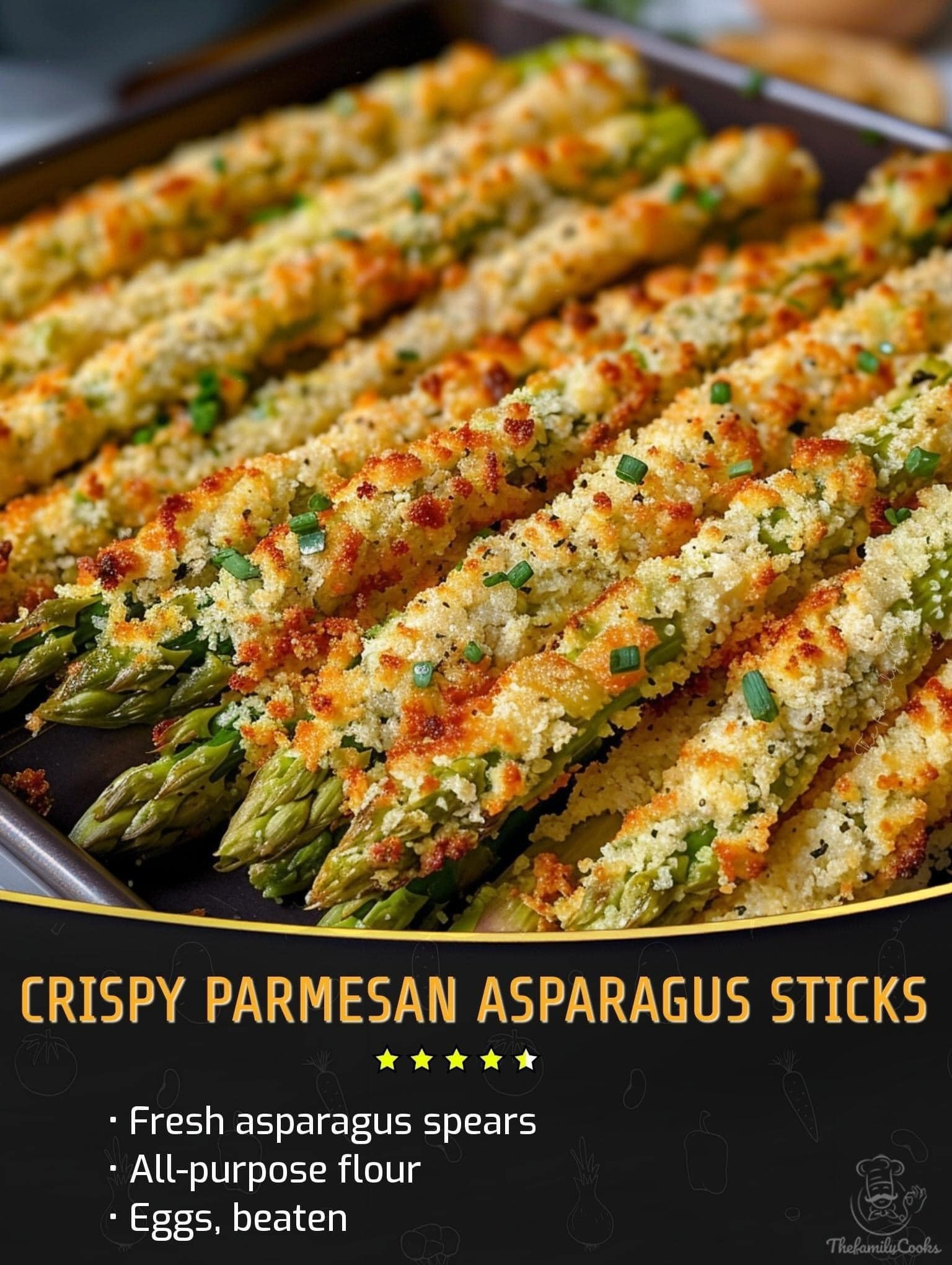
My first step is always to set up my assembly line. I line up three shallow dishes: the first with flour, garlic powder, salt, and pepper whisked together. The second holds the beaten eggs (I add a tiny splash of water to make them easier to work with). The third is for the magical mix of panko, Parmesan, and Italian seasoning, combined with a fork until it’s beautifully clumpy. I line my baking sheet with parchment and place a wire rack on top—this lets hot air circulate all around the sticks, preventing a soggy bottom. It’s a game-changer I discovered after my first slightly-soft batch.
Now, for the fun, slightly messy part. I take a spear of asparagus and roll it firmly in the flour mixture, making sure it’s lightly but completely coated. This is the “glue” for the next layers, so don’t rush it. Next, I dip it into the egg, letting any excess drip off. Finally, I press it firmly into the panko-Parmesan mixture, rolling and patting to ensure every nook and cranny gets coated in that cheesy crunch. I really press the coating on here; a gentle sprinkle just falls right off in the oven.
Once all my spears are proudly breaded and arranged on the rack, I give them a generous, even spray with olive oil. This mimics deep-frying, helping them turn a gorgeous, deep golden brown and get extra crispy. I pop the tray into a preheated 425°F (220°C) oven. The high heat is key. I set my timer for 10 minutes, then rotate the pan. At this point, my kitchen starts to smell incredible. I cook for another 8-12 minutes, but I start watching like a hawk after the rotation. You want them deeply golden and the asparagus inside tender when pierced with a fork.
The hardest part is waiting. I pull the tray out and let the sticks cool on the rack for a full 5 minutes before attempting to move them. This rest time lets the coating set and crisp up even more. I learned this patience lesson after sacrificing a few perfectly good crumbs to the baking sheet because I was too eager. That brief wait is the final, crucial step to achieving the perfect, stable crunch.(See the next page below to continue…)