Pro Tips for Best Results
Let’s talk potatoes. After testing this three different ways, I found that soaking the sliced potatoes in cold water for 20 minutes before assembling the casserole makes a noticeable difference. It washes off excess starch and prevents them from turning gray or sticking together. Just be sure to pat them very dry with towels before layering. This extra step guarantees perfectly tender, not gummy, potatoes.
The layering order is non-negotiable for me. The potatoes on the bottom create a barrier and almost become a crust, while the potatoes on top steam and soften in the savory juices. If you just mix everything together, the texture isn’t the same. I’ve tried it both ways, and trust me, the layered method works better and feels more like a true casserole.
Don’t be tempted to add more liquid! The potatoes and vegetables release a lot of moisture as they cook. My first attempt was a bit soupy because I added an extra cup of broth thinking it needed it. It doesn’t. The ratios here are perfect as written. The final result should be hearty and thick, not runny.
Common Mistakes to Avoid
One major mistake I made the first time was not draining the ground beef well enough. That leftover grease will make the entire casserole feel heavy and oily. Take the extra minute to drain it in a colander, and maybe even give it a quick blot with a paper towel. It seems like a small thing, but it makes a huge difference in the final feel of the dish.
Another common pitfall is over-salting too early. I season my beef lightly while browning, but I hold back on adding the full salt amount to the mixture because the condensed soup, broth, and cheeses all contain salt. You can always add more at the end, but you can’t take it out. Taste the filling before the final cheese melt and adjust if needed.
Serving Suggestions
I like serving this casserole straight from the crockpot, spooned into shallow bowls. It’s a complete meal in one, but a simple side can really round it out. My absolute favorite thing to serve alongside is a crisp, green salad with a tangy vinaigrette. The freshness and acidity cut through the richness of the casserole beautifully and make the whole meal feel balanced.
For a more casual, family-style night, I’ll set out a basket of warm, crusty bread or soft rolls. They’re perfect for sopping up every last bit of the cheesy sauce. Sometimes, if we’re extra hungry, I’ll roast some green beans or broccoli in the oven while the casserole finishes—the oven does the work while the slow cooker handles the main event.
This dish is also a phenomenal potluck or gathering food. I just bring the whole slow cooker insert, keep it on the “warm” setting, and watch it disappear. It’s universally loved, easy to transport, and requires no last-minute fuss. I’ve brought it to everything from football watch parties to neighborhood potlucks, and I always come home with an empty dish.
Variations & Customizations
The beauty of this recipe is how adaptable it is. I’ve made a fantastic “Philly Chicken” version by substituting the ground beef for about 2 pounds of diced chicken breasts or thighs. I don’t pre-cook the chicken; I just add it raw, diced into bite-sized pieces, and it cooks perfectly in the slow cooker with the other ingredients. The flavor profile is lighter but just as delicious.
For a kick of heat, my husband loves when I add a diced jalapeño or two to the pepper mix, or stir a tablespoon of pickled banana pepper rings into the beef mixture. You can also swap the provolone for pepper jack cheese at the end for a spicier cheese pull. It’s a simple swap that completely changes the vibe.
I’ve seen friends get creative with the “cheesesteak” part, too. One added sliced mushrooms when cooking the beef, which was fantastic. Another used sliced steak (like flank or sirloin) instead of ground beef for a more authentic texture—just be sure to slice it very thinly against the grain. The formula is forgiving, so make it your own!
How to Store, Freeze & Reheat
From experience, leftovers keep wonderfully. I store any cooled leftovers in an airtight container in the refrigerator for up to 4 days. To reheat, I strongly recommend using the oven or a toaster oven (at about 350°F until warmed through) instead of the microwave. The microwave can make the potatoes a bit rubbery and the cheese separates. The oven method preserves the textures much better, giving you a near-perfect fresh-out-of-the-crockpot experience.
This casserole freezes surprisingly well! I let it cool completely, then portion it into freezer-safe containers or a foil pan. I cover it tightly with plastic wrap and then foil. It keeps for up to 3 months. To reheat from frozen, I thaw it overnight in the fridge first, then bake it covered at 350°F for 30-45 minutes, until bubbling hot. Adding a tiny splash of broth before reheating can help revive the sauciness.
Conclusion
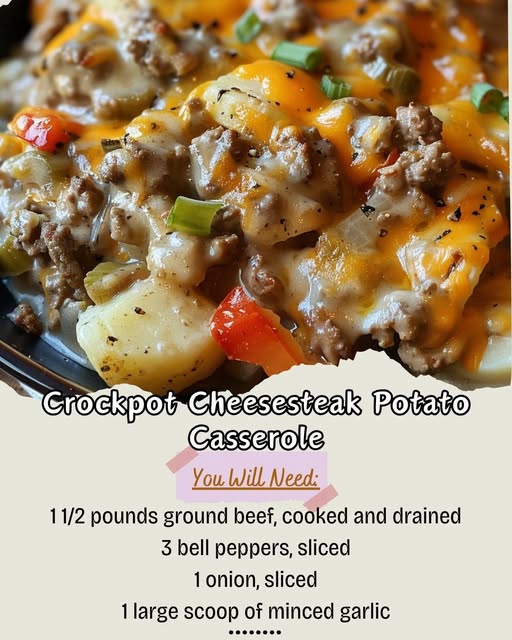
This Crockpot Cheesesteak Potato Casserole is more than just a recipe; it’s my little secret weapon for effortless, comforting meals that bring everyone to the table with a smile. It embodies everything I love about home cooking: familiar flavors, simple processes, and a result that feels like a warm hug. I hope it finds its way into your kitchen and becomes a trusted, beloved recipe for your family, just as it has for mine. Happy, easy cooking