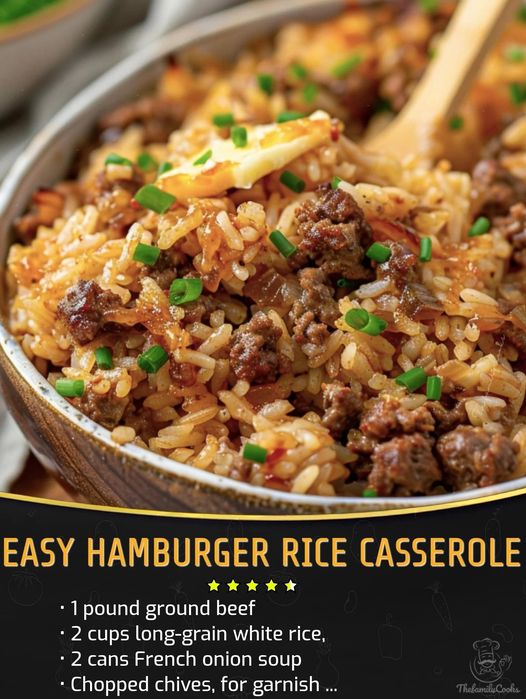
Step-by-Step Instructions
First, I preheat my oven to 350°F. Then, in my Dutch oven over medium-high heat, I brown the ground beef, breaking it up with my spoon until it’s just cooked through and no longer pink. I don’t rush this step—getting some little crispy bits on the meat adds fantastic texture. I also don’t drain all the fat unless there’s an excessive amount; that rendered fat carries so much flavor that will soak into the rice. The kitchen starts to smell amazing at this point, all savory and rich.
Next, I simply stir in the two cups of dry, long-grain white rice right into the beef and those delicious drippings. I let it toast for just a minute, stirring constantly. This little toast wakes up the rice and helps each grain stay separate. Then, I pour in both cans of French onion soup straight from the can—no water added. I give everything a really good stir, making sure the rice is evenly submerged in the soup. The mixture will look a bit brothy, but that’s perfect; the rice will drink it all up.
Finally, I bring the whole pot just to a bubble on the stovetop. The moment I see those first few bubbles break the surface, I clamp the lid on tightly (sometimes with that foil safety net underneath) and immediately transfer the pot to the preheated oven. I set my timer for 45 minutes. No peeking! I ruined a batch once by opening the lid too early and letting the crucial steam escape. When the timer goes off, I take it out, leave the lid on, and let it rest for 10 full minutes. This rest time is non-negotiable—it lets the rice finish steaming and settle into the perfect texture.
Pro Tips for Best Results
Let the casserole rest after baking. I know it’s tempting to dig right in, but those 10 minutes off the heat with the lid on are magical. They allow the last bit of steam to be absorbed, firming up the rice so it’s fluffy, not mushy, and making it much easier to serve. I’ve rushed this step and ended up with a delicious but slightly soupy spoonful. Patience here rewards you with the ideal consistency.
Toasting the dry rice in the beef fat for that brief minute is a tip I picked up after several tests. I’ve tried this step both ways, and trust me, this one works better. It coats each grain in a thin layer of flavor and helps create a barrier so the rice absorbs the liquid more evenly during baking. It’s the difference between good rice and great, distinct rice in your final casserole. It takes seconds but elevates the entire dish.
When you fluff and serve, use a fork, not a spoon. Gently rake through the casserole to separate the grains and distribute the beef evenly without smashing them. I also always add my fresh chopped chives right at the end, after fluffing. Adding them before baking makes them vanish. This way, you get those lovely pops of fresh color and a mild, oniony brightness that cuts through the richness beautifully.
(See the next page below to continue…)