Pro Tips for Best Results
I tested the rice texture three different ways, and here’s what I learned the hard way: slightly undercooked rice is your friend. If your rice is a little al dente before it goes into the casserole, it will absorb the sauce and finish cooking in the oven without turning to mush. If you use rice that’s already perfectly soft, you risk a gummy final texture.
Don’t be shy with the color on your peppers and onions. That char is where the true “fajita” flavor lives. I used to rush this step, afraid of burning, and my casserole lacked that depth. Let them sit in the hot skillet undisturbed for a minute or two to get some blackened spots. It makes a world of difference in the final taste.
For the ultimate golden, bubbly top, I’ll sometimes pop the casserole under the broiler for the last 2-3 minutes of baking. Just keep a very close eye on it! This gives you that restaurant-quality, slightly crisp cheese topping that is utterly irresistible. It’s a small step with a huge visual and textural payoff.
Common Mistakes to Avoid
The first time I made this, I made the classic mistake of not draining the canned tomatoes and green chiles. My casserole was way too wet and soupy, even after extra baking time. It tasted fine, but the texture was off. Draining that liquid is a crucial 10-second step that ensures your casserole holds its shape beautifully.
Another lesson from my kitchen: seasoning in layers. The fajita packet and soup have salt, but they need help. I once forgot to season the vegetable sauté and the final dish tasted flat. Now, I always add a pinch of salt and pepper to the peppers and onions as they cook, and I taste the combined mixture in the bowl before baking. If it needs a little more cumin or chili powder, I add it then. You can’t fix underseasoning after it’s baked!
Serving Suggestions
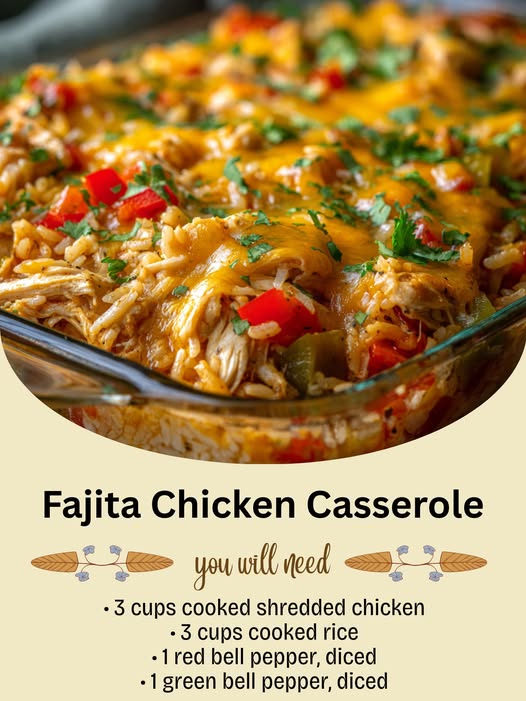
I like serving this casserole right out of the baking dish, family-style, with a big handful of freshly chopped cilantro scattered over the top. The bright, herbal pop cuts through the richness perfectly. On the side, I always offer cool, creamy toppings because they balance the heat and add freshness. A big dollop of extra sour cream, some chunky guacamole, and a bowl of pico de gallo are my non-negotiable trio.
For a restaurant-style spread, I’ll warm up some soft flour tortillas on the side. My family loves making little casserole burritos, scooping the hot filling right into a tortilla with their toppings. It’s fun, interactive, and stretches the meal even further. If we’re feeling it, a simple side of crunchy tortilla chips for scooping is always a hit, too.
On a busy weeknight, I often keep it super simple. A crisp green salad with a lime vinaigrette or just some quick-pickled red onions (thinly slice an onion, cover with lime juice and a pinch of salt, let sit for 15 minutes) is all you need to round out the meal. It’s hearty enough to stand on its own, so don’t feel pressured to make a bunch of sides unless you want to.
Variations & Customizations
This recipe is a beautiful canvas. I’ve made a “Tex-Mex” version by swapping the fajita seasoning for a packet of taco seasoning and using a blend of cheddar and Monterey Jack cheese. It’s a slightly different, but equally delicious, flavor profile. For a kick, I’ll sometimes add a finely chopped jalapeño to the pepper sauté (seeds removed if you’re sensitive to heat).
For my vegetarian friends, I’ve simply omitted the chicken and used an extra can of black beans or pinto beans, and swapped the cream of chicken soup for cream of mushroom. It’s incredibly satisfying and protein-packed. You could also add in sautéed zucchini or mushrooms for more bulk.
My sister loves to make a “breakfast for dinner” version. She uses cooked, crumbled spicy sausage instead of chicken, and sometimes even cracks a few eggs on top during the last 10 minutes of baking. It’s a completely different dish but inspired by the same method. Don’t be afraid to make it your own!
How to Store, Freeze & Reheat
To store leftovers, I let the casserole cool completely, then cover the baking dish tightly or transfer portions to airtight containers. It keeps beautifully in the fridge for 3-4 days. For reheating, the microwave works fine for single portions (sprinkle a tiny bit of water on top to keep it moist), but to recapture that crispy top, I reheat larger portions in a 350°F oven, covered with foil, until heated through (about 20 minutes), then remove the foil for a few minutes.
This casserole freezes wonderfully, which is a lifesaver. I assemble it completely in a foil baking dish (perfect for gifting, too!), but stop before baking. I wrap it tightly in a layer of plastic wrap, then a layer of heavy-duty foil, label it, and freeze for up to 2 months. To cook from frozen, I don’t even thaw it—I just remove the plastic wrap, cover with the foil, and bake at 375°F for about 1 hour 15 minutes, then uncover and bake until bubbly and hot in the center. It’s like having a fantastic freezer meal ready to go.
Conclusion
This Fajita Chicken Casserole truly is more than the sum of its parts. It’s the kind of reliable, crowd-pleasing recipe that earns a permanent spot in your dinner rotation. I hope it brings as much joy and ease to your table as it has to mine. Give it a try this week, and don’t forget to let me know how it turns out in your kitchen. Happy cooking