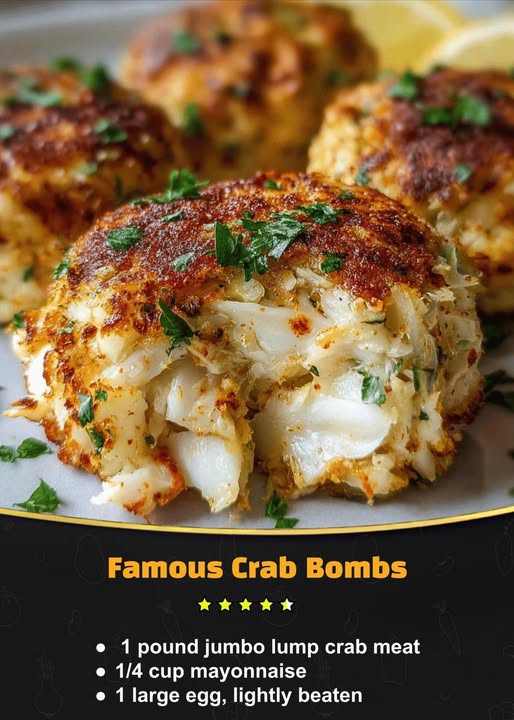
Pro Tips for Best Results
My number one tip is all about temperature. Make sure your crab mixture is cold before you start forming the bombs. I often pop the bowl in the fridge for 15-20 minutes after mixing. A cold mixture is far easier to handle and shape without falling apart. Also, having a bowl of cool water nearby to occasionally rinse and re-oil your hands prevents the mixture from sticking to you like glue and makes the process much smoother.
When frying, don’t be tempted to crank the heat to high to cook them faster. Medium heat is your friend. It allows the inside to heat through completely while giving the panko coating time to become irresistibly crunchy and golden without burning. If you see the panko browning too quickly, your oil is too hot. I keep a digital thermometer handy and aim for an oil temperature of about 350°F (175°C) for the perfect fry.
For an extra layer of flavor and texture, I sometimes toast the panko breadcrumbs in a dry pan for a few minutes before using them for the coating. It adds a nutty, deeper flavor and an even more robust crunch. It’s a small, optional step, but if you have an extra five minutes, it truly elevates the final dish. Trust me, do not skip the wire rack step for draining—it makes a huge difference in the final texture.
Common Mistakes to Avoid
The biggest mistake I made the first time was overmixing. I treated the crab like burger meat, mushing it all together until it was a homogeneous paste. The result was a dense, rubbery little puck, not a light, flaky bomb. Please, learn from my error! Use a folding motion and stop the second the ingredients are combined. A few stray lumps of crab are a feature, not a bug.
Another pitfall is incorrect oil temperature. If the oil smokes, it’s too hot and will burn the coating. If the bombs just sit there and slowly soak up oil, it’s too cool. That sizzle test is crucial. Also, don’t crowd the pan. Adding too many at once plummets the oil temp, leading to soggy, oily exteriors. Fry in small, manageable batches and keep your finished bombs warm in a 250°F oven on that wire rack set-up while you finish the rest.
Serving Suggestions
I love serving these bombs immediately while they’re at their peak crispness. Arrange them on a platter with plenty of lemon wedges for squeezing—that bright acid cuts through the richness beautifully. For dipping, I always offer two sauces: a classic, creamy rémoulade (I mix mayo, more Dijon, capers, pickle relish, and a dash of hot sauce) and a simpler, zesty lemon aioli. The contrast lets everyone choose their own adventure.
For a full meal, I turn these into the star of a seafood feast. I’ll plate them over a simple arugula salad dressed with lemon vinaigrette, which makes for a stunning lunch. For dinner, I pair them with creamy coleslaw, crisp sweet potato fries, and maybe some roasted corn on the cob. It feels indulgent and celebratory without requiring you to slave over the stove for hours.
They are also the ultimate party food. I’ve served them at everything from holiday gatherings to casual backyard barbecues. To make it easier on yourself, you can bread them completely several hours ahead, place them in a single layer on a tray, cover, and keep them in the fridge until your guests arrive. Then, just fry and serve. The “oohs” and “aahs” are practically guaranteed.
Variations & Customizations
If you’re not a fan of frying, you can absolutely bake these. I’ve tested it! Place the breaded bombs on a parchment-lined baking sheet, spray or brush them lightly with oil, and bake in a 425°F oven for 15-20 minutes, flipping halfway, until golden. They won’t be quite as uniformly crispy as the fried version, but they are still utterly delicious and a great lighter option.
Feel free to play with the seasoning blend. Old Bay is classic, but a Cajun seasoning blend gives them a wonderful spicy kick. I’ve also made an “herb garden” version using fresh dill and tarragon in the mix, which feels very elegant. For a different texture, sometimes I’ll mix in a very small amount of finely shredded sharp cheddar cheese—maybe two tablespoons—for a subtle, melty surprise inside.
You can also play with the shape and size. For a passed appetizer, I make them teaspoon-sized, which I call “Crab Poppers,” and they fry up in just a minute. For a more substantial burger-alternative, form the mixture into patties and serve on brioche buns with lettuce, tomato, and that rémoulade. The basic mixture is wonderfully adaptable once you get the technique down.
How to Store, Freeze & Reheat
These are truly best eaten right after frying, but if you have leftovers, let them cool completely on the rack. Store them in a single layer (or between layers of parchment) in an airtight container in the fridge for up to 2 days. To reheat, do not microwave them—it will turn the coating soft and sad. Instead, place them on a wire rack over a baking sheet and warm them in a 375°F oven for 10-12 minutes until heated through and re-crisped. An air fryer also works brilliantly for this, at 370°F for about 6-8 minutes.
They freeze beautifully before frying. After breading, place the uncooked bombs on a parchment-lined tray and flash-freeze until solid (about 2 hours). Then, transfer them to a freezer-safe bag. You can fry them directly from frozen—just add an extra minute or two to the frying time. I don’t recommend freezing them after they’ve been cooked, as the texture of the reheated crab can become a bit tough and watery.
Conclusion
I hope you feel inspired and confident to bring these Famous Crab Bombs into your own kitchen. They’ve brought so much joy to my table, from quiet dinners to raucous gatherings, and I know they’ll do the same for yours. Cooking is about sharing those moments of delicious triumph, and this recipe is a surefire winner. So grab that jumbo lump crab, be gentle with your folding, and get ready for the incredible aroma and flavor that’s about to fill your home. Happy cooking!