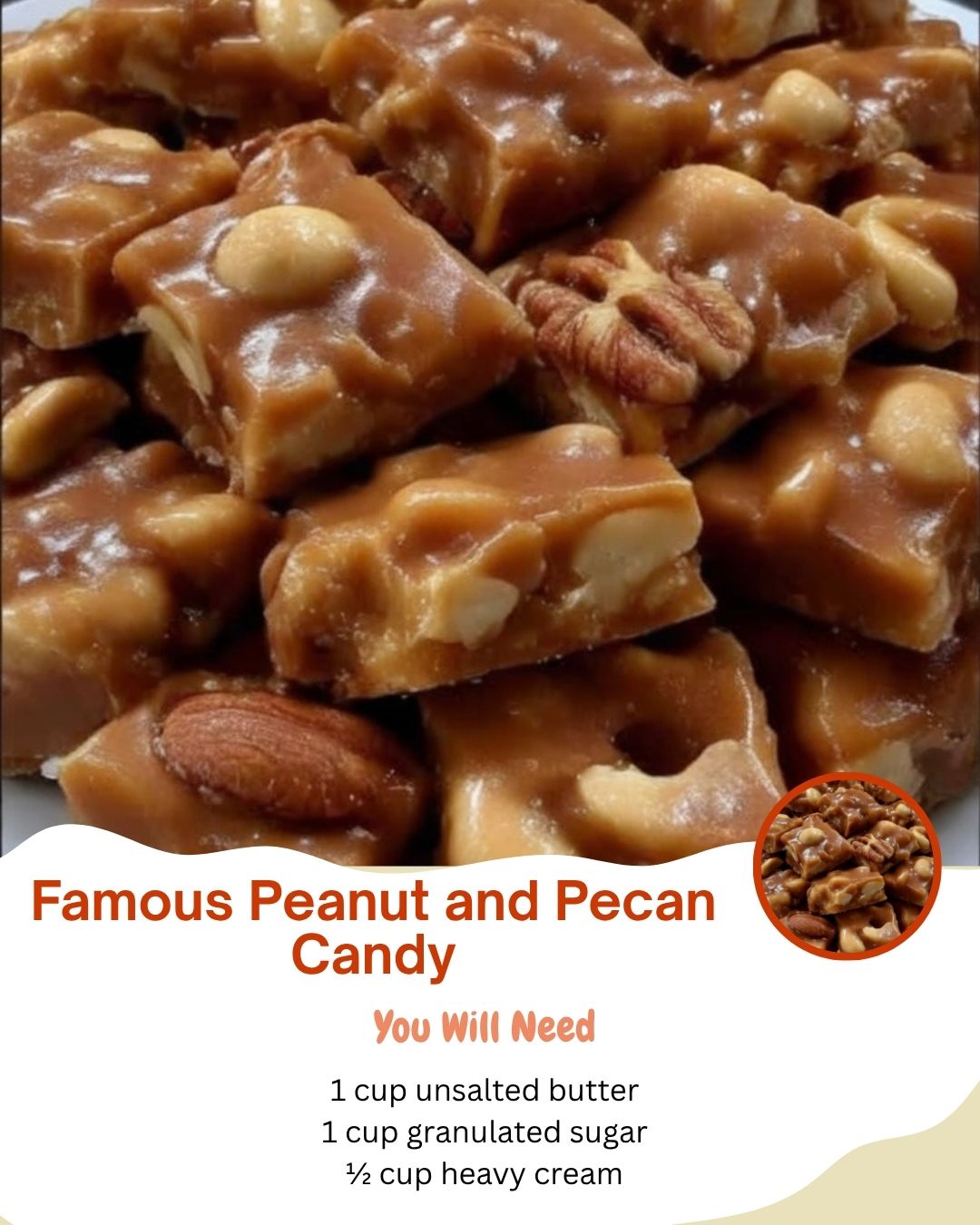
The first time I made this Famous Peanut and Pecan Candy, the entire house transformed. My kitchen filled with the warm, buttery, and profoundly sweet scent of caramelizing sugar, mingling with the toasty nuttiness of pecans and the humble, comforting aroma of peanuts. It was pure, old-fashioned magic. I remember pulling the pan from the stove, watching the golden concoction bubble, and feeling a giddy sense of anticipation. This recipe isn’t just about making candy; it’s about creating little squares of buttery, crunchy joy that instantly transport you to a simpler, sweeter time. I promise you, the moment you break into a piece and taste that perfect blend of salty and sweet, you’ll understand why this has become a cherished staple in my home.
Ingredients
- 1 cup unsalted butter
- 1 cup granulated sugar
- 1/2 cup heavy cream
- 1 cup roasted, salted peanuts
- 1 cup pecan halves
Let’s talk about these simple ingredients, because their quality truly dictates the soul of this candy. I always use unsalted butter so I can control the salt level perfectly, allowing the natural salt from the peanuts to shine through. That granulated sugar is your foundation—it’s going to melt and caramelize into liquid gold. For the heavy cream, please don’t be tempted to substitute with milk or half-and-half; the high fat content is crucial for creating that luxuriously smooth, non-grainy texture that sets up with a perfect snap. As for the nuts, I’ve learned the hard way that using raw nuts just doesn’t deliver the same depth. The roasted, salted peanuts provide essential savory pops, and toasting the pecans beforehand (even just for 5-7 minutes in a 350°F oven) unlocks an incredible fragrance and crunch that makes all the difference.
Equipment Needed
- Heavy-bottomed medium saucepan (3-quart is ideal)
- Wooden spoon or heatproof spatula
- Candy thermometer (digital is best)
- 8×8 or 9×9 inch baking pan
- Parchment paper
- Sharp knife for cutting
Having the right tools turns this from a potentially stressful endeavor into a joyful process. That heavy-bottomed saucepan is non-negotiable—it distributes heat evenly, preventing those dreaded hot spots that can scorch your sugar in an instant. I’ve tried this in a thin pot, and trust me, this one works better. A candy thermometer is your best friend here; while the “hard crack stage” can be tested in water, the thermometer takes the guesswork out and is worth the small investment. Lining your pan with parchment paper isn’t just a suggestion; it’s what lets you lift out the entire slab of candy effortlessly for clean, satisfying cuts. I learned this after wrestling with a buttered pan and broken pieces—never again.
Step-by-Step Instructions
The process begins with combining your butter, sugar, and heavy cream in that sturdy saucepan over medium heat. I stand right there, stirring constantly with my wooden spoon, watching as the butter melts and the mixture turns a pale, creamy yellow. This is where patience is key. Don’t crank the heat to make it go faster; you’ll risk separating the fats. As it starts to bubble gently, that’s when I clip on my candy thermometer. The smell at this stage is already divine—rich, buttery, and sweet.
Now, you’ll keep stirring, adjusting the heat to maintain a steady, rolling boil. The mixture will gradually darken from pale yellow to a beautiful golden caramel color. This is the most critical phase. Watch that thermometer like a hawk, waiting for it to hit 300°F, the hard crack stage. I once got distracted and let it climb to 310°F, and while the candy was still delicious, it had a slightly bitter, over-caramelized note. The moment it hits 300°F, immediately remove the pan from the heat. The residual heat will carry it a few degrees further, which is perfect.(See the next page below to continue…)