Equipment Needed
- A large, heavy-bottomed pot or Dutch oven (for safe, even heating of the oil)
- Deep-fry or candy thermometer (crucial for getting the oil temp just right)
- Wire cooling rack set over a baking sheet
- Three shallow bowls or pie plates (for your breading station)
- Tongs or a spider skimmer
- Paper towels
Step-by-Step Instructions
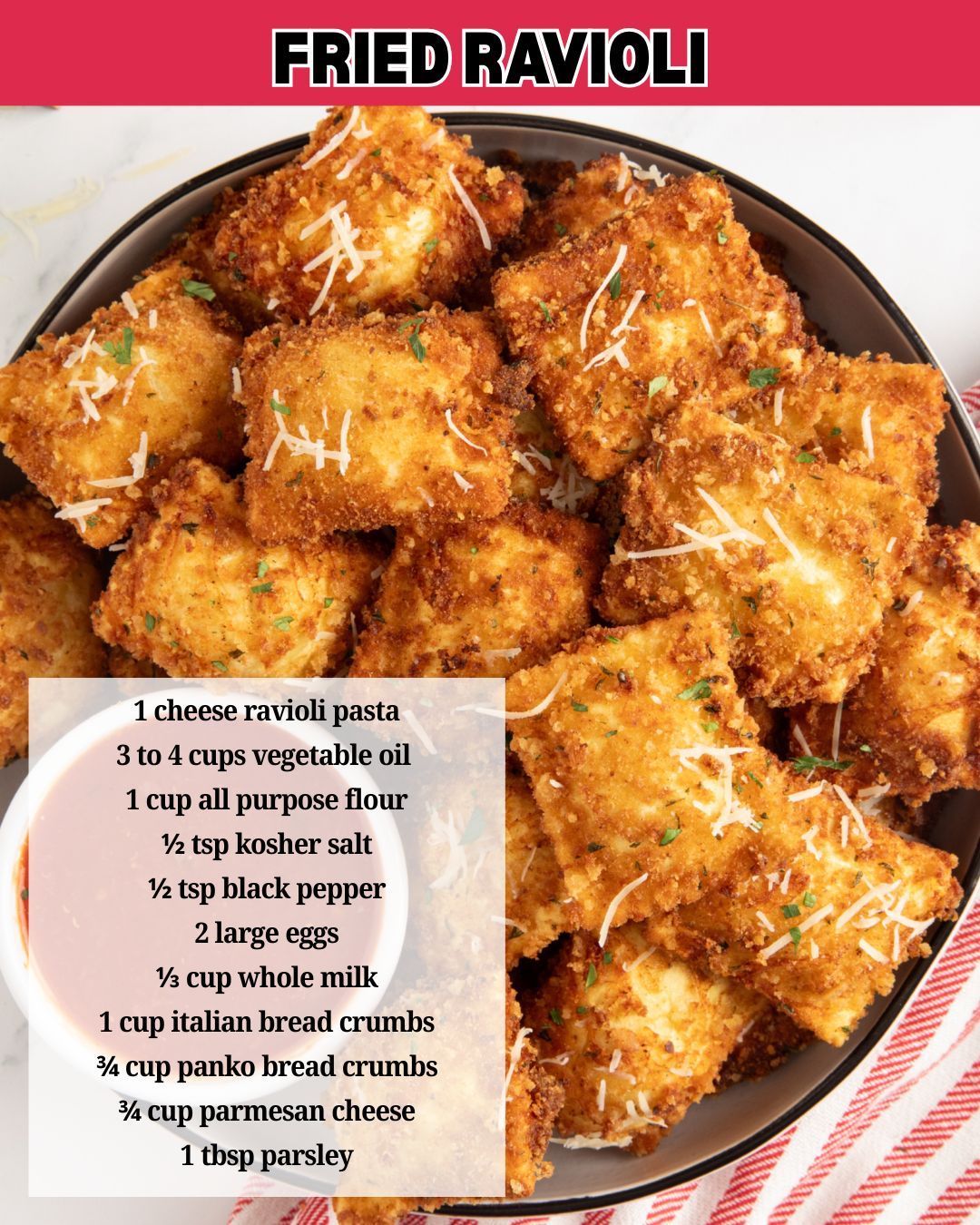
The key to success here is setting up a flawless breading station before you even think about turning on the stove. I line up three bowls: in the first, I whisk together the flour, salt, and pepper. In the second, I vigorously beat the eggs with the milk until completely smooth. In the third, I combine the Italian breadcrumbs, panko, grated Parmesan, and parsley, mixing it with my fingers to break up any clumps. This “dry-hand, wet-hand” method is your best friend for keeping the process clean and efficient.
Now, heat your oil. I pour about 1.5 inches of vegetable oil into my Dutch oven and attach my thermometer. Slowly bring it to 350°F (175°C). This is the perfect temperature—hot enough to seal the coating quickly without burning, but not so hot that the inside stays frozen. I’ve learned the hard way that guessing the temperature leads to oily or burnt ravioli. The thermometer is non-negotiable for me now. While the oil heats, start breading: dredge a ravioli in the flour, shake off the excess, dip it fully in the egg wash, let the excess drip off, then press it firmly into the crumb mixture, coating it completely. I press gently to make sure every nook and cranny is covered.
Frying time! Once the oil is steadily at 350°F, I carefully add 4-5 ravioli at a time using my tongs. Don’t crowd the pot, or the temperature will plummet and you’ll get soggy, oily ravioli. They fry quickly—just about 2-3 minutes total, flipping once, until they’re a gorgeous, deep golden brown. I listen for that steady, happy sizzle. The smell of toasting Parmesan and herbs is incredible. As they finish, I transfer them directly to the wire rack over the baking sheet, not onto paper towels. This trick, which I learned after a few batches, keeps the bottom crispy instead of letting steam soften it.
I repeat the process in small batches, always letting the oil come back to temperature between each. It takes a little patience, but it’s worth it for that perfect crunch on every single one. As they come out, I’ll give them a very light sprinkle of flaky sea salt while they’re still piping hot. Then, I try my very best to let them cool for just a minute or two before I inevitably steal one for “quality control.” The sound of that first crisp bite is everything.(See the next page below to continue…)