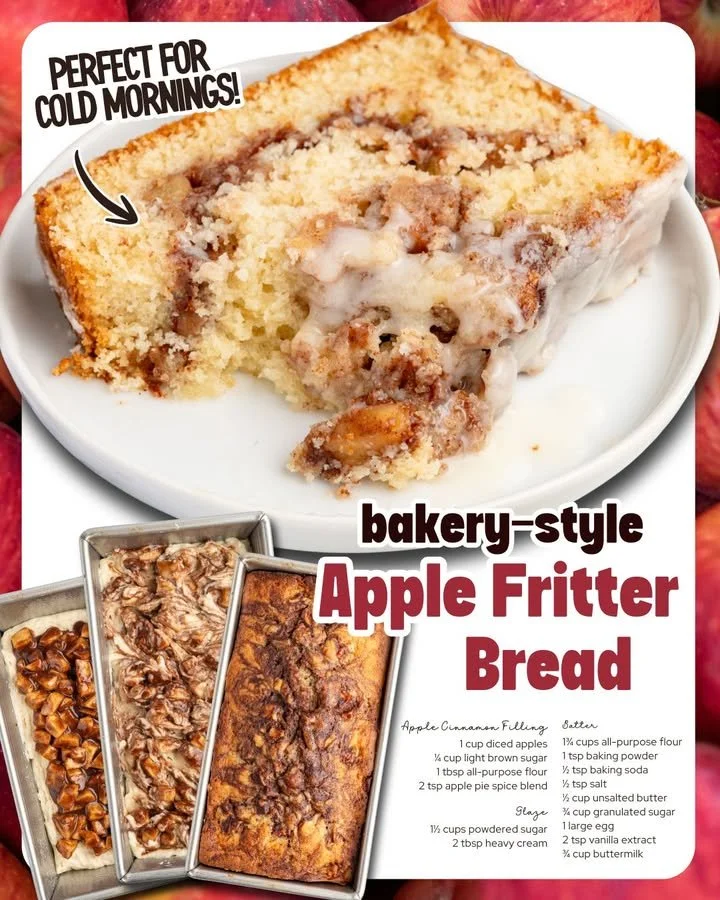
Now, it’s time to gently fold in those fresh, diced apples. As I do this, I can’t help but think about the delightful bites of fruit that will be hiding throughout the loaf. I’m careful not to overmix because I want my bread to be fluffy and light! Next, I grab my loaf pan and either grease it lightly or line it with parchment paper for easier removal. I pour the batter in and smooth out the top. After just about an hour in the oven, my kitchen is filled with the mouthwatering scent of baked apples and cinnamon.
When the baking timer goes off, I do the toothpick test—it should come out clean. I let the bread cool in the pan for about 10 minutes before transferring it onto a cooling rack. Now comes the fun part: making the glaze! In a small bowl, I whisk together the powdered sugar, milk, and vanilla extract until smooth. I drizzle it generously over the warm loaf, allowing it to soak in. Trust me, the moment the glaze hits the warm bread, you’ll want to dive right in!
Pro Tips for Best Results
I tested this recipe three different ways to find the perfect apple-to-bread ratio. I found that using a mix of sweet and tart apples, like Granny Smith and Honeycrisp, created an amazing flavor balance that kept the bread moist without making it overly sweet. Also, if you seem to have extra glaze leftover, you can always save it for drizzling on top when serving!
Another thing I discovered was that letting the bread cool completely before slicing yields prettier slices and allows the glaze to set perfectly. I learned this the hard way when I had a beautifully glazed loaf that fell apart as I tried to slice it while still warm! Patience pays off, my friends.
Finally, I recommend storing any leftovers in an airtight container, as it helps the bread retain its moisture and flavors for days. Just so you know, I often make this bread on a Sunday and it lasts well into the week, making for delicious breakfast treats!
Common Mistakes to Avoid
A mistake I made during my first few attempts was not peeling the apples thoroughly. Leaving the peel on can add an unexpected texture to the bread, and not in a good way! So, make sure the apples are peeled and diced well for the softest result. Also, cutting the apples too large can leave some unbaked chunks when baked inside the bread.
Another tip is to avoid overmixing the batter. I remember thinking a smooth batter would give me the best bread, but overmixing actually made it dense. So just fold until everything is combined—trust me, the fluffy texture is worth it!
And let’s not forget about the glaze. Adding too much milk can make it too runny, while too little can leave it clumpy. I suggest starting with less and gradually adding until you reach that perfect drizzle consistency. (See the next page below to continue…)