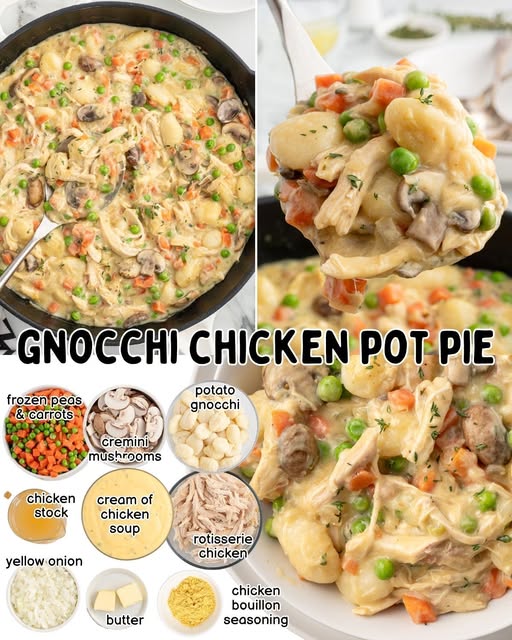
Pro Tips for Best Results
I’ve tested this recipe three different ways, and the cast-iron skillet is the undisputed champion. It heats evenly, gets the gnocchi perfectly toasted on the stovetop, and creates an incredible crust on the bottom and sides in the oven. If you don’t have one, any heavy, oven-safe pan will do, but the cast iron really makes a difference in texture. Also, toasting the gnocchi in butter before adding the liquids is a non-negotiable step for me now. I skipped it once, and the gnocchi were a bit pasty. That quick toast gives them a firmer bite.
Here’s what I learned the hard way about the filling consistency: it should look a little looser than you think it should be when you put it in the oven. The gnocchi will absorb a significant amount of liquid as they bake. If your mixture seems very thick on the stovetop, don’t hesitate to add an extra ¼ to ½ cup of chicken stock. It’s much easier to add liquid now than to end up with a dry pot pie later.
Don’t skip the rest time after baking! I know it’s tempting to dive right in, but allowing the dish to sit for 10 minutes is crucial. It lets the frantic bubbles settle, the sauce tighten up just a touch, and, most importantly, it saves the roof of your mouth from a serious scorching. This patience pays off with the perfect, scoopable serving that holds its shape beautifully on the spoon.
Common Mistakes to Avoid
The first time I made this, I was in a rush and didn’t fully sauté my onions. I figured they’d soften in the oven anyway. The result? A slightly sharp, raw onion flavor that cut through the creaminess in a not-so-pleasant way. Take those few extra minutes to cook them until they’re soft and sweet. It builds a foundational flavor that makes the whole dish sing. Trust me, do not rush the onion step.
Another mistake is over-baking. The goal is a bubbly filling and a golden top, not a dried-out casserole. The gnocchi are already cooked; we’re just heating everything through and browning the top. At the 20-minute mark, start checking it. If it’s bubbling like a witch’s cauldron and the top is nicely colored, it’s done. Over-baking can cause the sauce to break or absorb completely, leaving you with a dry result. Set a timer and keep an eye on it.
Serving Suggestions
I like serving this pot pie right from the skillet at the table—it’s rustic and inviting. A simple, bright side salad is the perfect companion to cut through the richness. My go-to is a mix of crisp romaine with a tangy vinaigrette; the acidity and crunch balance the creamy, warm gnocchi perfectly. It turns the meal into something that feels complete and well-rounded without any extra fuss.
For something a little heartier, a side of garlicky sautéed green beans or roasted broccoli is fantastic. I’ll often toss whatever veggie I’m roasting right on the same oven rack while the pot pie bakes. The roasted, slightly caramelized flavors play so nicely with the savory filling. It’s a hands-off way to get your greens in.
And don’t forget the bread! A warm, crusty baguette or some flaky biscuits on the side are mandatory in my house for sopping up every last bit of that creamy sauce. It’s the best part, and I make no apologies for it. A light, crisp white wine or even a hard cider also pairs wonderfully with all these cozy flavors.
Variations & Customizations
This recipe is wonderfully adaptable. Not a fan of mushrooms? I’ve left them out and added in extra peas and carrots, or even some chopped celery when I sauté the onions. For a decadent twist, swap the cream of chicken soup for cream of mushroom and add a cup of fresh spinach at the very end of the stovetop step—it wilts perfectly into the hot filling.
I’ve also seen friends make a fantastic turkey version using leftover holiday turkey and a splash of white wine in place of some of the stock. For a vegetarian spin, use vegetable stock, omit the chicken, and add in more hearty vegetables like diced potatoes and cannellini beans. The creamy soup and gnocchi base is so forgiving and welcoming to all sorts of add-ins.
If you want to play with herbs, fresh is lovely. A tablespoon of chopped fresh rosemary or sage added with the thyme gives it a more sophisticated, aromatic flavor. I love it with fresh thyme best—just strip the leaves from a few sprigs and throw them in. The possibilities are endless, which is why this dish has earned a permanent spot in my monthly rotation.
How to Store, Freeze & Reheat
Leftovers store beautifully, making fantastic lunches. Let the dish cool completely, then transfer it to an airtight container. It will keep in the refrigerator for 3-4 days. To reheat, I find the microwave works just fine for a single portion—just cover it and heat in 60-second intervals, stirring in between. For larger portions, reheat it in a covered oven-safe dish at 350°F until warmed through, which takes about 15-20 minutes. You may want to add a tiny splash of broth or cream to refresh the sauciness.
You can also freeze this gnocchi pot pie for longer storage. Assemble the dish completely in a freezer-safe, oven-to-table dish, but do not bake it. Cover tightly with a layer of plastic wrap and then foil. It will keep for up to 2 months. To cook from frozen, do not thaw. Remove the plastic wrap, cover with the foil, and bake at 375°F for about 45 minutes. Then, remove the foil and bake for another 15-20 minutes to brown the top. The texture of the gnocchi changes slightly after freezing—they become a bit softer—but the flavor is still absolutely fantastic.
Conclusion
This Gnocchi Chicken Pot Pie is more than just a recipe for me; it’s my go-to hug in a dish. It’s the meal I make when I need comfort, when I’m short on time but want something special, or when I’m feeding a family that deserves a little cozy magic. I hope it brings as much warmth and joy to your table as it has to mine. Give it a try this week, and don’t forget to come back and tell me how it turned out in your kitchen. Happy cooking