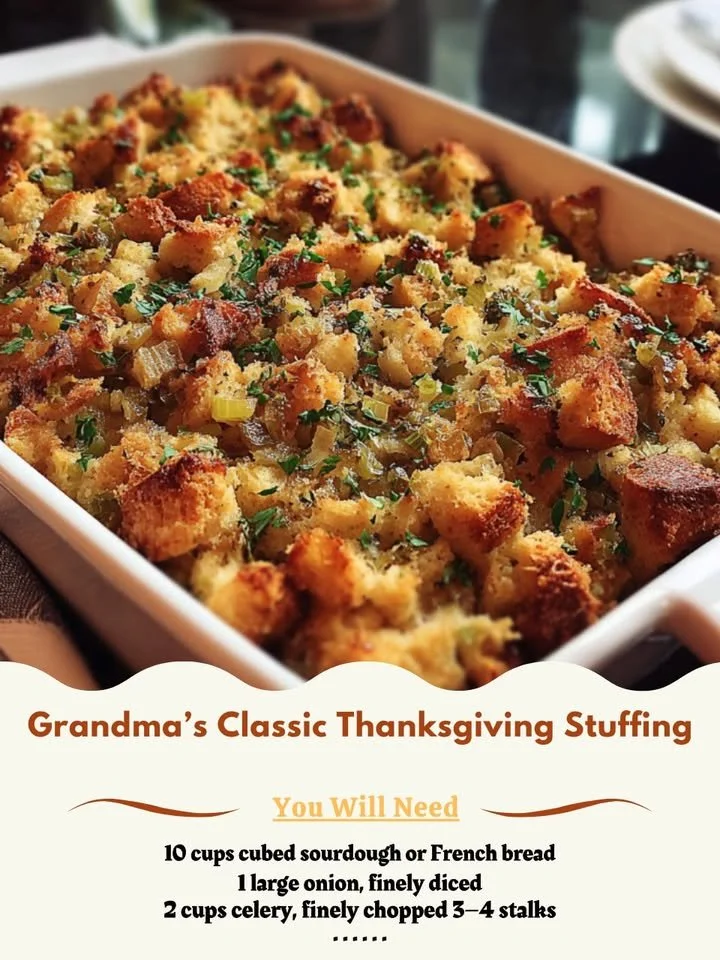
Next, pour in the chicken or vegetable broth while continuing to toss the bread mixture until it’s evenly moist. Be careful not to overdo it; you want it to be just right—moist, but not soggy. Now, sprinkle in the dried sage, thyme, and rosemary. Give everything a good mix and season with salt and pepper to taste. This is the moment when you should sneak in a taste of the mixture; it’s one of my favorite parts! Once all the flavors are combined, transfer the stuffing into your baking dish, spreading it evenly.
Cover the baking dish with aluminum foil and bake in your preheated oven for about 30 minutes. After that, uncover the dish and continue baking for an additional 15 minutes, allowing the top to become golden brown and crisp. The aroma that fills my kitchen during this time is simply irresistible! I often find myself daydreaming about that first forkful.
Pro Tips for Best Results
When it comes to bread, I highly recommend using a sturdy loaf, such as sourdough or a French baguette. I tested this three ways with different types of bread, and my favorite was definitely the sourdough; it added an extra tang that elevates the stuffing beautifully. Also, if you can, give the bread cubes a little time to air out before using them. Leaving them out overnight helps them become slightly stale, which results in a perfect texture.
Don’t hesitate to make the dressing a day in advance! I often prepare the stuffing the night before and store it in the fridge (without baking). This not only saves time, but the flavors have a chance to meld wonderfully. Just remember to bring it to room temperature before popping it in the oven, and adjust the baking time as needed.
Finally, keep an eye on the topping! You want that perfect crispy golden skin while keeping the stuffing moist inside. If you notice it browning too quickly, just cover it with foil and allow it to continue baking gently to ensure everything cooks evenly.
Common Mistakes to Avoid
One of the most common mistakes I see is using fresh bread instead of stale bread. Fresh bread might seem appealing, but it can lead to a mushy texture in the stuffing, which is definitely not what we want! Instead, using day-old bread gives the stuffing a nice structure and helps absorb the broth without falling apart.
Another mistake is not seasoning adequately. It’s essential to taste the mixture at different stages. I was hesitant during my early attempts, thinking it was better to under-season, which led to a bland stuffing that left everyone wanting more. So don’t be shy with your salt and pepper; they can enhance the flavor tremendously.
Lastly, make sure to bake it long enough! I know life gets busy, and it can be tempting to rush things, but undercooked stuffing is not safe to eat. Always check that it’s heated through and the top is golden brown to ensure a delicious result. (See the next page below to continue…)