Equipment Needed
- 9×13 inch baking dish
- Medium mixing bowl
- Whisk
- Cutting board & knife
- Measuring cups and spoons
- Spatula
Step-by-Step Instructions
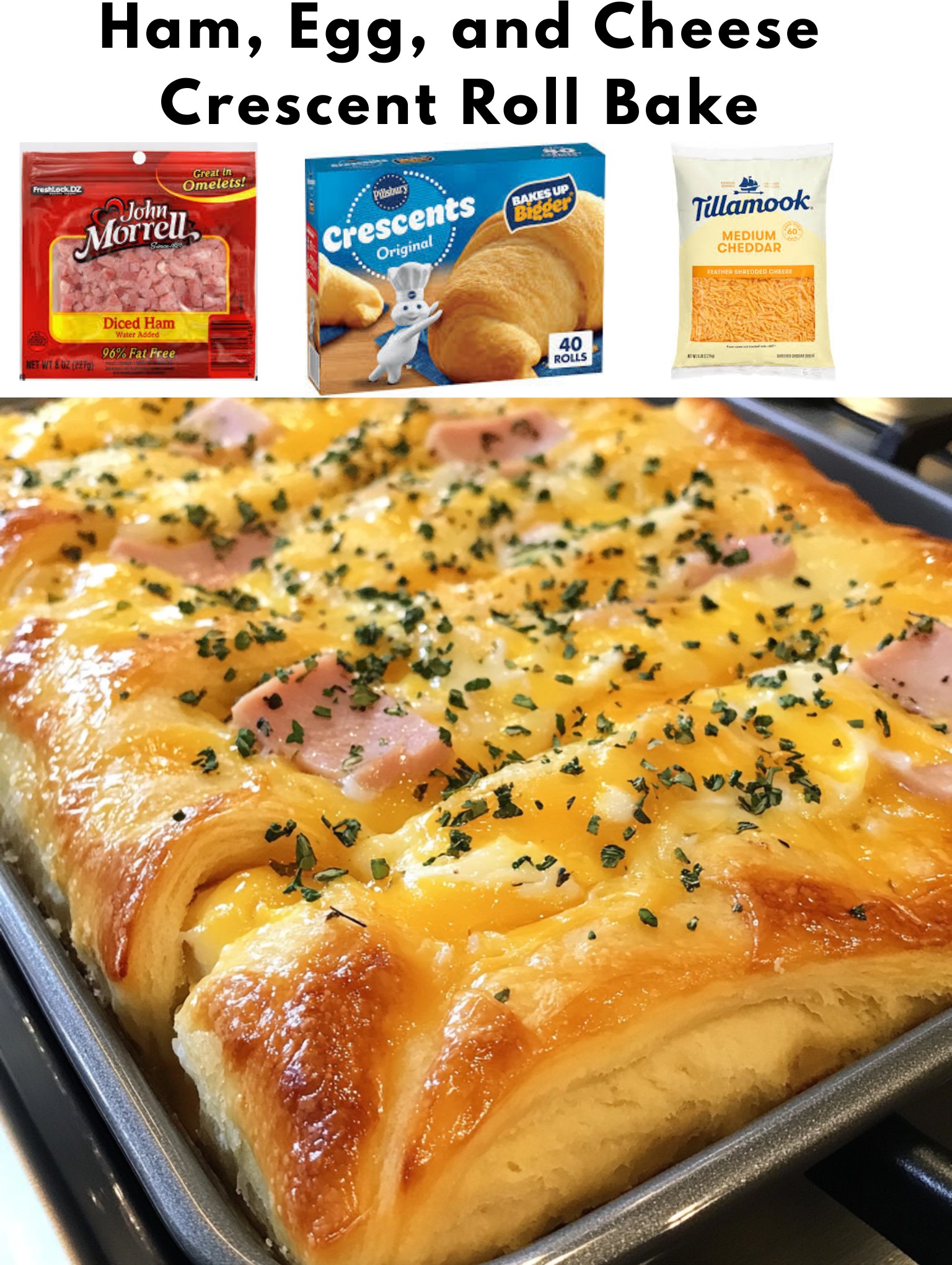
I always start by preheating my oven to 375°F (190°C) and lightly greasing that 9×13 dish. Unroll the crescent dough sheet—if yours has perforations, press them together to seal—and gently press it into the bottom and about halfway up the sides of your dish. It doesn’t have to be perfect; this is a rustic, cozy bake. I’ve found that letting the dough sit out for 5-10 minutes first makes it much easier to work with without tearing. Now, in your mixing bowl, whisk the eggs, milk, salt, pepper, and garlic powder with gusto until they’re completely smooth and slightly frothy. This aeration is key for a light, fluffy texture, so don’t rush it.
Next, I evenly scatter the diced ham over the crescent dough crust. Then, I sprinkle over a generous cup of that shredded cheddar cheese. The cheese layer acts as a bit of a barrier, helping to prevent the crust from getting soggy. Slowly and carefully, I pour the egg mixture right over the top. I tilt the dish a little to help it spread into all the nooks and crannies. The first time I made this, I just dumped it in the center and had to awkwardly spread it with a spatula, disturbing my lovely layers. A slow pour from the bowl’s edge is the way to go.
Here’s the final flourish before it hits the oven: top it all with the remaining 1/2 cup of cheddar and the grated Parmesan. The Parmesan adds a wonderful salty, nutty depth. I finish it with the fresh chives for a pop of color and freshness. Then, it goes into the oven, right on the middle rack. I set my timer for 25 minutes, but I start peeking at about 22. Ovens vary so much! You’re looking for the edges to be deeply golden brown and the center to be completely set with no jiggle.
The hardest part is waiting. I let it rest on the stovetop for a solid 5-7 minutes after pulling it out. This rest time is crucial—it allows the eggs to finish setting firmly, making it infinitely easier to slice cleanly. If you cut in immediately, it’ll be a delicious but messy scramble on a crust. I learned that the hard way, watching my beautiful slices slump on the first attempt. That patience pays off in perfect, neat portions.(See the next page below to continue…)