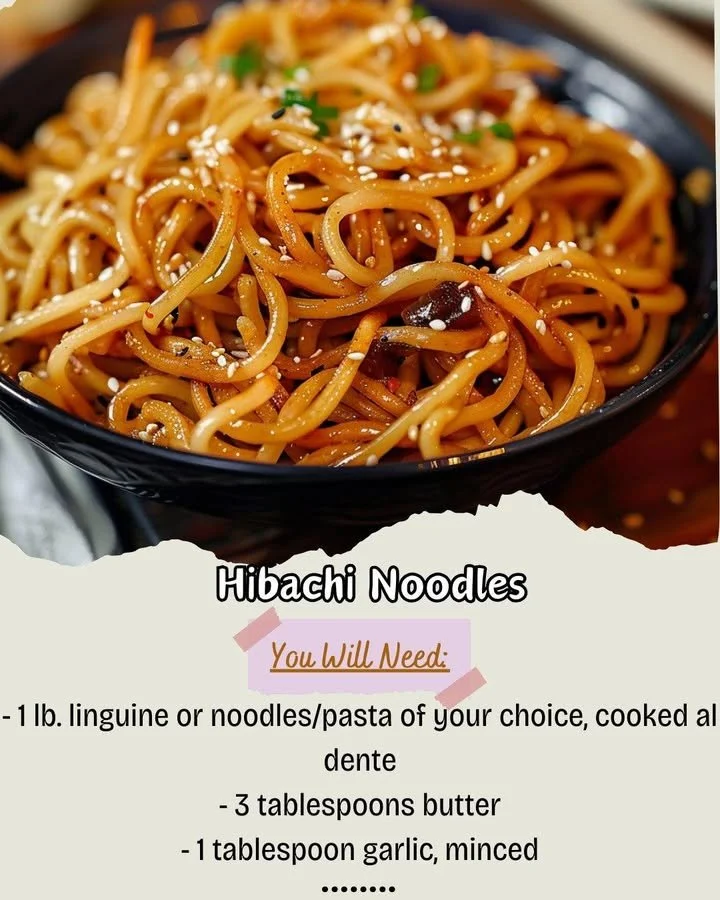
Another thing to watch is overcooking the noodles. Follow the package directions closely because nobody likes mushy noodles! I prefer them a little al dente as they will continue to cook a bit while you’re stir-frying them. It took me a few tries to get that timing just right, but now it’s perfect.
Also, be careful with your seasoning; it’s easy to go overboard with soy sauce. Start with less and adjust according to your taste as you stir-fry. I’ve gone a bit heavy-handed before, and it can overwhelm the dish. A little goes a long way!
Lastly, I must say, the order in which you add ingredients matters. Adding garlic too early can cause it to burn—so I always add it at the beginning but keep an eye on it as it can go from fragrant to burnt really quickly!
Serving Suggestions
These hibachi noodles are perfect as a standalone dish or paired with your favorite protein like grilled chicken, shrimp, or tofu. I often serve them alongside some delicious grilled teriyaki chicken. It adds a wonderful contrast of flavors! The juicy chicken drizzled with teriyaki sauce complements the savory noodles beautifully.
If I’m feeling indulgent, I like to whip up a side of gyoza or dumplings. The crispy bites alongside the soft noodles make for a delightful dining experience. Plus, it feels like a mini hibachi feast right at my dinner table!
Lastly, a side salad with a light sesame dressing can be a refreshing addition for a balanced meal. The crisp and refreshing flavors of a salad make the rich noodles shine even brighter. It’s the perfect combo for those summer evenings!
Variations & Customizations
One of the things I love most about hibachi noodles is how customizable they are. You can easily swap in your favorite vegetables based on what you have on hand. Carrots, broccoli, or snap peas work wonderfully and add beautiful color to the dish. I often use whatever is seasonal to keep things fresh and exciting!
Another variation I enjoy is adding protein to the mix. You can toss in grilled shrimp, chicken, or even marinated tofu to make it a more filling meal. Sometimes, I even use leftover rotisserie chicken for a quick weeknight meal, and it saves me so much time!
Lastly, I like to play around with seasoning. If I’m in the mood for something different, I add a splash of teriyaki sauce or a squirt of lime juice for a tangy twist. It brings the dish to life and keeps it exciting each time I make it!
How to Store, Freeze & Reheat
If you have leftovers (although they rarely last long in my house!), you can easily store them in an airtight container in the refrigerator for up to three days. I love reheating them in a skillet because it brings back that delightful stir-fry texture, but you can also use the microwave for convenience.
For long-term storage, you can freeze the noodles before adding sauces. Just make sure they are in an airtight container to prevent freezer burn. When you’re ready to enjoy them again, let them thaw overnight in the fridge and reheat as usual. The flavor holds up great, and you can recreate the magic in just a few steps!
When reheating, I recommend adding a splash of water or broth to keep the noodles from drying out. This small trick has done wonders for me, allowing me to enjoy leftovers that taste almost as good as the freshly made dish.
Conclusion
I hope you enjoy making these hibachi noodles as much as I do! This recipe is a delightful blend of flavors and textures that will surely bring joy to your table. So gather your ingredients and get cooking; I can’t wait for you to experience the deliciousness that awaits you in your kitchen. Happy cooking!