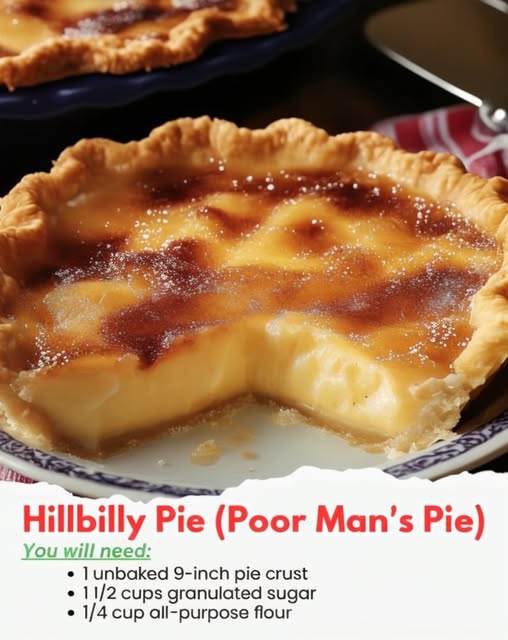
Step-by-Step Instructions
First, preheat your oven to 350°F (175°C). Take your pie crust and gently press it into your pie plate, crimping the edges however you like—I go for a simple fork-press pattern. There’s no need to pre-bake it. In your large bowl, whisk together the granulated sugar, flour, cinnamon, nutmeg, and that all-important pinch of salt until they are completely combined and no white streaks remain. This step is crucial for an even spice distribution and texture. I learned the hard way that if you don’t whisk the dry ingredients thoroughly, you can get little pockets of flour or clumps of spice.
Next, make a well in the center of your dry ingredients. Pour in the slightly cooled melted butter, the milk, and the vanilla extract. Now, whisk everything together vigorously until you have a smooth, silky, homogenous batter. It should be thin, like a pancake batter. Don’t worry if it seems runny—that’s exactly what you want! I’ve tried mixing this step lazily, and you end up with bits of unmixed flour; a good, strong whisking here is the key to a flawless filling.
Carefully pour the batter into your unbaked pie shell. It will fill it up nicely. Gently tap the pie plate on the counter to release any air bubbles. Place it on a baking sheet—this is my learned-the-hard-way tip, as it catches any potential drips and makes handling much easier. Bake on the middle rack for 50 to 60 minutes. You’re looking for the edges to be deeply golden and set, while the center still has a slight, gentle jiggle when you nudged the oven rack. It will continue to set as it cools. Let it cool completely on a wire rack before slicing. This waiting period is the true test of willpower!
Pro Tips for Best Results
Let your melted butter cool for a few minutes before adding it to the milk and dry ingredients. I once poured it in hot, and it slightly cooked the milk, creating little curds. Slightly cooled butter blends in seamlessly for a velvety texture. Also, use real vanilla extract, not imitation. In a recipe with so few flavor agents, the quality of the vanilla shines through. I’ve tested this three different ways, and the real stuff creates a warmer, richer flavor profile.
For the milk, whole milk is king for richness, but 2% works beautifully too. I don’t recommend skim, as the pie can turn out a bit thin. When you’re whisking the wet and dry together, don’t be timid. A full minute of steady whisking ensures everything is perfectly emulsified. The first time I made this, I was too gentle and had a faint floury layer at the bottom of my bowl that didn’t incorporate.
The baking sheet trick is a lifesaver. Not only does it catch spills, but it also provides a more stable surface for moving the pie in and out of the oven, preventing sloshing. And remember, the jiggle is your guide. If the center is liquidy, it needs more time. If it’s completely firm and doesn’t move at all, it’s overbaked and may become rubbery. That perfect, custardy jiggle in the center when you pull it out is the goal.
(See the next page below to continue…)