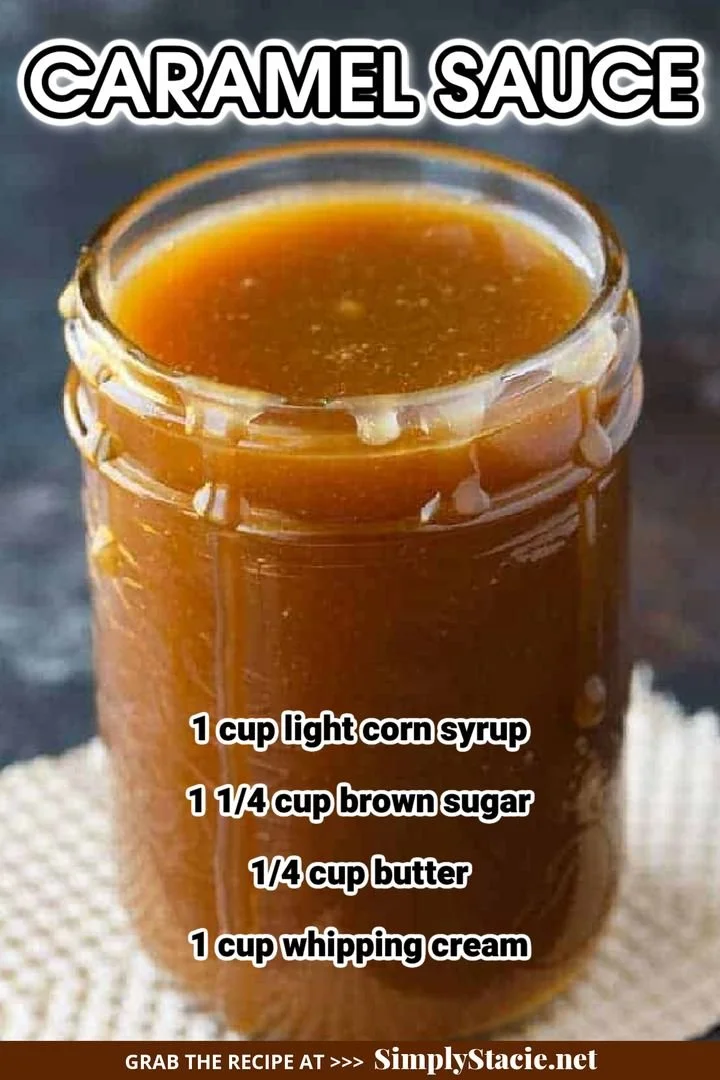
Next, I slowly add the cubed butter to the melted sugar. This part is always fun—I can almost hear the sugar sizzle as the butter melts and blends in. Stir vigorously until the mixture is completely smooth. Just when I think it can’t get any better, I slowly pour in the heavy cream. It’s essential to do this gradually so the mixture doesn’t seize up. Stir until well combined; the sauce should be thick and glossy. I like adding salt at this point to balance the sweetness, followed by a splash of vanilla extract for a hint of warmth.
After everything is fully blended, I let the sauce cool for about 10 minutes before transferring it to a heatproof jar. Watching it thicken as it cools is one of my favorite moments! It’s tempting to dive in right away, but allowing it to cool slightly creates a perfect drizzling consistency. My homemade caramel sauce can be stored in the fridge for two weeks—if I can resist eating it all before then!
Pro Tips for Best Results
I tested this recipe three ways: with light brown sugar, dark brown sugar, and plain granulated sugar. Ultimately, I found that granulated sugar gave me that classic caramel flavor, while the brown sugars added depth and richness. Feel free to experiment and find your favorite!
One tip that has saved me more than once is to have your butter and cream at room temperature before starting. That way, the butter melts smoothly into the sugar, and there’s no shocking temperature change that could cause the caramel to seize.
Lastly, if you’re worried about burning the sugar, I suggest using a candy thermometer. For caramel, the perfect temperature is around 350°F (175°C). This little gadget has been a lifesaver in my kitchen, giving me more confidence as I create perfect caramel every time.
Common Mistakes to Avoid
One of the most common mistakes is stirring the sugar too vigorously while it’s melting. I made this error once—I ended up with a crystalized mess! Instead, gently stir the sugar only until it begins to melt, then let it be.
Another mistake is adding the cream or butter too quickly. It can create steam, causing the mixture to bubble up aggressively, which can lead to burns. I learned the hard way to add in increments, stirring gently until everything is smoothly combined.
Additionally, be cautious about heat settings. I initially tried to make it on high heat, eager to speed up the process, but I ended up with burnt sugar. Medium heat is key—a slower melt means better flavor and color development.
Also, don’t skip the cooling step! I’ve made the mistake of pouring hot caramel straight into containers, which caused them to warp or crack. Letting it cool before storage not only keeps your containers safe but also helps the caramel thicken perfectly.