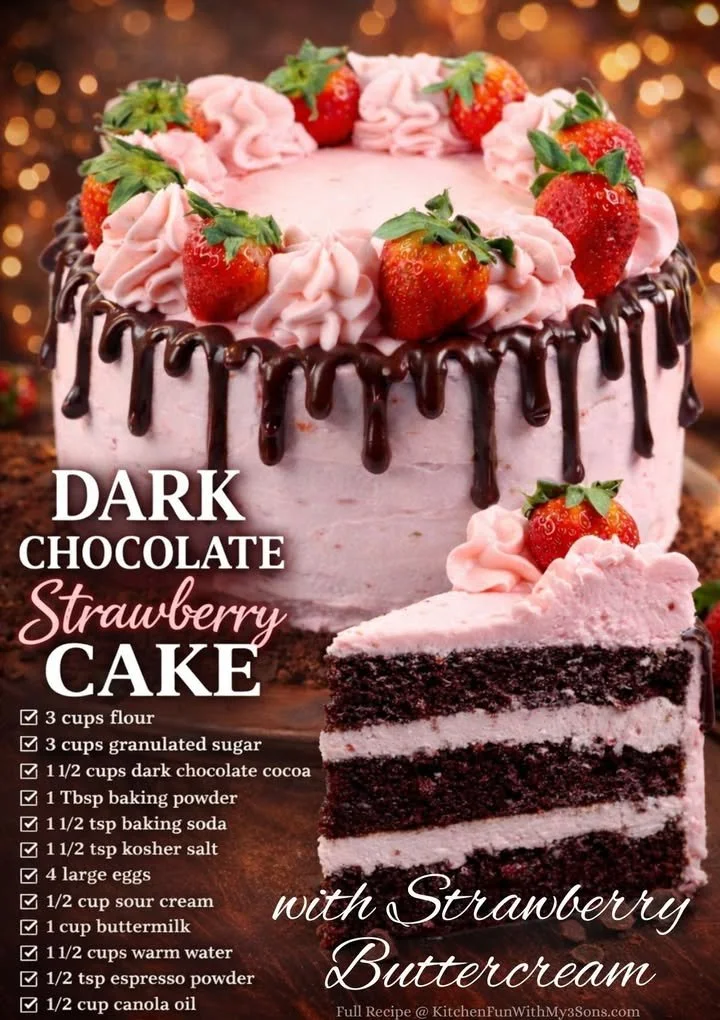
Next, I divide the batter evenly between the two prepared pans and bake for about 30 minutes. While they bake, the entire house fills with the wonderful scent of chocolate. It’s absolutely delightful! Once the cakes are done, I let them cool in the pans for about 10 minutes before transferring them to the cooling rack. patience is key here; letting them cool completely makes frosting easier and prevents a melty buttercream disaster!
Now comes the fun part—making the strawberry buttercream! I take softened butter and beat it until it’s creamy and smooth. Then, I gradually add the powdered sugar and once incorporated, I mix in the pureed strawberries and a splash more vanilla extract. The buttercream takes on a pretty pink hue, and it tastes like spring on a spoon. When the cakes are completely cool, I place one layer on a serving plate and scoop a generous amount of that strawberry buttercream on top. I carefully add the second layer, smooth more frosting on top, and then let my creativity shine with a swirl of buttercream on the sides!
Pro Tips for Best Results
I’ve made this cake a few times now, and I’ve learned a couple of little tricks. First, I always weigh my flour for the most accurate measurement. Too much flour can make the cake dense, and trust me—you want a light and fluffy texture! Secondly, I like to use high-quality cocoa powder; it really makes a difference in the depth of flavor, and you can taste it in every bite. Finally, when it comes to the buttercream, I recommend chilling it briefly if it’s too soft; a quicker chill can make it easier to spread and get that perfect finish.
Another tip I swear by is to use room temperature ingredients. I’ve tested baking with cold eggs and milk versus room temperature, and the latter definitely leads to more consistent results. Lastly, I always let my cakes cool completely on the rack. Slicing a warm cake may sound tempting, but trust me, it’s worth the wait!
Common Mistakes to Avoid
One of the biggest mistakes I made when I first started baking was not properly measuring my ingredients. I learned the hard way that packing flour too tightly into a measuring cup can ruin the texture of your cake. Now, I spoon my flour into the cup and level it off with the flat edge of a knife for a perfect measurement. (See the next page below to continue…)
Another pitfall I avoided is underbaking. I used to think a toothpick coming out with a few moist crumbs meant the cake was done, but it can lead to a gummy center, especially with denser cakes. Instead, I look for a clean toothpick or very few crumbs, and I check my cakes a couple of minutes before the recommended bake time.
And let’s not forget about frosting! I’ve made the mistake of frosting my cakes while they’re still warm, and it just turns into a melty mess. Allow your cakes to cool completely before frosting to avoid this mishap. Trust me; the cake still tastes amazing, but it can be less visually appealing!