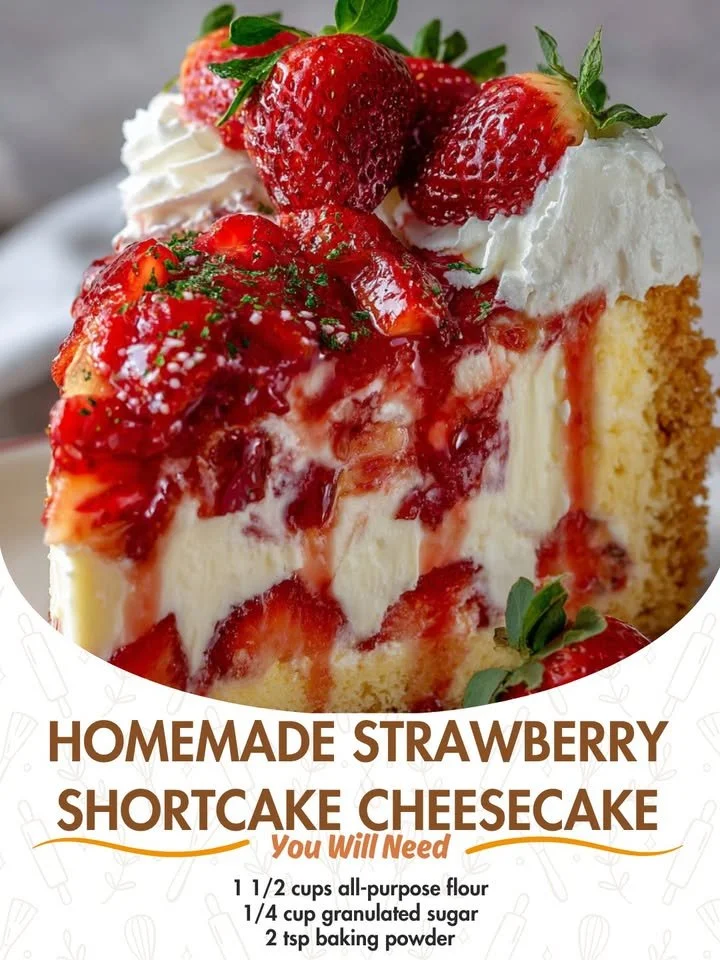
Now that the crust is cooling, I beat my cream cheese with an electric mixer until it’s smooth and creamy. I gradually add in the sugar and vanilla, and I’m already overwhelmed by the sweet aroma filling my kitchen. Next, I add the eggs one at a time, mixing gently. This is where the cheesecake starts to get that luscious, creamy texture. Once well-blended, I pour the cheesecake mixture over the cooled crust and smooth it out with a rubber spatula.
I then bake the cheesecake for 45-50 minutes until the edges are set but the center still slightly jiggles. While it cools, I whip up some heavy cream until soft peaks form, and then fold in a little sugar to sweeten. Once the cheesecake is completely cool, I spread this whipped cream generously on top and finish it off with the fresh strawberries and a drizzle of strawberry jam if I’m feeling fancy.
Pro Tips for Best Results
I tested this cheesecake three ways: with the typical cream cheese, with mascarpone, and even a plant-based alternative. Each one brought a different flavor profile, but I found cream cheese to give the most balanced and rich taste. If you want a lighter option, consider using half cream cheese and half Greek yogurt for that tangy twist.
Make sure to beat your cream cheese until it’s super smooth before adding the eggs! This helps to create a lump-free filling, resulting in a creamy texture that melts in your mouth. I remember my first attempt where I skipped this step, and let’s just say, it was a lumpy disaster!
Lastly, don’t rush the cooling process. After taking it out of the oven, let it cool slowly in the pan for about an hour before transferring it to the fridge. This step prevents cracks and gives you a wonderfully smooth surface for topping with strawberries.
Common Mistakes to Avoid
One common mistake I made in the beginning was not letting my cheesecake cool adequately. I was just too eager! It led to cracks forming on the surface, which, although they don’t change the taste, can affect the presentation. Give it time to set in the fridge for at least four hours or, better yet, overnight for optimum results.
Another thing to watch out for is underbaking. A cheesecake should be set yet slightly jiggly in the center when you take it out. It continues to firm up as it cools in the fridge. I remember jumping the gun and taking it out too soon, which led to a cheesecake that was more like pudding!
Also, be careful with excess moisture. If you’re using frozen strawberries instead of fresh, make sure to thaw and drain them well. No one likes a soggy cheesecake, and I learned this the hard way with a very watery topping that slipped off!
(See the next page below to continue…)