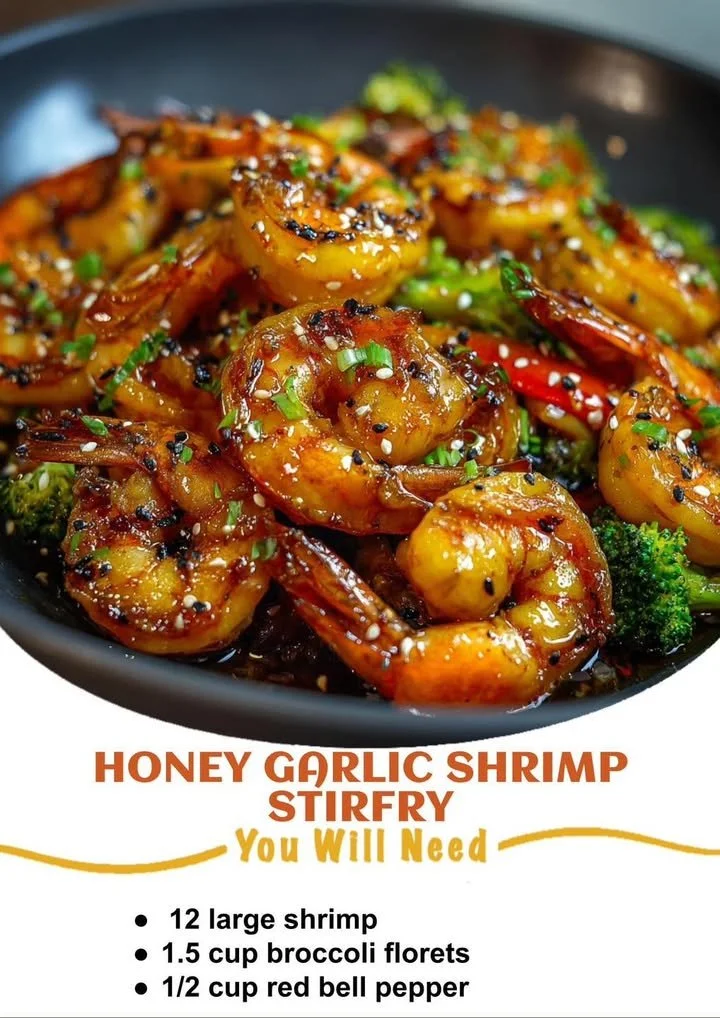
Next, I sauté the shrimp for about 2-3 minutes per side until they turn pink and opaque. Once that happens, I add in the minced garlic and the mixed veggies. The colors pop, and the gentle sizzle is music to my ears. I let everything cook together for another 2-3 minutes until the vegetables are tender-crisp – I love the hint of garlic mingling with the sweetness of the honey as it warms up.
Once my shrimp and veggies are fully cooked, I stir in the honey and soy sauce. The golden hue of the sauce clings to everything, and I can hardly wait to dig in. If you’re looking for a thicker sauce, this is where I like to dilute the cornstarch in a bit of water before pouring it in – it adds that luscious, glossy finish that elevates the dish! I cook everything together for another minute before removing it from the heat.
Finally, I serve my Honey Garlic Shrimp Stirfry over a bed of fluffy rice or noodles, garnished with sesame seeds and chopped green onions. It looks so beautiful that I can hardly wait to dive in. The sweet, savory aroma fills my kitchen, making my mouth water in anticipation.
Pro Tips for Best Results
I’ve experimented with this recipe a few times, and one thing I learned is that fresh shrimp truly makes a difference. If you have access to wild-caught shrimp, go for it! The sweetness is more pronounced, and it elevates the whole dish.
Also, don’t rush the veggie cooking time! I usually set a timer for about 3 minutes after adding them to ensure they stay vibrant and crunchy. Overcooked vegetables can become mushy and lose that colorful aesthetic that makes the dish so appealing.
Lastly, I found that letting the sauce simmer a little helps it become more cohesive. It allows the flavors to meld beautifully, and you end up with a thicker sauce that clings perfectly to the shrimp and veggies. Trust me, taking those extra minutes is worth it!
Common Mistakes to Avoid
One mistake I made early on was crowding the pan with too many ingredients. This caused the shrimp to steam rather than sear, which resulted in a rubbery texture instead of that tender, juicy bite we’re all after. Now, I always cook in batches if needed to ensure perfect results!
Another error I’ve encountered is using low-quality soy sauce. It drastically impacts the overall flavor, making it overly salty rather than sweet and balanced. I’ve found that a less processed soy sauce can bring out those rich umami flavors and really elevate the dish!
Also, be cautious with the garlic. It can burn quickly and turn bitter, which completely changes the experience of this dish. I always add it in just after the shrimp are nearly cooked to avoid this pitfall. You want the garlic to be aromatic and fragrant, not burnt and bitter! (See the next page below to continue…)