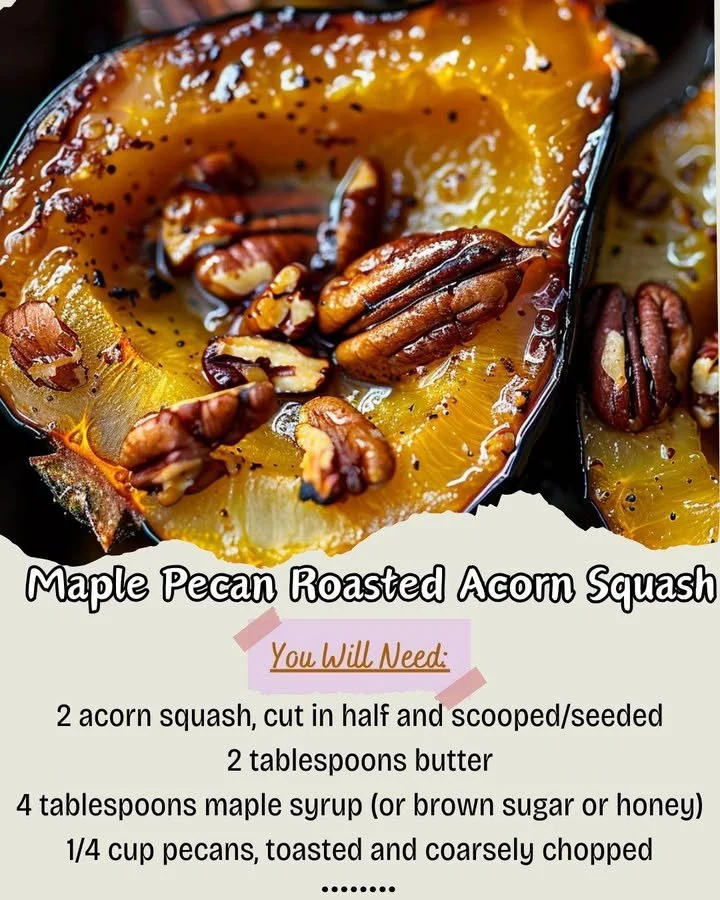
Once I’ve seasoned the squash, I place them cut side down on a lined baking sheet. This way, they get beautifully caramelized on the outside. They roast for about 25 to 30 minutes until they are tender. It’s amazing how the kitchen smells as they cook; it’s a mix of sweet, nutty, and spicy scents that instantly make me feel at home. In a small bowl, I mix maple syrup and pecans. After the squash has finished roasting, I flip them over, drizzle the maple-pecan mixture into the center of each half, and pop them back into the oven for another 10 to 15 minutes. The magic happens in that last step when the syrup bubbles and the pecans toast—pure bliss!
When it’s finally time to take them out, I can hardly wait! I let them cool for a few minutes, and then I garnish them with a sprinkle of fresh parsley, not just for color but for that little pop of freshness. And just like that, my Maple Pecan Roasted Acorn Squash is complete, bursting with flavor and ready to impress!
Pro Tips for Best Results
When I first started making this recipe, I went through a couple of experiments to get it just right. One tip I’ve found most helpful is to cut the squash evenly to ensure both halves cook at the same rate. Uneven pieces can lead to one half being perfectly tender while the other is still a bit tough.
I also tried different types of sweeteners. While I absolutely love pure maple syrup for this dish, I found that a mix of honey and agave syrup can work, too, if you run out of maple. Each brings its unique flavor, so don’t hesitate to experiment based on what’s in your pantry!
Lastly, don’t rush the roasting process! I’ve been tempted before to increase the heat to speed things up, but that’s a recipe for uneven cooking. Lower, slower roasting pulls out the sweetness and enhances those gorgeous caramel flavors that make this dish so irresistible.
Common Mistakes to Avoid
One mistake I learned the hard way was overcooking the squash. It can quickly go from perfectly tender to mushy if you leave it in for too long. I recommend checking for doneness by gently poking the flesh with a fork; it should yield easily but still have some structure. (See the next page below to continue…)