Pro Tips for Best Results
I tested the frying method three different ways: deep frying, shallow frying, and baking. Shallow frying in a heavy skillet gave me the best combination of ease, control, and that perfect, even crust. A deep fryer can be overkill, and baking, while healthier, just doesn’t deliver the same iconic texture. This method is the sweet spot.
Here’s what I learned the hard way about temperature: get an instant-read thermometer and aim for your oil to be between 350°F and 375°F. I didn’t use one my first try and my oil was too hot, causing the outside to brown before the inside was cooked. The thermometer takes the guesswork out and is worth its weight in gold for fried foods.
Don’t skip the wire rack step! When I drained my first batch on paper towels, the bottom side lost its crunch and became slightly soggy within minutes. Using a wire rack allows air to circulate all around the fillet, keeping every inch of that beautiful breading crisp until you’re ready to assemble your sandwich. It’s a small step with a huge impact.
Common Mistakes to Avoid
My biggest initial mistake was using wet fish. I was in a rush and didn’t pat the fillets dry. The flour became a pasty glue, the breading didn’t stick well, and the whole thing steamed more than it fried. It was a sad, pale, and soft result. Please, take the ten seconds to thoroughly pat your fish dry with paper towels. It’s the foundation of a great crust.
Another pitfall is moving the fish too soon in the pan. In my eagerness, I’d try to peek or shift it after 30 seconds, and the breading would tear. Once you gently lay the fillet in the oil, leave it alone! Let it fry undisturbed for a full 3 minutes. You’ll see the edges turn golden brown, and that’s your cue that it’s ready to be flipped. A little patience here rewards you with a perfectly intact, crunchy coating.
Serving Suggestions
I like serving these sandwiches immediately, hot and crisp, with a classic side. A big pile of skinny french fries or crisp tater tots is my go-to for the full nostalgic experience. The salty fries are the perfect contrast to the creamy, cool tartar sauce in the sandwich. It just feels right.
For a lighter meal, I’ll pair it with a very simple, crunchy coleslaw or a vinegar-based cucumber salad. The acidity and crunch cut through the richness of the fried fish beautifully and make the whole meal feel a bit more balanced. It’s a refreshing combo that I’ve come to love on warmer days.
And don’t forget the drinks! For the adults, a cold, crisp lager or a zesty lemonade is fantastic. For the kids (or the kid in you), this sandwich is begging for a chocolate shake. I’ve been known to whip up a quick vanilla milkshake with a big spoonful of chocolate syrup blended in—it’s the ultimate tribute meal.
Variations & Customizations
Of course, there’s the chicken version I mentioned! For a Filet-O-Chicken, I use thin chicken breast cutlets. I add 1/2 teaspoon of poultry seasoning to the flour mixture for that extra savory depth. The process is identical—pat dry, dredge, egg, panko, fry. The cook time might be a minute or so longer depending on thickness. Serve it with the same tartar sauce or switch it up with a honey mustard or a spicy mayo.
For a fun twist, I’ve made a “Deluxe” version by adding very thin slices of crisp iceberg lettuce and a couple of tomato slices under the cheese. It adds a fresh element that’s really nice. My husband also loves when I add a few thin slices of dill pickle right on top of the tartar sauce for an extra punch.
If you’re looking for a slightly different flavor profile, try swapping the cheddar for a slice of American cheese (it gets wonderfully melty) or even a pepper jack for a kick. You can also add a pinch of cayenne or Old Bay seasoning to the flour mix for a spicier crust. The basic recipe is wonderfully adaptable once you’ve mastered it.
How to Store, Freeze & Reheat
These are truly best enjoyed fresh, but if you have leftovers, let the fried fillets cool completely on the wire rack. Once cool, store them in a single layer in an airtight container in the fridge for up to 2 days. Do not assemble the sandwiches beforehand, as the bun will get soggy.
To reheat, do not microwave! That will turn your beautiful crust into a sad, rubbery mess. Instead, I reheat the fillets in a 375°F oven on a wire rack set over a baking sheet for about 10-12 minutes, until hot and re-crisped. You can also use an air fryer for about 5-7 minutes at 370°F. This method brings back a remarkable amount of the original texture. For the buns, a quick re-steam or a few seconds in the toaster oven works perfectly.
Conclusion
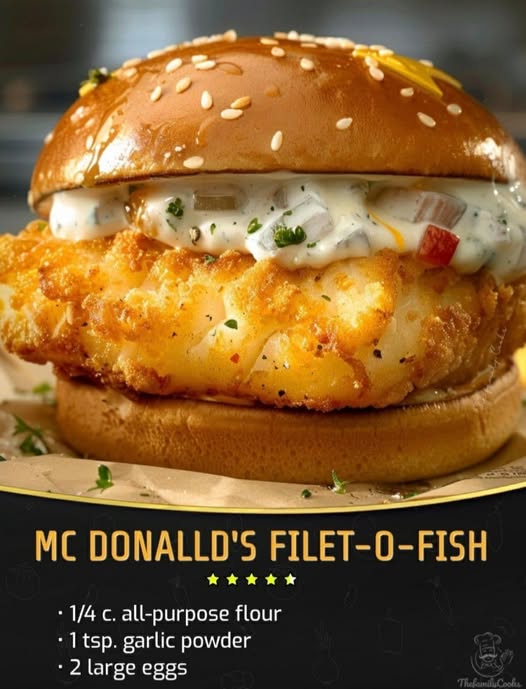
Making this copycat Filet-O-Fish at home has become one of my favorite kitchen projects. It’s more than just a recipe; it’s a little victory, a way to bring a beloved treat to life with your own two hands. The process is fun, the smell is incredible, and the first perfect bite is so deeply satisfying. I hope you give it a try and experience that same joy. Gather your ingredients, trust the process, and get ready for a homemade fast-food hack that’s sure to impress. Happy cooking