Pro Tips for Best Results
Room temperature eggs are my number one pro tip. I used to skip this step, thinking it wouldn’t matter, but it truly does. Cold eggs don’t incorporate as well and can make the batter slightly lumpy, which inhibits the rise. I just set my eggs in a bowl of warm water for 5 minutes if I forget to take them out ahead of time. It’s a tiny effort for a significantly better texture.
Preheating the muffin tin with the butter inside is the game-changer I learned after a few so-so batches. A hot pan gives the batter an instant lift the moment it hits the cup, creating that spectacular puff and crispy edge. It also ensures your pancakes won’t stick. If you just grease a cold pan, the results are good, but with a hot pan, they’re phenomenal. I tested this three different ways, and the hot pan method wins every time.
Finally, embrace the blender. I know it creates an extra dish to wash, but the aeration it provides is unmatched. A whisk can leave tiny flour lumps, but the blender makes the batter silky smooth and incorporates just enough air to help with that oven-spring. When you pour it, it should be effortlessly thin. If it feels thick, you likely over-measured the flour. For best results, spoon your flour into the measuring cup and level it off; don’t scoop directly from the bag.
Common Mistakes to Avoid
The biggest mistake, which I am guilty of from my first attempt, is opening the oven door to “peek” while they’re baking. I was so excited to see them puff, but that rush of cold air is a recipe for immediate deflation. Treat your oven like a sacred space for those 15 minutes. Trust the timer and use the oven light to check on their color. They need that consistent, steamy environment to achieve their full, glorious height.
Another common error is overfilling the muffin cups. If you fill them more than 2/3 to 3/4 full, the batter will bubble over and make a mess in your oven (another lesson I learned the hard way!). They need room to climb the sides and puff in the center. It’s better to have a little leftover batter than to deal with smoky, burnt batter dripping onto your oven floor. I usually get exactly 10 perfect pancakes from this recipe, which is why I only butter 10 cups.
Serving Suggestions
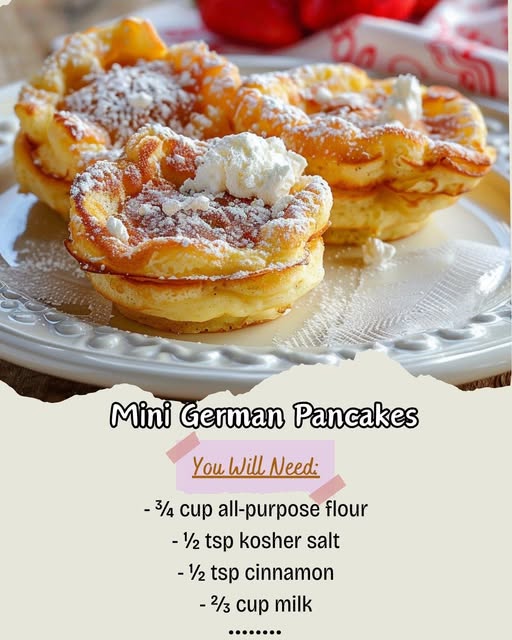
I love serving these pancakes straight from the oven, when their texture is at its peak contrast of crispy and tender. A generous dusting of powdered sugar is my go-to—it looks beautiful and melts into a light glaze. Then, I let everyone customize their own. I set out a bowl of fresh berries, some lemon wedges for a bright zing, a pitcher of warm maple syrup, and a dollop of whipped cream. The little cups are designed to hold toppings, so it’s a fun, interactive way to eat.
For a more decadent twist, I’ll sometimes make a quick berry compote by simmering frozen mixed berries with a tablespoon of sugar and a squeeze of lemon juice until syrupy. Spooned over the warm pancakes, it’s absolutely divine. On slower mornings, I might fry up some bacon or breakfast sausage on the side. The salty, savory meat pairs perfectly with the lightly sweet, eggy pancakes.
If I have any leftover pancakes (a rarity!), I enjoy them cold the next day, almost like a pastry. They lose their crispness but take on a lovely, custardy texture. I’ll spread them with a little jam or Nutella for a quick snack. They truly are the most versatile little vehicle for flavors, from the simple to the extravagant.
Variations & Customizations
One of my favorite things about this recipe is how easily it adapts. For a citrusy burst, I’ve added the zest of one lemon or orange to the blender. The fragrance is incredible, and it pairs wonderfully with a blueberry topping. You could also add a tablespoon of poppy seeds to the batter for a classic lemon-poppy seed flavor profile—just be sure they’re fresh so they don’t taste bitter.
Feeling indulgent? After swirling the melted butter in the hot pan, I’ve sprinkled a teaspoon of brown sugar and a few pecan pieces into the bottom of each cup before adding the batter. As it bakes, it creates a caramelized, praline-like crust on the bottom that is to die for. It’s a bit messier to clean, but oh so worth it for a special occasion.
For a dairy-free version, I’ve successfully used almond milk or oat milk and replaced the butter with an equal amount of refined coconut oil or a good dairy-free butter alternative. The texture is nearly identical, and they still puff up beautifully. This recipe is wonderfully forgiving, so don’t be afraid to make it your own with spices like nutmeg or cardamom, or different extract flavors like almond.
How to Store, Freeze & Reheat
These pancakes are absolutely best eaten fresh, but if you have leftovers, let them cool completely on a wire rack. I store them in a single layer in an airtight container at room temperature for up to a day. Do not refrigerate them in a sealed container, as the moisture will make them soggy. If I need to keep them longer, I freeze them.
To freeze, I place the cooled pancakes in a single layer on a baking sheet until solid, then transfer them to a freezer bag. They’ll keep for up to 2 months. To reheat, I don’t bother thawing. I just place them frozen directly on a baking sheet in a 350°F oven for 5-8 minutes, or until warmed through and re-crisped at the edges. The microwave will make them rubbery, so I avoid it. The oven method brings them shockingly close to their original glory.
Conclusion
Mini German Pancakes have earned a permanent spot in my weekend brunch rotation. They never fail to bring a smile, whether I’m making them for my family or impressing last-minute guests. They’re a beautiful reminder that the simplest recipes, made with a little care and a few good tricks, can create the most memorable moments around the table. I hope you give them a try and that they bring as much warmth and delight to your kitchen as they have to mine. Happy baking