Equipment Needed
- Large, oven-safe skillet or Dutch oven (a 10-12 inch one is perfect)
- Wooden spoon or spatula
- Cutting board and sharp knife
- Measuring cups and spoons
- Rolling pin (if your pastry needs a slight roll)
- Pastry brush
- Rimmed baking sheet (to catch any drips)
Step-by-Step Instructions
First, we build our flavor base. Preheat your oven to 400°F (200°C). In your large oven-safe skillet, I heat the olive oil over medium heat. I add the diced onion and a pinch of salt, cooking until they’re soft and translucent, about 5 minutes. This step smells like the start of every good thing. Then, I stir in the garlic, letting it become fragrant for just 30 seconds—you have to watch it closely so it doesn’t burn and turn bitter. Next, I add all those glorious sliced mushrooms. This will look like a mountain, but don’t worry! I stir them occasionally, and after about 8-10 minutes, they’ve released their water and shrunk down into a beautifully browned, fragrant pile. Patience here is everything; browning equals flavor.
Now, for the vegetables and the roux. I push the mushrooms to the side a bit and add the diced carrots and celery right into the skillet, letting them cook for about 5 minutes to soften. Then, I sprinkle the flour evenly over the entire mixture. This is crucial: I stir and cook this for a full 2 minutes. It cooks out the raw flour taste and forms the foundation of our gravy. I learned the hard way that rushing this step leaves a pasty flavor behind. Once it’s nice and bubbly, I pour in the white wine, scraping up any delicious browned bits from the bottom of the pan—that’s pure flavor.
It’s time for the gravy to come together. I slowly pour in the vegetable broth and the milk, stirring constantly. The mixture will look a bit strange at first, but keep stirring with faith! As it comes to a gentle simmer, it will thicken into a luscious, creamy sauce. This is when I stir in the fresh thyme, soy sauce, a good amount of black pepper, and the frozen peas. I taste it here and season with salt as needed—the broth and soy sauce are already salty, so I’m careful. I let it simmer for just 2-3 more minutes until the peas are warmed through, then I remove the skillet from the heat.
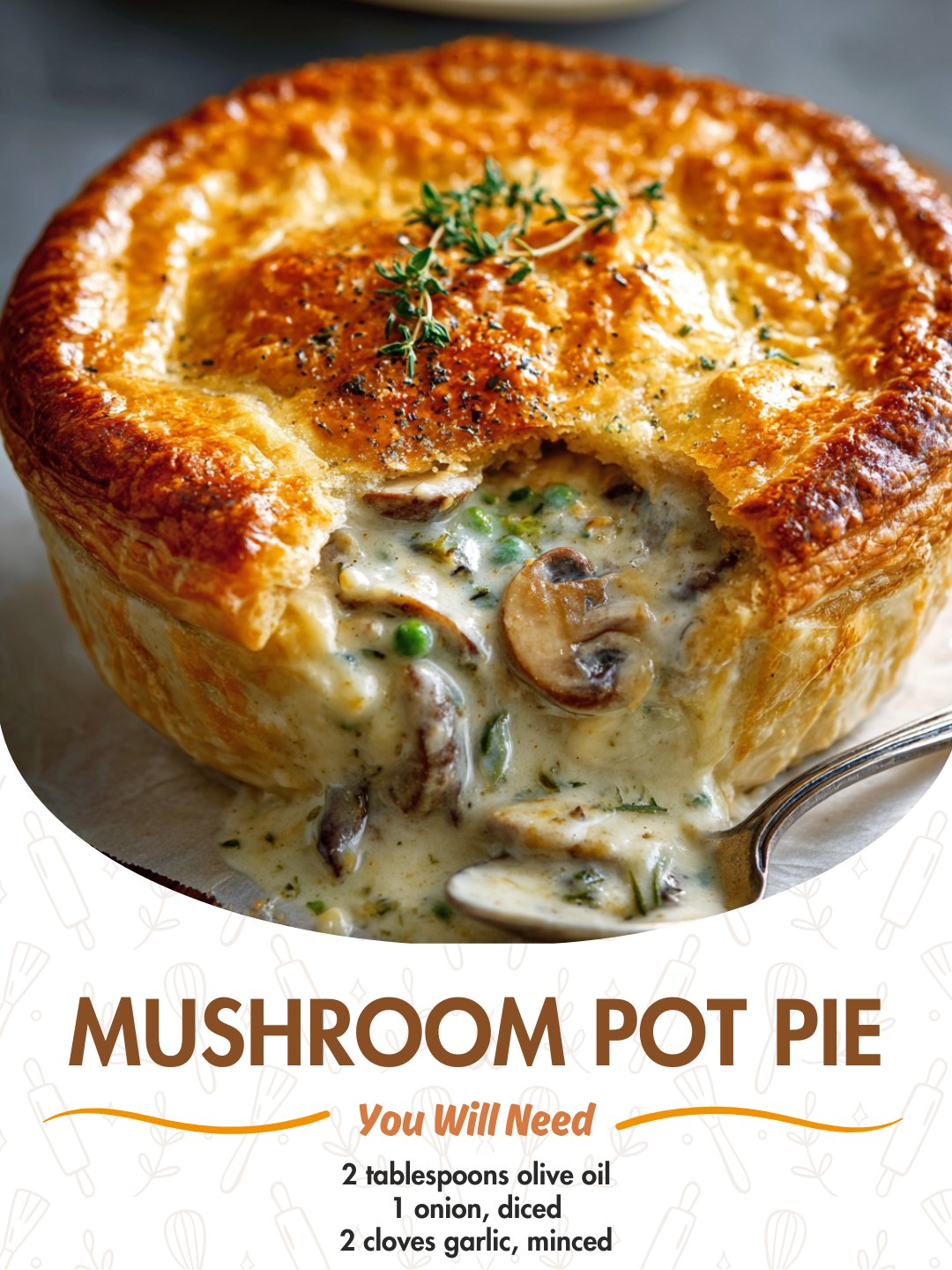
Finally, the crowning glory. I lightly roll out my pastry sheet if needed, just to make it large enough to drape over the skillet with a slight overhang. I carefully lay it over the top of the bubbling filling. I don’t seal it tightly—I just let it rest on the edges. I brush the top generously with the beaten egg wash; this is what gives you that deep, golden, professional-looking shine. I cut a few small slits in the center to act as steam vents. I place the skillet on a rimmed baking sheet (to catch any potential bubble-overs) and bake for 25-30 minutes, until the pastry is puffed and a perfect golden brown all over.(See the next page below to continue…)