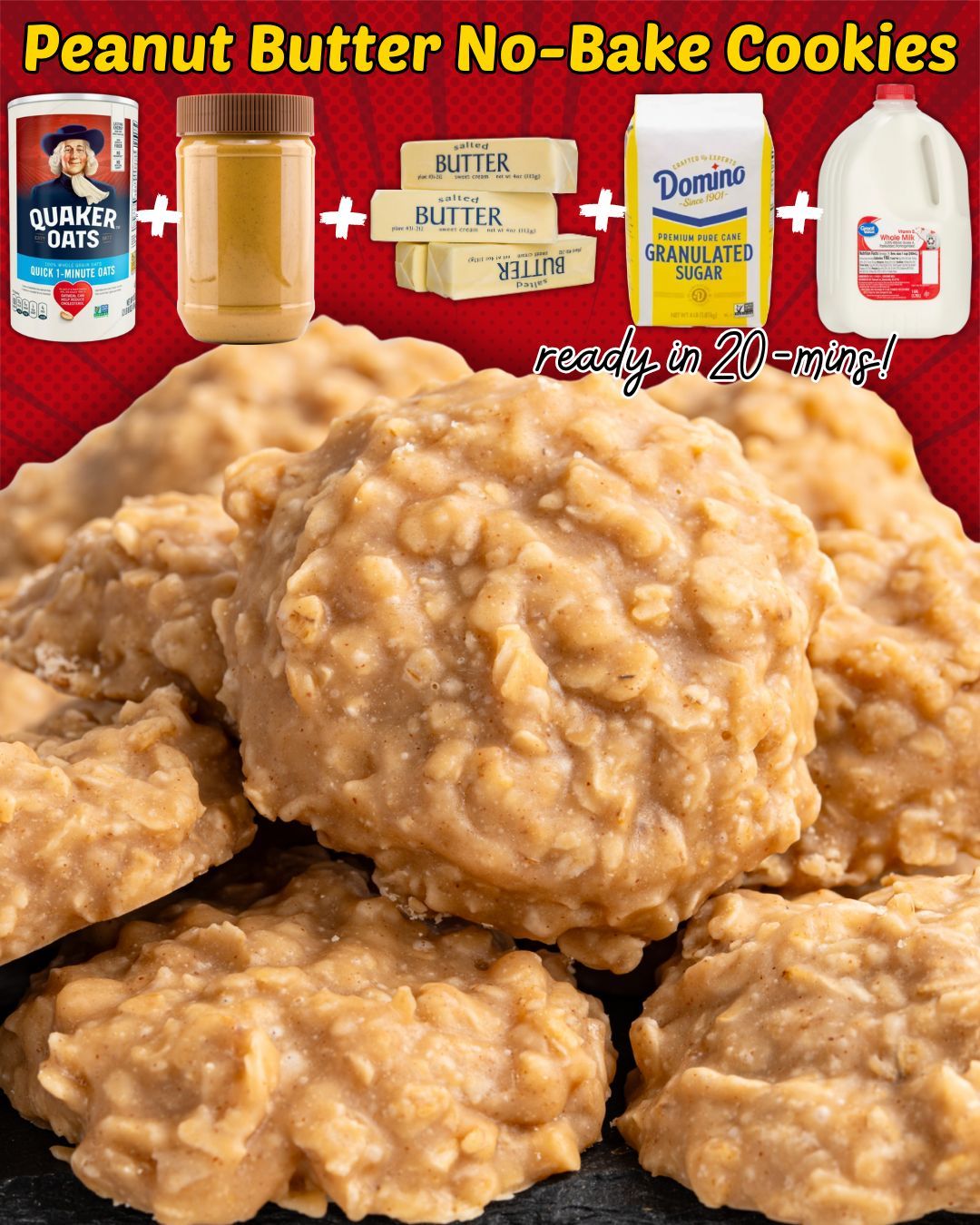
After the minute is up, immediately remove the pot from the heat. Now, working quickly, stir in the peanut butter and vanilla extract until you have a gloriously smooth, shiny, homogeneous mixture. Watching the peanut butter swirl and melt into the chocolate is my favorite part. Then, dump in all the rolled oats. Fold and stir until every single oat is thoroughly coated. The mixture will be thick and will start to set as you work, which is exactly what you want.
Finally, drop heaping tablespoonfuls of the mixture onto your parchment-lined baking sheets. I like to use a small cookie scoop for uniformity, but two spoons work just fine. Work with speed here, as the cookies become harder to portion as they cool in the pot. If they start setting up too fast, you can briefly place the pot back on the warm (but off) burner to loosen it. Let them sit at room temperature until completely firm, which usually takes about 30 minutes.
Pro Tips for Best Results
The single most important tip I can give you is to respect the boil. I tested this three different ways: boiling for 45 seconds, 60 seconds, and 90 seconds. At 45 seconds, the cookies were too soft and never fully firmed up. At 90 seconds, they were crumbly and dry. The 60-second sweet spot, from a full rolling boil, gives you the perfect chewy-yet-set texture. Use a timer and don’t guess. Also, resist the urge to keep stirring the boiling mixture vigorously; a gentle, continuous stir is all you need to prevent burning.
My second pro tip is about patience during setting. I know it’s tempting to try one right away, but you must let them cool completely at room temperature. I made the mistake of putting a warm batch in the fridge once, thinking it would speed things up. It caused condensation, making the bottoms tacky and throwing off the texture. Room-temperature cooling is the way. They will transform from glossy puddles to matte, perfectly textured cookies right before your eyes.
Finally, if your cookies are consistently too dry or crumbly, the issue is likely over-boiling or an overly hot stovetop. If they’re too runny and never set, it’s under-boiling or a pot that’s too thin. I keep a glass of cold water nearby when I make these. After boiling for a minute, I drop a tiny bit of the mixture into the water. If it forms a soft ball that holds its shape, it’s ready. This little test has never failed me.
Common Mistakes to Avoid
The first big mistake is ingredient substitutions that seem harmless but aren’t. I once used almond milk instead of whole milk because it was all I had. The cookies never set properly; they remained a sticky, gooey mess. The fat and protein in whole milk are essential for the right chemical reaction. Similarly, don’t swap the granulated sugar for brown sugar hoping for a deeper flavor—it contains moisture that will prevent setting. Stick to the script with these ingredients; it makes a huge difference.
Another classic error is impatience with the cooling process. I made this mistake the first time—don’t do what I did! I started moving the cookies around after 10 minutes because they looked solid on top. They completely fell apart. The centers need that full half-hour or more to polymerize properly. Find something else to do for 30 minutes and let the science happen. They are worth the wait.
(See the next page below to continue…)